The PromptsRush journalIdeas worth exploring
Stay curious.
Fresh perspectives, practical guides, and a closer look at the tools changing how we create.
All stories
185 articles to explore
Tutorials
Opus 4.8 Fast Mode Ends Nov 30: How to Migrate Claude Code to Opus 5.5
Opus 4.8 fast mode is deprecated and removed on November 30, 2026 with no fallback to standard speed. Here is how to migrate Claude Code and API callers to Opus 5.5 before requests start erroring.
Nov 6, 202615 min read
Tutorials
25 Best GPT-6.1 Terra Prompts for Computer Use & Office Work
25 copy-ready GPT-6.1 Terra prompts for computer use and office work: form filling, invoice entry, browser admin, screen and chart reading, spreadsheets, proposals, decks and API automation, each with the right reasoning effort and built on OpenAI's own guidance.
Nov 5, 202628 min read
AI Tools
Claude Ultra vs Max vs Pro: Which Claude Plan Should You Pay For?
Claude Ultra ($200), Max ($100) and Pro ($20 / $17 annual) compared from Anthropic's live pricing page: usage multipliers, the Max 20x rename, no five-hour cap on verified Ultra, Fable, $100/$200 API credits, and who should buy which plan.
Nov 5, 202611 min read
AI Tools
GPT-6.1 Terra vs Claude Opus 5.5 vs Gemini 4 Argon
GPT-6.1 Terra, Claude Opus 5.5 and Gemini 4 Argon compared on independent benchmarks, API pricing, cost per task, speed, coding and multimodal inputs, with a clear pick for each job and what changes when Argon's price doubles on 1 December.
Nov 5, 202612 min read

AI Tools
Kimi K3.1 Pro: Open Weights, 1M Context & How It Compares
Kimi K3.1 Pro is Moonshot AI's new flagship: near-Opus 5.5 scores on agentic coding, a 1M-token context window and $2/$10 API pricing. Here's what changed from Kimi K3, the benchmarks, the open-weights status and when to pick it over Opus, Astra or Terra.
Nov 4, 202613 min read
AI Tools
GPT-6.1 Terra: What's New, Benchmarks & When to Use It
GPT-6.1 Terra is OpenAI's fast, efficient GPT-6 model for computer use, visual reasoning and writing, at $1/$5 per million tokens. Here's what changed from GPT-5.6 Terra, OpenAI's benchmark claims, ChatGPT availability and when to pick it over Sol, Astra or Luna.
Nov 4, 202612 min read
AI Tools
GPT-6.1 Terra Pricing: API, Batch, Fast Mode & Long-Context Costs
GPT-6.1 Terra costs $1/$5 per million tokens, with $0.05 cache reads, 50% off on Batch and Flex, and 2x for fast mode. Here's every rate, the 272K long-context surcharge, worked cost examples and how Terra compares with Claude and Gemini.
Nov 4, 202613 min read

AI Tools
AI Model Decision Matrix 2026: Which Model for Which Job
Which AI model should you use for coding, long documents, research, writing, cheap bulk tasks, images and video? Our 2026 decision matrix maps each job to a pick and a budget option, with per-token prices from OpenAI, Anthropic, Google and Z.ai.
Oct 31, 202618 min read
AI Tools
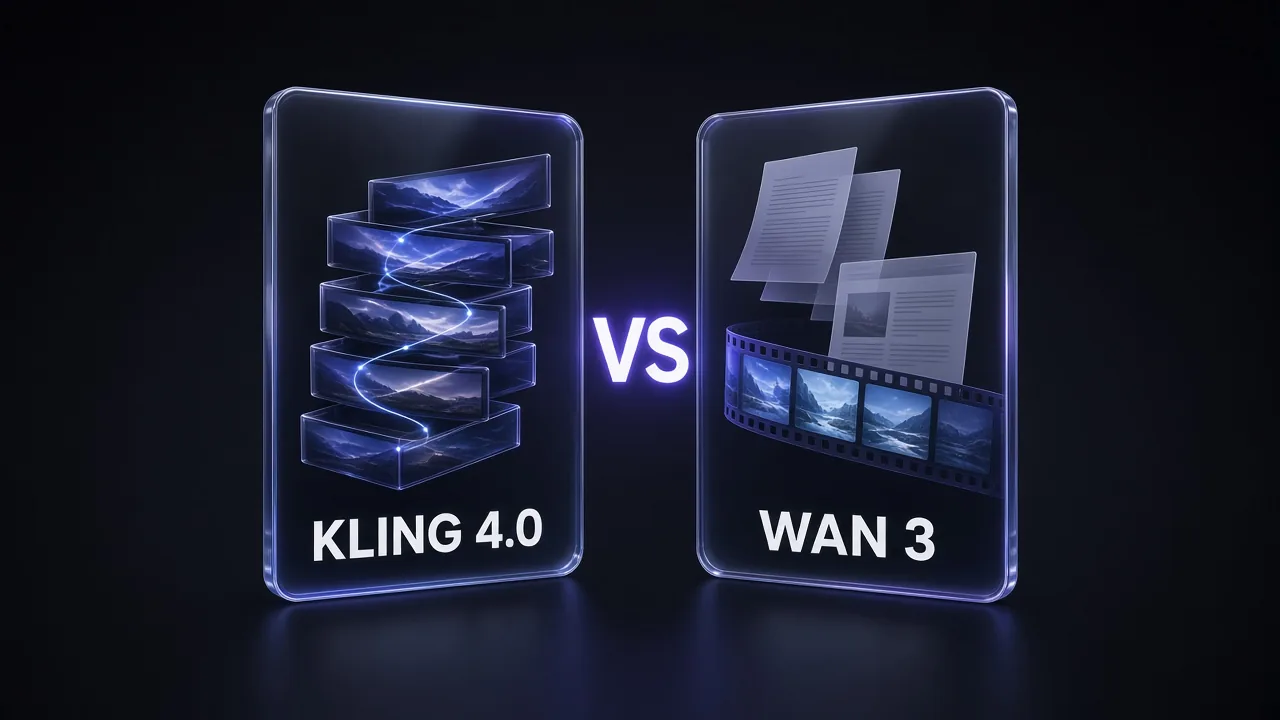
Kling 4.0 vs Wan 3: Which AI Video Model Is Better? (2026)
Kling 4.0 and Alibaba's Wan3.0 both make 30-second AI videos in one pass. We compare specs, reference inputs, audio, API pricing per second and access, then tell you which one fits creators, agencies and developers.
Oct 31, 202611 min read
AI Tools
The Promptsrush AI Builder Stack: Models, Skills, MCP & Video
The AI builder stack we'd pick for late 2026, layer by layer: Claude Opus 5.5 and Gemini 4 Argon, AGENTS.md and skills, MCP servers and subagents, Firecrawl and Genspark for research, and a Kling, HeyGen, ElevenLabs, Descript and Remotion video layer.
Oct 31, 202616 min read
Tutorials
20 Prompts to Turn design.md Into Production Components
20 copy-ready prompts that take a design.md from file to finished components: read the spec, map tokens to CSS variables and Tailwind, build buttons, forms and dialogs with every state, then audit contrast, focus, target size and drift.
Oct 30, 202628 min read
Tutorials
design.md Marketplace Guide: Ship Consistent UI With AI Coders
How to take a design system from the Promptsrush design.md marketplace to a matching first screen: pick, preview in light and dark, copy the tokens and design.md into your repo, and wire it into Claude Code or Cursor, with three copy-ready prompts.
Oct 30, 202618 min read
Put it into practice