Our Blog
Latest articles.
Discover tutorials, insights, and best practices for AI prompt engineering and creative generation.
All Articles

Tutorials
What Is Context Engineering? The Next Step Beyond Prompt Engineering
Context engineering decides what an AI model sees at every step: instructions, memory, retrieved docs and tool results. Learn how it differs from prompt engineering, the 4 core techniques, 5 ways context fails, and a step-by-step workflow.
Oct 724 min
11
Tutorials
How to Turn a Product Idea Into a Landing Page With AI
A product idea doesn't need a product to get a landing page — it needs a page that measures whether anyone wants it. An 8-step AI workflow from raw idea to a live validation page, with a free tool stack and an honest way to read the result.
Oct 515 min
11
AI Tools
10 Must-Have AI Tools for Marketers
Ten AI tools organised by the marketing job each one does — strategy, landing pages, visuals, video, voice, UGC ads, editing, research and automation — with real prices and where each stops being worth it.
Oct 312 min
8
Tutorials
18 Prompts to Audit Your Landing Page With AI
An audit is not an optimisation. 18 prompts that inspect your landing page across six layers — message, structure, evidence, friction, technical and reporting — and output a scored report with a prioritised fix queue.
Oct 313 min
8
AI Tools
ImagineArt Review (2026): Features, Pros & Cons
ImagineArt puts dozens of image, video and audio models behind one subscription, with studios, workflows, an MCP server and a Premiere Pro plugin. It's excellent value per credit, but credits expire each cycle and billing complaints are common. Here's who it suits.
Sep 1714 min
35
AI Tools
Kling AI Pricing (2026): Subscription Plans, API Cost
Kling AI plans renew at $8.80–$159.99 a month or $79.20–$1,429.99 a year, and the API costs $0.112–$0.42 per second of video. Real per-credit costs, how many videos each plan makes, and why yearly saves 25%, not 34%.
Sep 1611 min
152
AI Tools
ImagineArt Pricing (2026): Plans, Credits, Usage
ImagineArt costs $9–$175 a month billed yearly or $13–$250 monthly. Here's what each plan's credits actually buy, why two of its discount badges overstate the saving, and what 'unlimited' really covers.
Sep 1611 min
24
Tutorials
23+ Best 1980s, 85s, 90s AI Video Prompts
Retro AI video gives itself away through motion, not colour: gimbal glides, 60fps smoothness and drone shots that never existed. 26 prompts built from real film and camcorder behaviour, including image-to-video prompts that animate your 1985 time-travel photo.
Sep 1421 min
117
AI Tools
GPT-6 Astra vs Claude Fable 5.1 Comparison
Identical $10/$50 pricing makes this look like a pure capability contest. It is not — cached input differs 4x, cost per completed task differs more than 2x, and most published benchmark tables compare settings rather than models.
Sep 1112 min
63
News
GPT-6 Astra: What's New & Crazy?
GPT-6 Astra saturates three benchmarks and reprices past 272K tokens — but the real story is that it is the first model OpenAI has rated Critical for cyber, shipped alongside a documented drop in how well its reasoning can be monitored.
Sep 1112 min
56
Tutorials
44+ Best 80s & 90s ChatGPT Image Prompts (2026)
The viral ChatGPT time travel trend, done properly: 14 identity-locked prompts that turn your own photo into a genuine 1985 or 1995 photograph, plus 50 text-to-image prompts built from real film stocks, flash and tape — not mood words.
Sep 1143 min
4867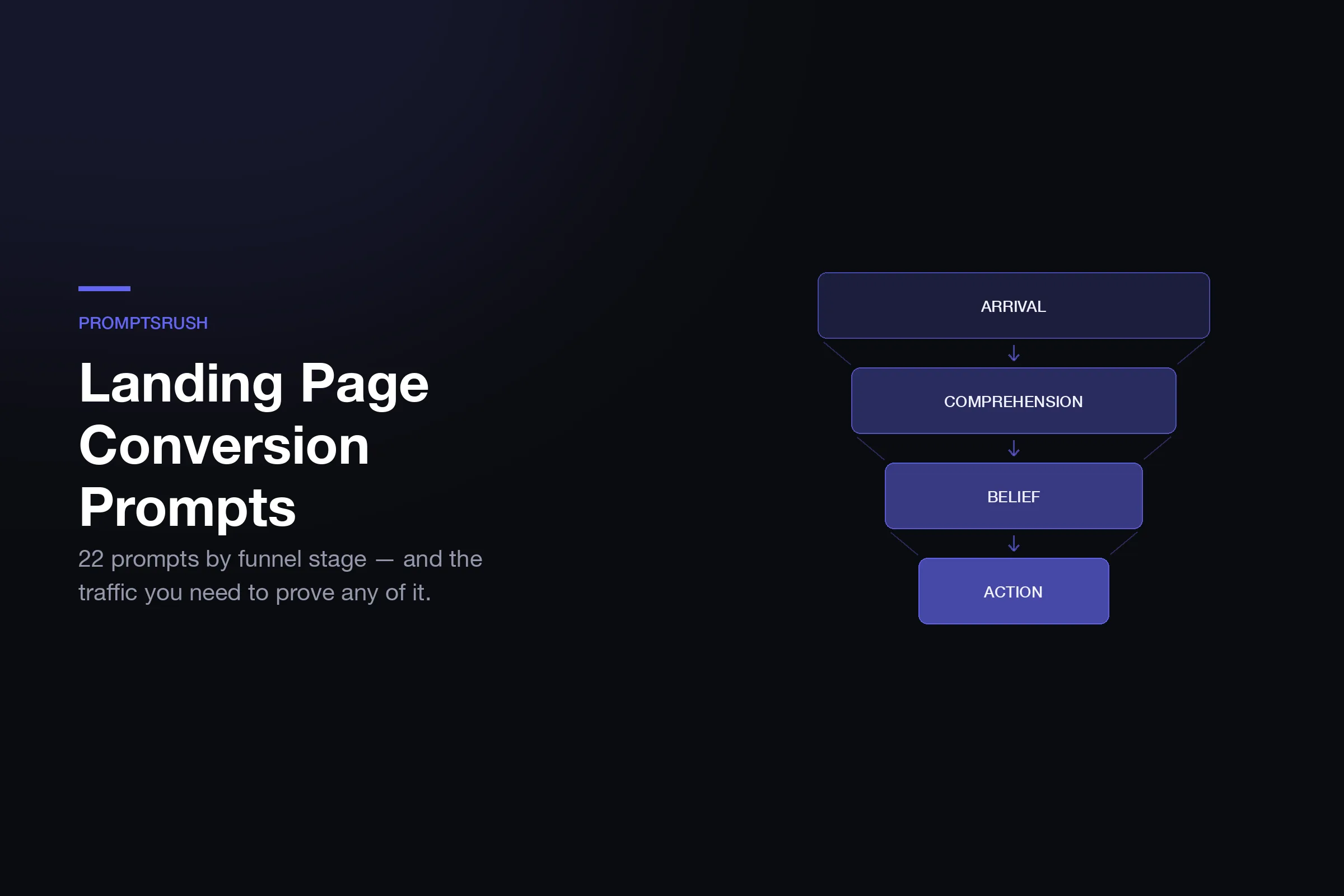
Tutorials
22 Prompts to Improve Landing Page Conversion Rates
Conversion and beauty are different objective functions. 22 prompts grouped by the funnel stage they fix — arrival, comprehension, belief, action — plus the traffic you actually need before any of it is measurable.
Sep 715 min
18