The PromptsRush journal
AI ToolsGPT-6.1 Terra: What's New, Benchmarks & When to Use It
GPT-6.1 Terra is OpenAI's fast, efficient GPT-6 model for computer use, visual reasoning and writing, at $1/$5 per million tokens. Here's what changed from GPT-5.6 Terra, OpenAI's benchmark claims, ChatGPT availability and when to pick it over Sol, Astra or Luna.
Advertisement
Short version: GPT-6.1 Terra is the model OpenAI wants you to run for the everyday work that eats most of an API budget: reading screenshots and documents, clicking through apps, filling forms and writing clear text. It isn't OpenAI's smartest model. It's the one with the best price-to-capability ratio in the GPT-6 lineup, at $1 per million input tokens and $5 per million output tokens, half what GPT-5.6 Terra and GPT-6.1 Sol cost.
Terra launched on 26 October 2026 in the API as gpt-6.1-terra and in ChatGPT Work and Codex. Everything below comes from OpenAI's launch post, model docs, GPT-6 guide and release notes, checked on 4 November 2026. We haven't run our own benchmarks, so every score here is OpenAI's. If you only care about the bill, our full GPT-6.1 Terra pricing breakdown covers every rate, the long-context surcharge and worked cost examples.
GPT-6.1 Terra at a Glance
| Spec | GPT-6.1 Terra |
|---|---|
| Released | 26 October 2026 |
| API model ID | gpt-6.1-terra (single snapshot so far) |
| Position in the family | "Fast and efficient": below GPT-6 Astra and GPT-6.1 Sol, above GPT-6 Luna |
| Context window | 1,050,000 tokens (922,000 max input) |
| Max output | 128,000 tokens |
| Input / output | Text and images in, text out (no audio or video) |
| Reasoning effort | none, low, medium (default), high, xhigh, max |
| Knowledge cutoff | 1 June 2026 |
| API price | $1 input / $0.05 cached input / $5 output per million tokens |
| Where to get it | OpenAI API (Responses, Chat Completions, Batch); ChatGPT Work and Codex on Plus, Pro, Business, Enterprise and Edu |
Two rows matter more than they look. Terra supports none reasoning effort, which GPT-6 Astra and GPT-6.1 Sol don't, so it can act as a plain fast model for extraction and rewriting. And the context window is the same million-token class as OpenAI's bigger models, though prompts above 272K input tokens are billed at a higher rate for the whole request.
What's New in GPT-6.1 Terra
OpenAI pitches Terra around three jobs: visual reasoning, precise computer use and clearer, more natural writing. The examples in its docs are deliberately unglamorous: matching product photos to catalog entries, interpreting technical drawings, acting on application screens, reading invoices and typing their details into accounting software. That's the honest framing. Terra is a workhorse for the boring, high-volume tasks that fill a workday.
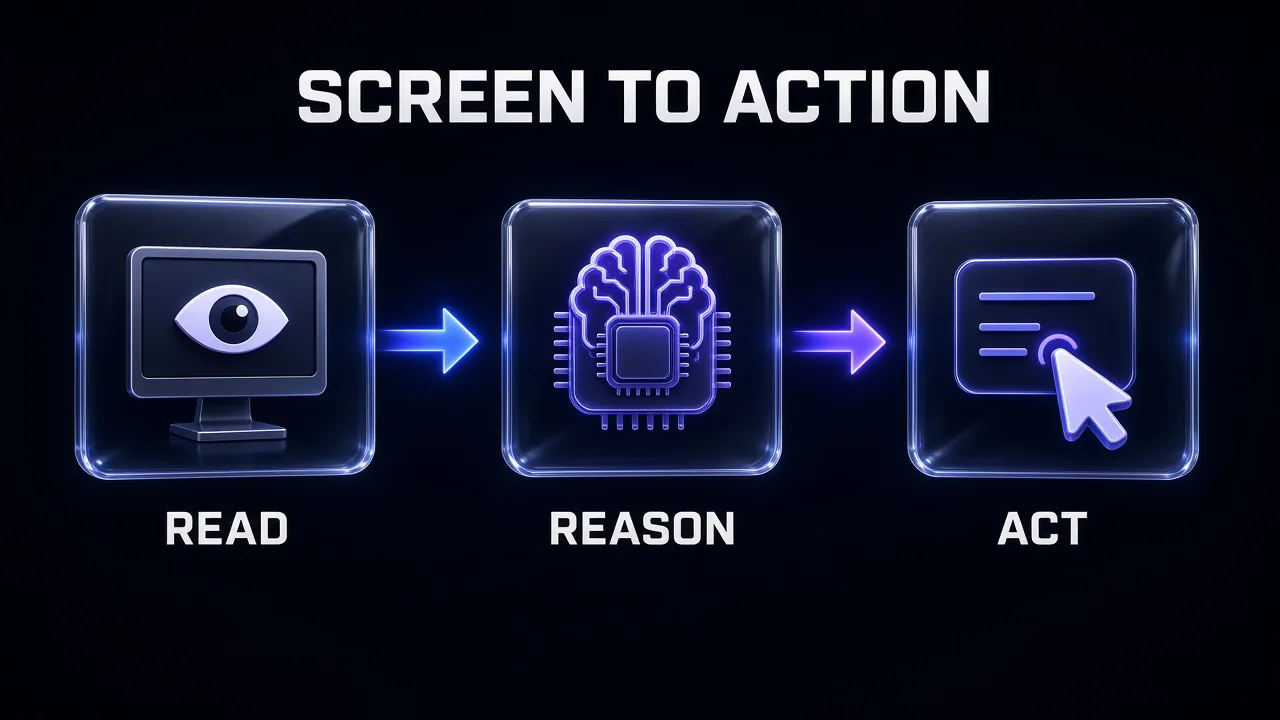
The practical changes compared with GPT-5.6 Terra:
- Half the price. Standard rates drop from $2/$12 to $1/$5 per million tokens, and cached input falls from $0.20 to $0.05.
- Much better computer use. On OpenAI's Agents' Last Exam, Terra at medium effort scores 15 percentage points higher than GPT-5.6 Terra at roughly a third of the cost per task.
- Fewer factual errors. On OpenAI's internal set of error-inducing prompts, the error rate at low effort fell from 53.6% to 16.7%.
- A real step up in coding. Terminal-Bench 4.0 at max effort goes from 21.5% to 50.3%.
- More speed. OpenAI says Terra completes tasks over three times faster than GPT-6 Astra and GPT-6.1 Sol.
Terra also inherits the GPT-6 API features: async tool calling (the model keeps working while your app runs a slow tool), mid-turn steering over WebSockets, and a configuration_update input item that changes reasoning effort mid-conversation without breaking your prompt cache. If you missed the flagship launch, our GPT-6 Astra explainer walks through where those features came from.
GPT-6.1 Terra Benchmarks: What OpenAI Reports
Every figure in this section is OpenAI's own, measured on its own harnesses. Treat the direction as reliable and the exact gaps as marketing until independent results appear.
| Benchmark | What it tests | What OpenAI reports for Terra |
|---|---|---|
| Agents' Last Exam | Professional computer-use tasks | +15 points over GPT-5.6 Terra at medium effort, ~1/3 the cost; on par with GPT-6 Astra at 1/10 the price per token |
| MMMU-Pro | Visual reasoning | Beats GPT-5.6 Terra at every effort setting; nearly matches Astra and 6.1 Sol |
| OSWorld 2.1 | Multistep desktop app tasks | At medium effort, beats GPT-5.6 Terra's best score |
| Terminal-Bench 4.0 | Command-line coding agents | 50.3% at max effort vs 21.5% for GPT-5.6 Terra |
| Terminal-Bench-Science 0.1 | Scientific research via code | Beats GPT-6.1 Sol at max effort; within 5 points of Claude Opus 5.5 at under 1/5 the estimated cost |
The factuality result is the one we'd pay most attention to, because hallucinations are what break unattended agent loops. OpenAI reports the error rate on its error-inducing prompt set at both ends of the effort scale:
Error rate on OpenAI's error-inducing prompts
Lower is better. GPT-5.6 Terra max-effort value derived from OpenAI's stated 18-point drop
- GPT-5.6 Terra
- GPT-6.1 Terra
Source: OpenAI, Introducing GPT-6.1 Terra (Oct 2026)
The headline comparison with Anthropic is that, at max effort on Agents' Last Exam, Terra is over three times as token-efficient as Claude Opus 5.5 at a quarter of its per-token price, which OpenAI rounds to roughly 9x lower cost per task. That's a vendor claim on a vendor benchmark. For Anthropic's side of the story, read our Claude Opus 5.5 explainer.
Pro tip: Don't migrate on benchmark tables alone. OpenAI's own advice is to compare GPT-5.6 Terra and GPT-6.1 Terra on your representative images and workflows at the same reasoning effort before switching.
GPT-6.1 Terra Pricing in One Table
Terra's price is the main reason it exists, so here it is next to its siblings and the obvious rivals, all at standard rates per million tokens.
| Model | Input | Cached input | Output |
|---|---|---|---|
| GPT-6.1 Terra | $1.00 | $0.05 | $5.00 |
| GPT-5.6 Terra | $2.00 | $0.20 | $12.00 |
| GPT-6.1 Sol | $2.00 | $0.10 | $10.00 |
| GPT-6 Astra | $10.00 | $1.00 | $50.00 |
| GPT-6 Luna | $0.10 | $0.01 | $0.50 |
| Claude Opus 5.5 | $4.00 | $0.20 | $20.00 |
| Gemini 4 Argon | $2.00 (to 30 Nov), then $4.00 | $0.10, then $0.20 | $10.00, then $20.00 |
Standard output price per million tokens
OpenAI GPT-6 family and rivals, standard tier
Source: OpenAI, Anthropic and Google API pricing pages, checked 4 Nov 2026
Batch and Flex cut Terra's rates in half, Fast mode doubles them, regional processing adds 10%, and anything over 272K input tokens bills at 2x input and 1.5x output for the full request. Those modifiers, plus cache-write pricing and real task costs, are all in our Terra API cost guide, so we won't repeat them here. Gemini 4 Argon's intro rate ends on 1 December, which our Gemini 4 Argon pricing explainer covers.
GPT-6.1 Terra in ChatGPT Work and Codex
In ChatGPT, Terra shows up in two places only: Work and Codex. It is not in regular Chat. It's rolling out on Plus, Pro, Business, Enterprise and Edu plans, and you select it from the model list (in the desktop app it sits under Advanced). Your plan's usage limits don't change, but OpenAI says the same allowance covers more tasks with Terra than with GPT-5.6 Terra, and substantially more than with GPT-6.1 Sol or GPT-6 Astra.
One quiet change to watch: OpenAI notes that some Plus and Pro users may now see GPT-6.1 Terra at Medium instead of GPT-6.1 Sol at Light in Work's default Power presets. If your Work results suddenly feel different, check which model the preset picked. Two more limits: Standard and Fast modes are available where supported, and Terra doesn't support UAE inference residency. API usage is billed separately from any ChatGPT subscription.
How to Start Using GPT-6.1 Terra in the API
Switching is mostly a model-ID change, with three things to check first:
- Use the Responses API for tools. Terra accepts plain Chat Completions requests, but tool calling requires Responses. Any app that calls functions through Chat Completions needs migrating before it can use Terra.
- Pick an effort level on purpose. The default is
medium. OpenAI recommends starting there and moving up only if the quality gain is worth the extra time and tokens. Reasoning tokens bill as output, somaxcan multiply your cost. Our guide on choosing reasoning effort for real workloads applies directly here. - Watch the 272K line. A million-token window invites stuffing everything in, but a 300K-token prompt costs double on input for the whole request. Trimming context usually helps quality too, as we explain in our piece on context rot.
Terra supports the full Responses tool set: web search, file search, image generation, code interpreter, hosted shell, apply patch, skills, computer use, MCP and tool search. It doesn't support fine-tuning or predicted outputs, and it has no audio or video modes.
If you want a first task that shows off what Terra is for, try a screen-reading workflow. Paste this into an agent tool that supports vision and browsing:
Screenshot-to-Action Checklist
You are an operations assistant. I will attach screenshots of a web app screen.

1. Describe what the screen is for in one sentence.
2. List every input field, button and status message you can see, with its exact label.
3. Given this goal: [GOAL, e.g. "submit invoice INV-2041 for approval"], write the exact sequence of clicks and entries needed, one step per line.
4. Flag any step where you are unsure what a control does, and ask me before guessing.
5. Finish with a one-line check I can use to confirm the task succeeded.

Be literal. Do not invent fields that are not visible.
GPT-6.1 Terra vs Sol vs Astra vs Luna: Which OpenAI Model to Pick
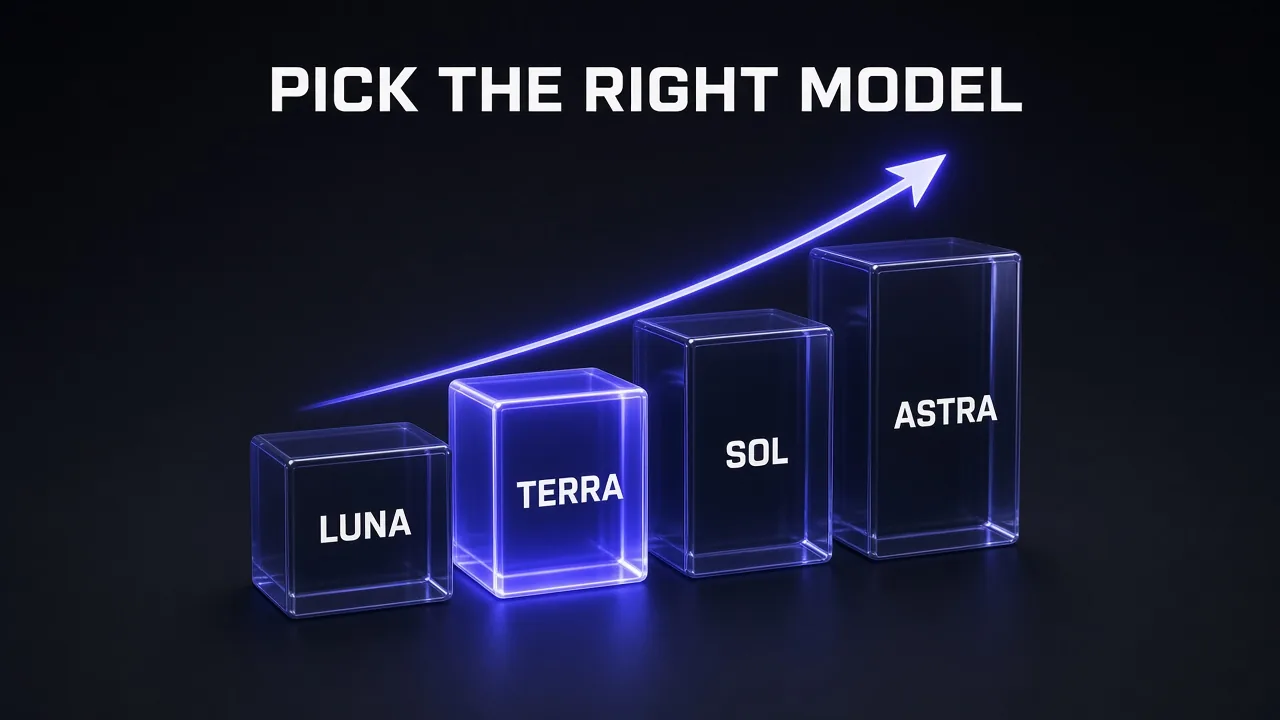
OpenAI's own labels are a useful start: Astra is "highest intelligence", 6.1 Sol is "balanced", Terra is "fast and efficient" and Luna is "fastest and most cost-effective". Here's how we'd map them to work:
| Job | Best pick | Why |
|---|---|---|
| Hardest coding, research, long autonomous runs | GPT-6 Astra or GPT-6.1 Sol | OpenAI says they remain better for the most complex coding |
| Computer use, form filling, screen-driven agents | GPT-6.1 Terra | Near-Astra Agents' Last Exam score at 1/10 the token price |
| Reading images, drawings, receipts, catalogs | GPT-6.1 Terra | Strong MMMU-Pro results at the lower price |
| Drafting and editing business writing | GPT-6.1 Terra | Clearer writing is one of its three headline goals |
| Classification, tagging, simple extraction at huge volume | GPT-6 Luna | 10x cheaper than Terra per token |
If you're choosing across vendors rather than inside OpenAI's lineup, our AI model decision matrix lines Terra-class models up against Claude and Gemini by job.
Where GPT-6.1 Terra Fits in an Agent Stack
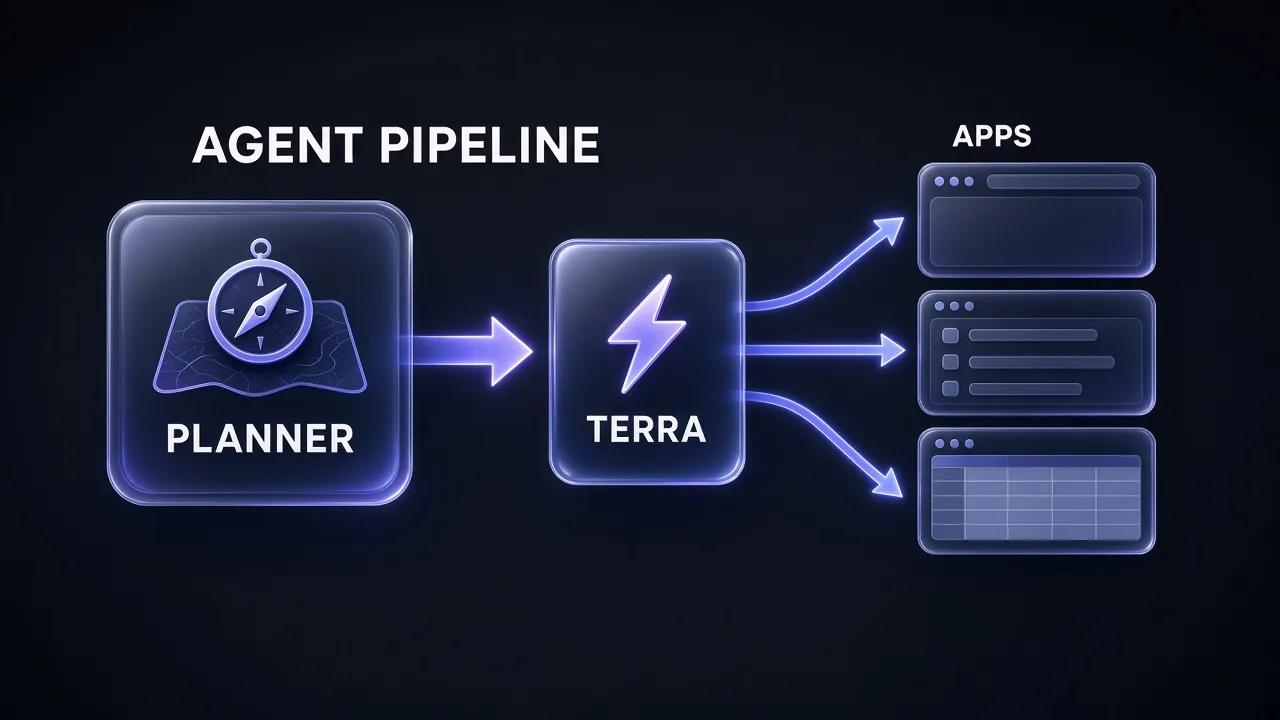
Terra's sweet spot is the middle of an agent pipeline: a planner model (often Sol, Astra or Claude Opus 5.5) breaks a task down, and Terra does the many cheap steps of looking at screens, reading pages and typing. Because cached input is just $0.05 per million tokens, long, repeated system prompts and tool definitions cost very little once they're cached.
The weak link in most of these pipelines isn't the model; it's the input. Agents that browse live sites burn tokens on navigation chrome and cookie banners. Feeding Terra clean markdown instead of raw pages is cheaper and more reliable, which is the pattern we use in our Firecrawl and Claude workflow, and it works the same way with OpenAI models.
If you're building computer-use agents on Anthropic's side as well, the safety habits in our Claude computer use guide (sandboxed machines, allow-lists, a human check before anything irreversible) apply just as much to Terra. OpenAI says Terra resists prompt injection well in its tests, but a model that can click is a model that can click the wrong thing.
Limits and Caveats
- It isn't the top coder. 50.3% on Terminal-Bench 4.0 is a huge jump for Terra, but OpenAI itself points complex coding to Sol and Astra.
- Benchmarks are self-reported. Agents' Last Exam, OSWorld 2.1 and the error-rate set are OpenAI's numbers on OpenAI's setups. The 9x-cheaper-than-Opus figure is a vendor claim.
- Text out only. No native audio, video or image output, and no fine-tuning.
- Long prompts cost more. Over 272K input tokens, the whole request is billed at higher rates.
- ChatGPT availability is partial. Work and Codex only, not Chat, and no UAE inference residency.
- Cybersecurity safeguards apply. OpenAI rates Terra as meeting the Critical threshold in cybersecurity under its Preparedness Framework, so expect the same protections as GPT-6 Astra on security-sensitive requests.
Our Verdict on GPT-6.1 Terra
My take: GPT-6.1 Terra is the most important OpenAI release of the autumn for anyone paying API bills, even though Astra gets the headlines. Half the price of GPT-5.6 Terra, a big drop in factual errors, and near-Astra computer use on OpenAI's tests make it the sensible default for screen-reading agents, document work and business writing. Keep Sol or Astra for the hardest coding and reasoning, keep Luna for bulk classification, and send almost everything in between to Terra after a quick side-by-side on your own tasks.
If you also want a cheaper open alternative to test against, GLM models from Z.ai are worth a look for coding-heavy work:
Frequently Asked Questions
10 questions answered