The PromptsRush journal
AI ToolsGemini 4 Argon vs Claude Opus 5.5: Benchmarks, Pricing & Verdict
Gemini 4 Argon and Claude Opus 5.5 compared from Google's and Anthropic's own docs: specs, API and plan pricing, every official benchmark (and where the vendors disagree), strengths for coding, agents, long context and video, plus six test prompts.
Advertisement
Short version: Gemini 4 Argon and Claude Opus 5.5 are closer than either launch post suggests, and the real difference right now is price. Until 30 November 2026, Argon costs half as much per token as Opus 5.5 ($2/$10 against $4/$20 per million input/output tokens), and an independent benchmark run found it used about half the output tokens per task as well. From 1 December the per-token list prices are identical. On quality, Opus 5.5 leads the independent Artificial Analysis Intelligence Index (58 to 53) and terminal-based coding; Argon leads Google's own table on knowledge work, very long context, video and multimodal tasks.
Both models are new. Anthropic released Opus 5.5 on 22 September 2026, and Google made Argon generally available on 13 October after a limited preview that began on 30 September. Everything below comes from the two companies' documentation, model card and launch posts, plus Artificial Analysis for independent numbers. We haven't run our own tests, so where a number is a vendor's, we say whose it is. If you read our Gemini 3.8 Flash vs Opus 5 vs GPT-5.6 comparison, this is the flagship rematch.
The Two Models at a Glance
| Gemini 4 Argon | Claude Opus 5.5 | |
|---|---|---|
| Model ID | gemini-4-argon | claude-opus-5-5 |
| Released | Announced 30 Sep 2026 (limited); generally available 13 Oct 2026 | 22 Sep 2026 |
| Context window | 1,048,576 tokens, shared by input, thinking and output | 1M tokens |
| Max output | 65,536 by default; up to ~1M with "long decode" (background execution) | 128K; 300K on the Batch API (beta) |
| Input | Text, image, video, audio, PDF | Text and images |
| Output | Text | Text |
| Reasoning control | thinking_level: low / medium (default) / high | Adaptive thinking, always on; effort parameter, default medium |
| Knowledge cutoff | March 2026 | June 2026 |
| Caching | Implicit only (no explicit caching) | Explicit prompt caching (5-minute and 1-hour writes) |
| Where you get it | Gemini API, AI Studio, Antigravity, Gemini for business, Gemini app | Claude API, Amazon Bedrock, Google Cloud, Microsoft Foundry, Claude apps |
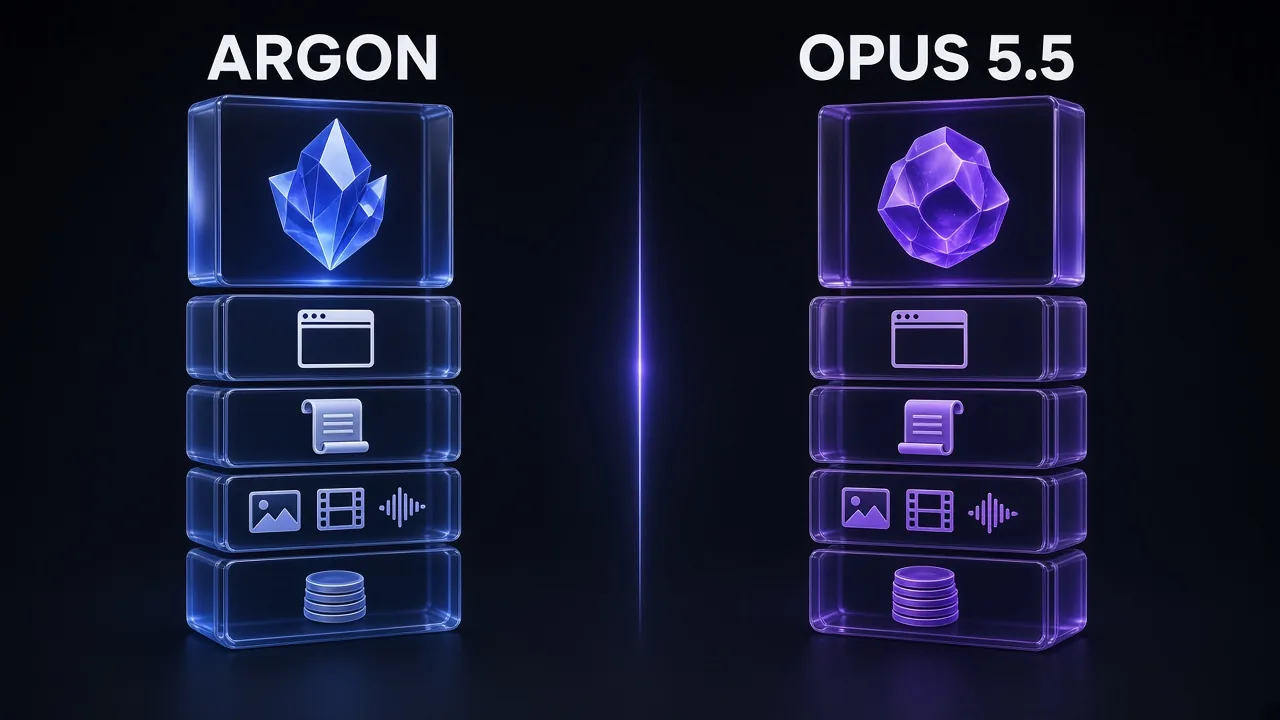
Two rows matter more than they look. First, output length: Argon's unified 1M window means a single response can run far past 64K tokens if you use background execution, which Google pitches for multi-file diffs, whole test suites and long proofs. Opus 5.5 caps a normal response at 128K. Second, input types: Argon takes video and audio natively; Opus 5.5 takes text and images. If your input is a meeting recording or a screen capture, Argon wins by default (with Claude you would extract frames and a transcript first, as in our guide to editing videos with Claude).
API Pricing: Half Price Until December, Then Even
| Per 1M tokens (USD) | Gemini 4 Argon (to 30 Nov 2026) | Gemini 4 Argon (from 1 Dec 2026) | Claude Opus 5.5 |
|---|---|---|---|
| Input | $2.00 | $4.00 | $4.00 |
| Output (incl. thinking) | $10.00 | $20.00 | $20.00 |
| Cached input | $0.10 (implicit) | $0.20 (implicit) | $0.20 cache read |
| Cache writes | None (implicit caching) | None (implicit caching) | $5 (5-min) / $8 (1-hour) |
| Batch | $1.00 input | $2.00 input | 50% off: $2 / $10 |
| Faster tier | Priority inference available | Priority inference available | Fast mode: $8 / $40, up to 2.5× faster |
A worked example: an agent step that reads 200,000 tokens and writes 20,000 costs $1.20 on Opus 5.5 ($0.80 + $0.40). On Argon it costs $0.60 until 30 November, then the same $1.20. The list price is the smaller half of the story, though. Artificial Analysis measured Argon at 62K output tokens per task against 119K for Opus 5.5 on its index, and put the cost per task at $1.99 versus $5.98. Even at equal December prices, a model that writes half as many tokens costs roughly half as much on output-heavy work, if that efficiency holds on your workload.
Anthropic's counter is caching. Cache reads are $0.20 per million on Opus 5.5, and Anthropic says cached reads make up most of the cost of agentic and coding work. Argon also discounts cached input by 95%, but only through implicit caching, so you can't pin a prompt prefix the way Claude's explicit cache lets you. Our Claude Code API pricing guide shows how much caching changes a real Claude bill.
Pro tip: Argon bills thinking tokens as output, and Google warns it "can spend more of the limit on thinking than earlier models". Start at thinking_level: "medium", and only move to high for the tasks that fail.
Consumer Plans: Which Subscription Gets You Which Model
- Gemini 4 Argon is in the Gemini app and AI Mode in Search for Google AI Pro ($19.99 a month in the US) and Google AI Ultra (from $99.99 a month, with a $199.99 tier for 20× Pro's limits). Antigravity, Google's agent-first coding tool, gets Argon on Ultra. The cheaper Google AI Plus plan ($4.99) doesn't list Argon, and the free API tier doesn't include it.
- Claude Opus 5.5 is on Claude Pro ($17 a month billed annually, $20 monthly), Max (from $100 a month), Team and Enterprise, and in Claude Code on those plans. Our Claude pricing breakdown covers the usage limits on each plan.
At the entry level they're priced almost the same: about $20 a month gets you either flagship in chat. The difference is coding agents. Claude Pro includes Claude Code with Opus 5.5, while Google keeps Argon in Antigravity for Ultra subscribers.
Benchmarks: What Each Company Reports
Honest answer: there's no neutral scoreboard yet. Google's model card compares Argon against Opus 5.5 directly; Anthropic's launch post predates Argon and compares Opus 5.5 against other models. The table below takes Google's head-to-head numbers as published, so read it as Google's selection of benchmarks.
| Benchmark (Google's model card, Oct 2026) | Gemini 4 Argon | Claude Opus 5.5 |
|---|---|---|
| Vals Index (knowledge work) | 68.9% | 67.0% |
| AutomationBench | 51.3% | 42.5% |
| Vals Finance Agent v2 | 65.4% | 58.6% |
| Harvey's Legal Agent Benchmark | 19.6% | 3.8% |
| DeepSWE v1.1 (agentic coding) | 77.9% | 74.2% |
| FrontierSWE v2 | 55.0% | 62.3% |
| Vibe Code Bench | 91.9% | 90.3% |
| Terminal-bench 4.0 | 57.4% | 66.4% |
| PostTrainBench (ML engineering) | 45.3% | 49.3% |
| Terminal-Bench Science 0.1 | 57.6% | 63.3% |
| LABBench 2 | 88.8% | 73.1% |
| RiemannBench (math) | 76.0% | 69.6% |
| GraphWalks up to 128K (long context) | 99.7% | 90.6% |
| GraphWalks 256K to 1M | 84.2% | 66.8% |
| Agent's Last Exam (computer use) | 39.5% | 38.2% |
| Chartography (multimodal) | 71.6% | 66.3% |
| LVBench (long video) | 91.7% | 83.7% |
| CWE-bench v1 (cybersecurity) | 68.0% | 67.0% |
Where each model leads on Google's table
Selected benchmarks, Gemini 4 Argon vs Claude Opus 5.5
- Gemini 4 Argon
- Claude Opus 5.5
Source: Google DeepMind Gemini 4 Argon model card, October 2026
Even on Google's own table, Opus 5.5 wins four of the eighteen rows, and all four are terminal and engineering work: Terminal-bench 4.0 (by 9 points), FrontierSWE v2, PostTrainBench and Terminal-Bench Science. Argon's biggest leads are legal agents, long-context retrieval past 256K tokens, LABBench and long video.
Anthropic's numbers for Opus 5.5
Anthropic's launch table (adaptive thinking at max effort unless noted) reports Opus 5.5 at 66.4% on Terminal-Bench 4.0 (at xhigh effort), 54.4% on FrontierCode v1.1, 57.8% on CursorBench 4.0, 1846 on GDPval-AA v2.1, 67.7% on Humanity's Last Exam with tools, 81.8% (partial) on OSWorld 2.1 and 89.0% on Chartography with tools. There's no Argon column, because Argon wasn't public yet.
Where the two sources disagree
Three Opus 5.5 scores appear in both tables with different values, which tells you how much harness and settings matter:
- AutomationBench: 42.5% in Google's table, 40.0% in Anthropic's (Anthropic notes Zapier ran it and counted safeguard interventions as failures).
- Terminal-Bench Science 0.1: 63.3% in Google's table, 58.7% in Anthropic's.
- Chartography: 66.3% in Google's table, 89.0% "with tools" in Anthropic's. The tools setting likely explains most of that gap.
Terminal-Bench 4.0 is the one shared number that matches exactly (66.4%). So treat a 2-3 point gap on any single row as noise, and look at patterns instead.
The independent view: Artificial Analysis
Artificial Analysis runs its own tests on both models (Argon at high thinking, Opus 5.5 at max effort). As of 14 October 2026 it scores Opus 5.5 ahead on its Intelligence Index (58 vs 53), GDPval-AA (1866 vs 1624), Terminal-Bench 4.0 (60% vs 57%), Humanity's Last Exam (61% vs 57%) and its long-context reasoning test AA-LCR (85% vs 80%). Argon leads its AutomationBench run (78% vs 70%). Running the whole index cost $2,407 on Argon and $8,708 on Opus 5.5, at Argon's introductory prices.
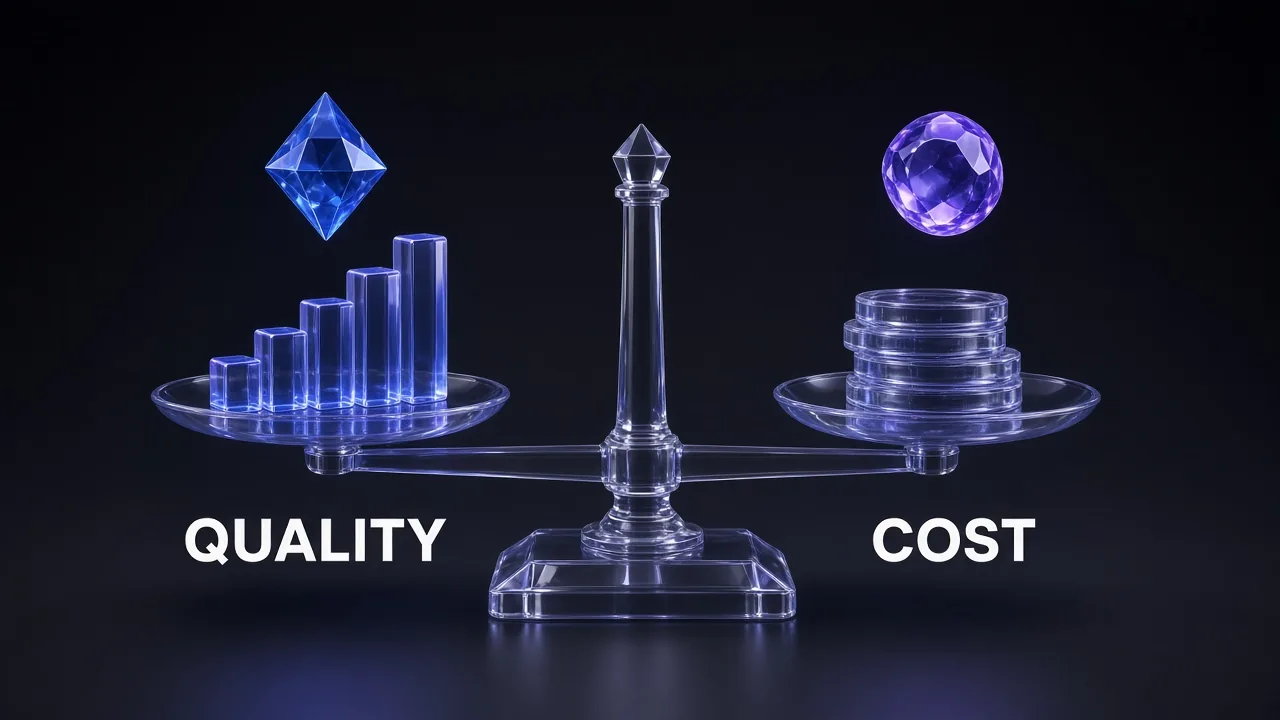
Put the three sources together and a consistent picture emerges: Opus 5.5 is slightly stronger on hard, general reasoning and terminal coding, Argon is close behind at a fraction of the cost, and Argon pulls clearly ahead once inputs get very long or very visual.
Strengths by Use Case
Coding
Split decision. Opus 5.5 leads the terminal-heavy benchmarks on Google's own table (Terminal-bench 4.0, FrontierSWE v2), and Anthropic recommends it as a "daily driver" for production-ready code. Argon leads DeepSWE v1.1 and Vibe Code Bench, and Google says Argon in Antigravity raised agentic code submissions inside Google by more than 35% while cutting rollbacks by nearly a third (an internal, Google-reported figure). Argon's long decode also suits one-shot outputs like full test suites. If you live in a terminal with Claude Code, Opus 5.5 is the safer pick; if you want big multi-file outputs cheaply, Argon. For ready-made coding briefs, our 25 coding prompts transfer to either model with small edits.
Agents and automation
Argon leads AutomationBench in both Google's table and Artificial Analysis's run, and it leads Agent's Last Exam narrowly. Opus 5.5 leads OSWorld 2.1 in Anthropic's table (Argon has no published score there) and is the model Anthropic tunes Claude Code and its agent tooling around. Note the breaking changes if you're upgrading from Opus 5: thinking can't be disabled and forced tool use now returns an error.
Writing and knowledge work
Argon edges the Vals Index (68.9% vs 67.0%) and leads finance and legal agent benchmarks in Google's table. Opus 5.5 leads GDPval-AA, a test of finished professional deliverables, in Artificial Analysis's run by a wide margin (1866 vs 1624). For polished long-form writing, Claude has the stronger track record; for structured finance and legal analysis, Google's numbers favour Argon. Test both on your own documents.
Multimodal
Argon, clearly. It takes video, audio and PDF natively, offers agentic video understanding, and leads LVBench (91.7% vs 83.7%) in Google's table. Opus 5.5 takes text and images only.
Long context
Both advertise 1M tokens, but Google's GraphWalks numbers show the gap widening as context grows: 99.7% vs 90.6% up to 128K, then 84.2% vs 66.8% from 256K to 1M. Artificial Analysis's AA-LCR test points the other way (Opus 85%, Argon 80%), so the honest read is that Argon is stronger at retrieval across huge inputs on Google's test, not that Opus can't use long context. Either way, context discipline still beats raw window size; see our context engineering guide.
Availability and Platform Lock-In
- Gemini 4 Argon: paid tier of the Gemini API, Google AI Studio and Android Studio, Gemini for business, Google Antigravity (Ultra and enterprise) and the Gemini app and AI Mode (Pro and Ultra). It uses Google's newer Interactions API, and long decode needs background execution.
- Claude Opus 5.5: Claude API, Amazon Bedrock (
anthropic.claude-opus-5-5), Claude on Google Cloud, Microsoft Foundry and Claude Platform on AWS, plus the Claude apps and Claude Code. Anthropic commits to keeping it available until at least 22 September 2027.
If you're on AWS or Azure, Opus 5.5 is the one you can use through your existing cloud account. If you're on Google Cloud, Claude runs there too, alongside Google's own Gemini for business platform.
Which One Should You Pick?
| If you need… | Pick | Why |
|---|---|---|
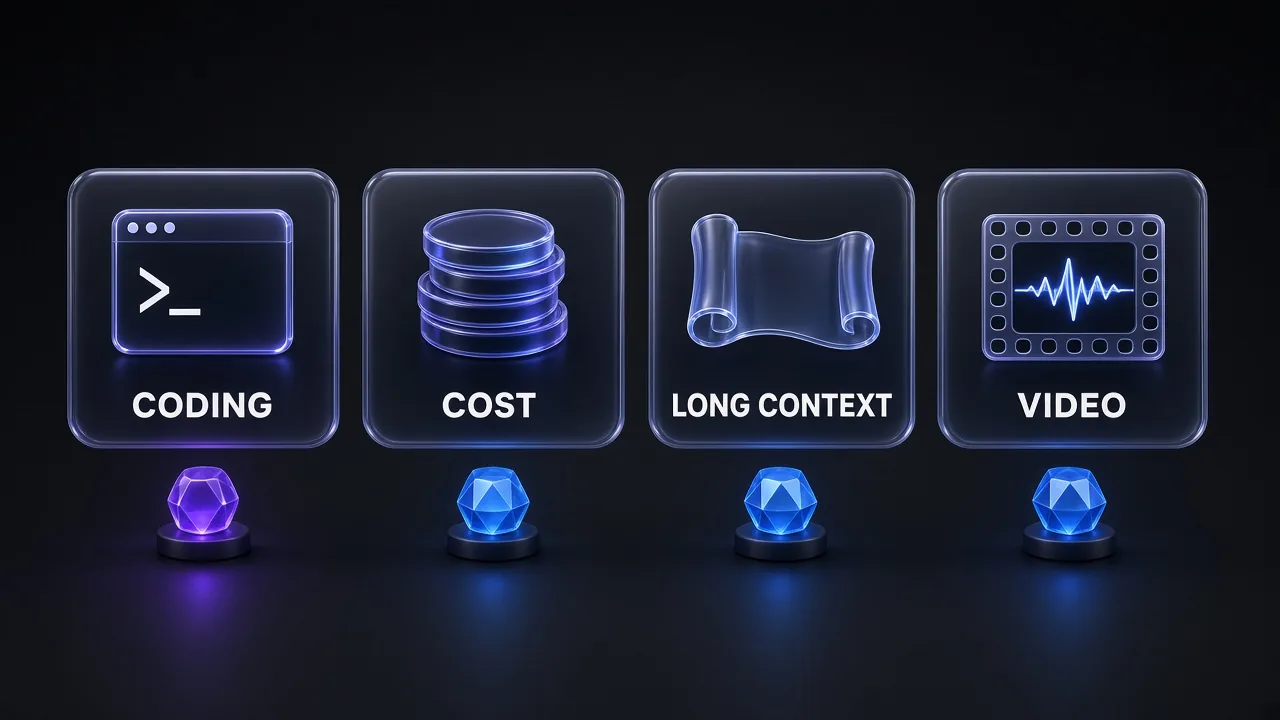
| Terminal coding agents, Claude Code workflows | Claude Opus 5.5 | Leads Terminal-bench 4.0 and FrontierSWE v2 on Google's table, and Terminal-Bench 4.0 in Artificial Analysis's run |
| The lowest cost per task right now | Gemini 4 Argon | Half the token price to 30 Nov, and about half the output tokens per task (Artificial Analysis) |
| Video, audio or mixed-media inputs | Gemini 4 Argon | Native video/audio/PDF input; leads LVBench |
| Retrieval across 256K-1M tokens | Gemini 4 Argon | 84.2% vs 66.8% on GraphWalks (Google) |
| Very long single outputs (full suites, huge diffs) | Gemini 4 Argon | Long decode up to ~1M output tokens vs 128K |
| Polished professional deliverables | Claude Opus 5.5 | Leads GDPval-AA in independent testing |
| AWS Bedrock or Azure Foundry | Claude Opus 5.5 | Google doesn't list Argon on those clouds |
| Predictable caching costs | Claude Opus 5.5 | Explicit 5-minute and 1-hour prompt caching |
My take: for most teams the smart move this quarter is to run both. Route bulk, long-context and multimodal work to Argon while its introductory price lasts, and keep Opus 5.5 for terminal agents and final-quality output. Re-check the maths on 1 December, when Argon's price doubles.
Copy-Ready Prompts to Test Them Yourself
Benchmarks are someone else's workload. These six prompts let you compare the two on yours. Run each one on both models with the same inputs, at Argon's medium thinking level and Opus 5.5's default effort, and compare the result, the time taken and the tokens billed.
Real-Repo Bug Fix Test
You are working in this repository: [PASTE FILE TREE AND RELEVANT FILES OR CONNECT THE REPO].
Bug report: [PASTE ISSUE TEXT, INCLUDING STEPS TO REPRODUCE].

1. Explain the root cause in under 120 words, citing file and line.
2. Write the smallest fix as a unified diff.
3. Add or update one test that fails before the fix and passes after.
4. List anything you were unsure about instead of guessing.
Do not refactor unrelated code.
Long-Context Needle Test
I am attaching [N] documents totalling about [TOKEN COUNT] tokens: [ATTACH OR PASTE].

Answer these five questions. For each, quote the exact supporting sentence and name the document and section it came from. If the answer is not in the documents, say "not found" rather than inferring.
1. [QUESTION ABOUT A DETAIL NEAR THE START]
2. [QUESTION ABOUT A DETAIL IN THE MIDDLE]
3. [QUESTION THAT NEEDS TWO DOCUMENTS COMBINED]
4. [QUESTION ABOUT A NUMBER IN A TABLE]
5. [QUESTION WHOSE ANSWER IS NOT IN THE DOCUMENTS]
Agentic Planning Test
Goal: [ONE-PARAGRAPH BUSINESS GOAL, e.g. "migrate our newsletter from Mailchimp to a self-hosted tool without losing subscribers"].
Tools available: [LIST TOOLS OR APIS].

Before acting, produce:
1. A numbered plan with checkpoints where a human must approve.
2. For each step: the tool call you would make, the expected output, and how you'll verify it worked.
3. The three most likely failure points and your fallback for each.
4. A rollback plan.
Keep the plan under 400 words. Do not execute anything.
Professional Deliverable Test
Write a [2-page client memo / board update / product requirements doc] for [AUDIENCE] about [TOPIC], using only the facts in the attached notes: [ATTACH NOTES].

Requirements: an executive summary of three sentences, a recommendation with a clear rationale, a risks section with owners, and a one-table appendix. Match this tone: [PASTE A SAMPLE PARAGRAPH YOU LIKE]. Flag any claim you couldn't support from the notes.
Multimodal Chart and Screenshot Test
I am attaching [A CHART IMAGE / A DASHBOARD SCREENSHOT / A SCANNED TABLE].

1. Transcribe every data point you can read into a Markdown table.
2. State the single most important trend in one sentence.
3. Point out anything misleading in how the data is presented (axis, scale, missing labels).
4. Mark any value you are less than certain about with [?].
(For Gemini 4 Argon, also try the same task with a short screen recording or video clip of the dashboard.)
Cost and Token Efficiency Check
Complete this task: [PASTE A TYPICAL TASK FROM YOUR WORKLOAD].

After your answer, add a short section titled "Self-check" listing: the assumptions you made, what you would verify before shipping, and whether a shorter answer would have been just as useful.
(Run this on both models and record the input tokens, output tokens including thinking, total cost and time from each API's usage fields.)
The Verdict
Neither model wins outright, and anyone claiming otherwise is reading one vendor's chart. Claude Opus 5.5 is the slightly stronger all-rounder on independent tests and the clear choice for terminal coding agents and finished professional work, especially if you already use Claude Code, AWS or Azure. Gemini 4 Argon is the better buy for long documents, video and audio, very long outputs and cost-sensitive bulk work, and until 30 November it does that at half the token price. Run the six prompts above on your own tasks this month; the right answer depends far more on your workload than on any leaderboard.
Frequently Asked Questions
8 questions answered