Anime & MangaAnime Night Sky Scenery Wallpaper
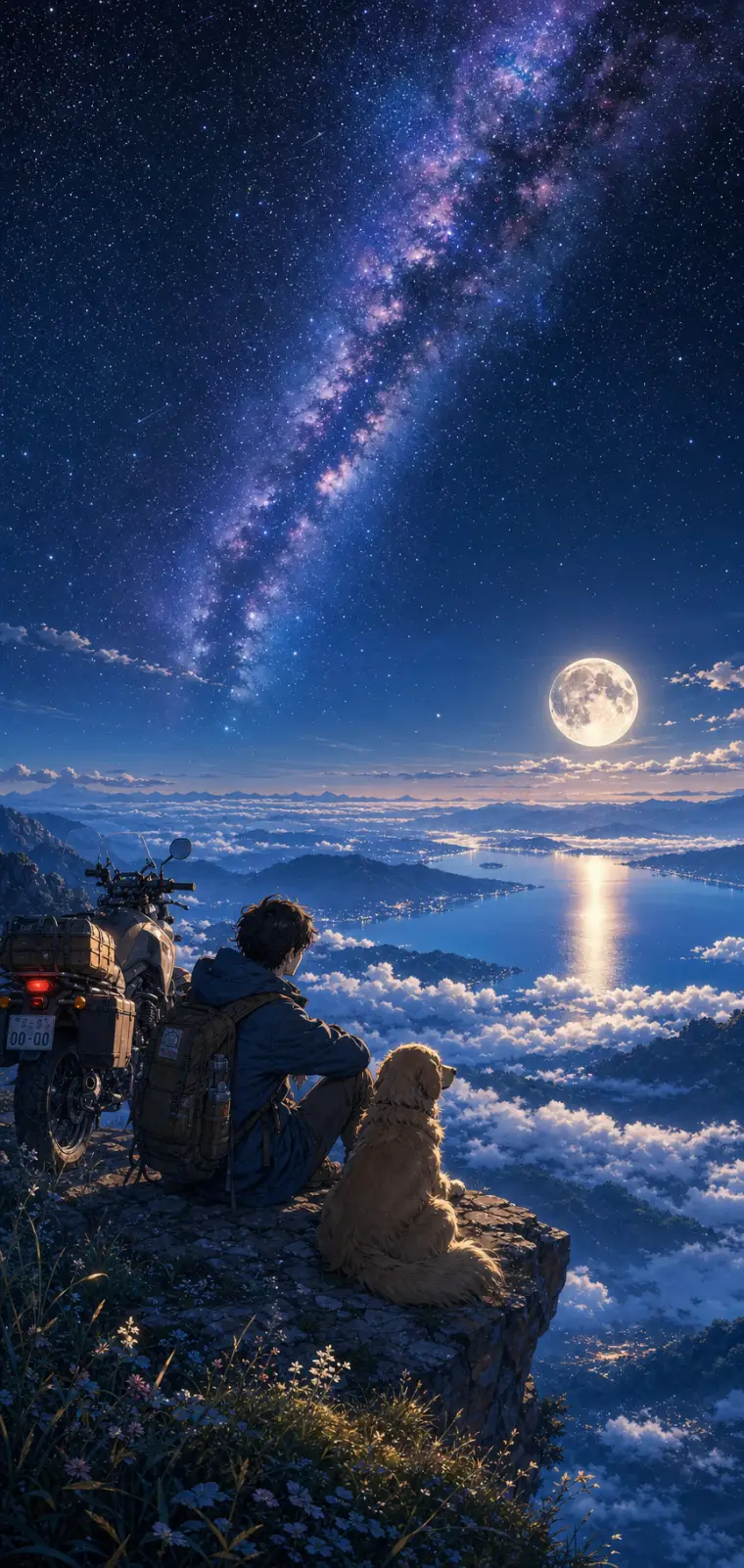
An anime scenery prompt that paints lush, cinematic wallpaper art in the Makoto Shinkai tradition — hyper-detailed skies, glowing light, saturated color. The template keeps that signature painterly anime style locked in while letting you rebuild the whole scene around it: the character and their companion, the vantage point they gaze from, the sky above them, and the little foreground details. The same dreamy aesthetic re-renders as a starry mountaintop, a sunset coastline, an aurora over snow or a neon city overlook. Every output lands as a tall phone-wallpaper-ready illustration, with the sky filling the upper two-thirds and distant silhouettes fading into haze. What you can customize Character & Companion — the figure in the lower third of the frame; the default is a lone traveler with a golden retriever and an adventure motorcycle Setting / Vantage — five viewpoints: Sea of Clouds, Ocean Coastline, Snowy Peaks, City Overlook and Grassy Hilltop Sky & Atmosphere — five skies that set the palette: Starry Milky Way & Full Moon, Golden Sunset, Aurora Borealis, Pastel Dawn and Stormy Twilight Foreground Details — the near-ground touches, such as wildflowers and pebbles catching the light on a rocky ledge Art Style — Makoto Shinkai Cinematic, Studio Ghibli Soft, Lo-fi Anime Chill or Vivid Modern Anime Best for Anime wallpapers, lo-fi playlist and video backdrops, Discord or profile banners, and key-visual concept art — creators, streamers and fans of the "lonely traveler under a huge sky" mood that dominates anime scenery feeds. Tips for the best results Keep the character to a simple silhouette-friendly setup — one or two figures and maybe a companion or vehicle — since the style shines when the tiny character is dwarfed by an enormous sky. The sky field is where to spend your detail. Match the sky and setting so their light agrees: a full-moon night over a sea of clouds, a golden sunset over the ocean. Avoid many detailed characters or close-up faces; this is a scenery style, not a portrait style. Avoid busy competing focal points and contradictory lighting between sky and ground — one dominant light source keeps the scene coherent.