The PromptsRush journal
AI ToolsFLUX 3 Max Video: Speed, Keyframes & Price (Promo Ends Nov 7)
FLUX 3 Max on fal is $0.0425/s at 720p through 7 Nov 2026 UTC, then 50% off through 22 Nov. Speed claims, keyframes (up to 10), pricing table vs Kling, HeyGen Video and Pika, plus where ImagineArt hosts Max.
Advertisement
Short version: FLUX 3 Max Video on fal is still on the 75% launch promo through 7 November 2026 (UTC) — $0.0425 per second at 720p and $0.0725 at 1080p. From 8 November 00:00 UTC the discount steps to 50% ($0.085 / $0.145), then list rates of $0.17 / $0.29 resume on 23 November. A free playground weekend (up to five 15-second 720p clips a day) also runs through Monday 9 November 12:00 PM PST. If you were waiting for a cheap day to try keyframes-to-video, today is that day.
Everything below is from fal's launch post, the FLUX 3 Max product page, the live text-to-video, image-to-video and keyframes-to-video endpoints, plus Black Forest Labs' FLUX 3 Video page — all re-checked on 7 November 2026. We have not run our own generations for this post, so there are no "we tested" claims. For the rest of a practical scene stack, pair this with our HeyGen Video explained guide and the best AI video stack.
FLUX 3 Max Video at a Glance
| Spec | Detail |
|---|---|
| What it is | fal Research post-trained video model on Black Forest Labs' FLUX 3 |
| Where it runs | fal only (playground, sandbox, API, fal Agent) — not on the BFL API |
| Endpoints | …/text-to-video, …/image-to-video, …/keyframes-to-video |
| Clip length | 5–20 seconds (1-second steps; default 5 s) |
| Resolution | 720p default; optional 1080p |
| Audio | Optional native audio (on by default) |
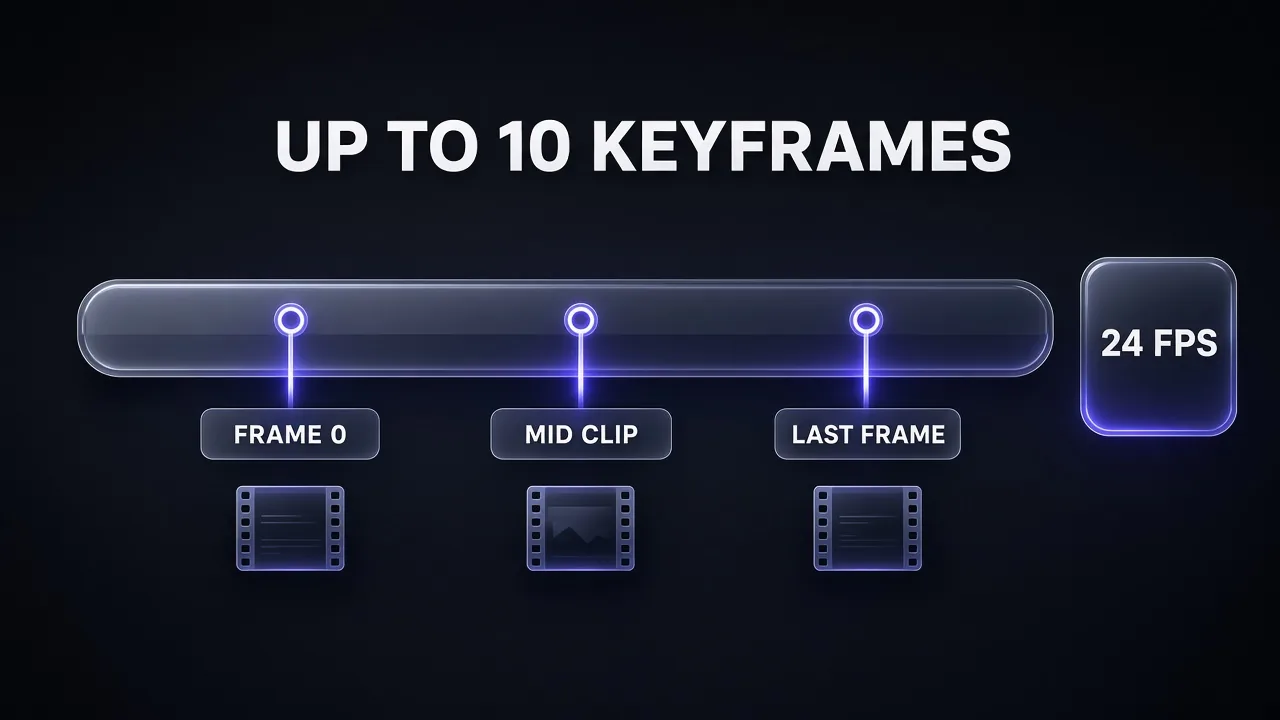
| Keyframes | Up to 10 images pinned by frame_index on a 24 fps timeline |
| I2V extras | Start image + optional ending frame |
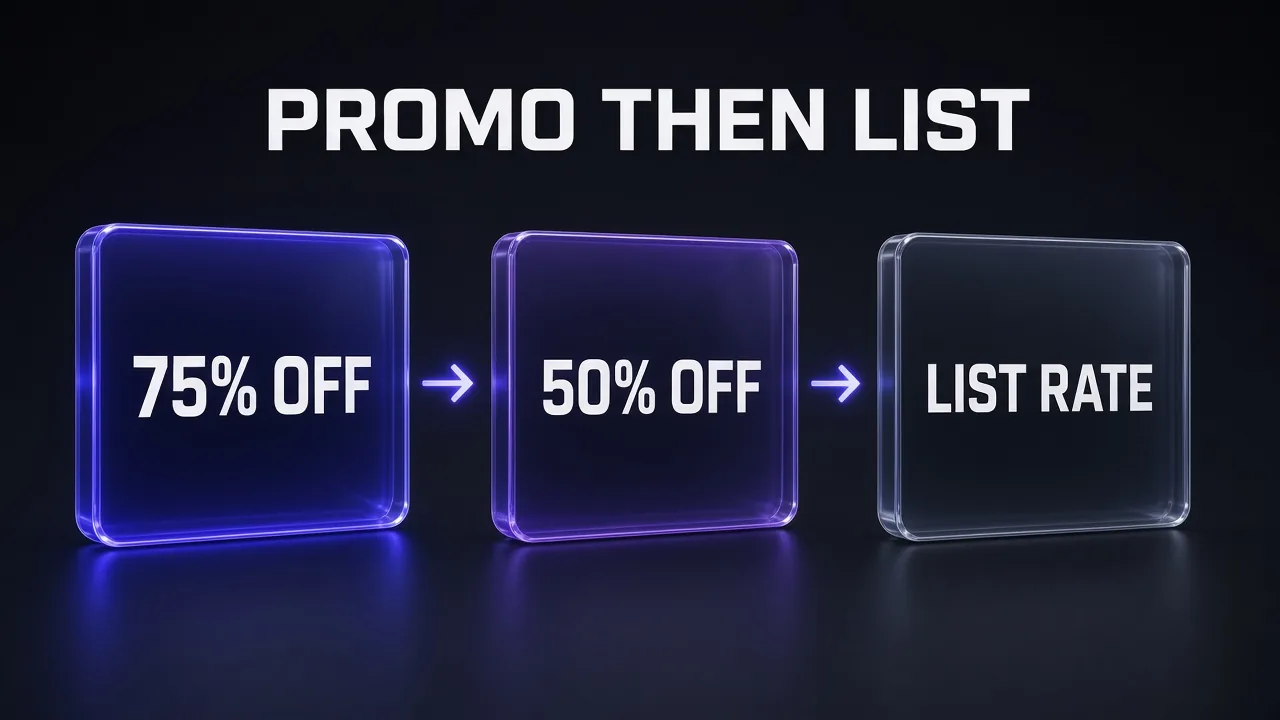
| Promo (through 7 Nov UTC) | $0.0425/s @720p · $0.0725/s @1080p (75% off) |
| 50% window (8–22 Nov UTC) | $0.085/s @720p · $0.145/s @1080p |
| List (from 23 Nov UTC) | $0.17/s @720p · $0.29/s @1080p |
| Quality claim | Joint #1 on Artificial Analysis preliminary I2V (Elo 1,139) |
| Speed claim | ~12.45 s to generate a 10 s clip (fal product / launch post) |
A 10-second 720p take at today's promo rate is $0.425. The same clip at list is $1.70. That gap is the whole reason this post is dated 7 November.
What FLUX 3 Max Video Is
FLUX 3 Max is not a separate foundation model. Black Forest Labs ships FLUX 3 Video on its own API (draft mode, keyframes, extend, up to UHD). fal Research then post-trains that FLUX 3 base — the same pattern they used for H3 Max on MiniMax H3 — and serves the result as FLUX 3 Max on fal's inference stack. BFL's own docs are explicit: Max lives at fal; it is not an endpoint on api.bfl.ai, the BFL MCP server or the BFL Playground.
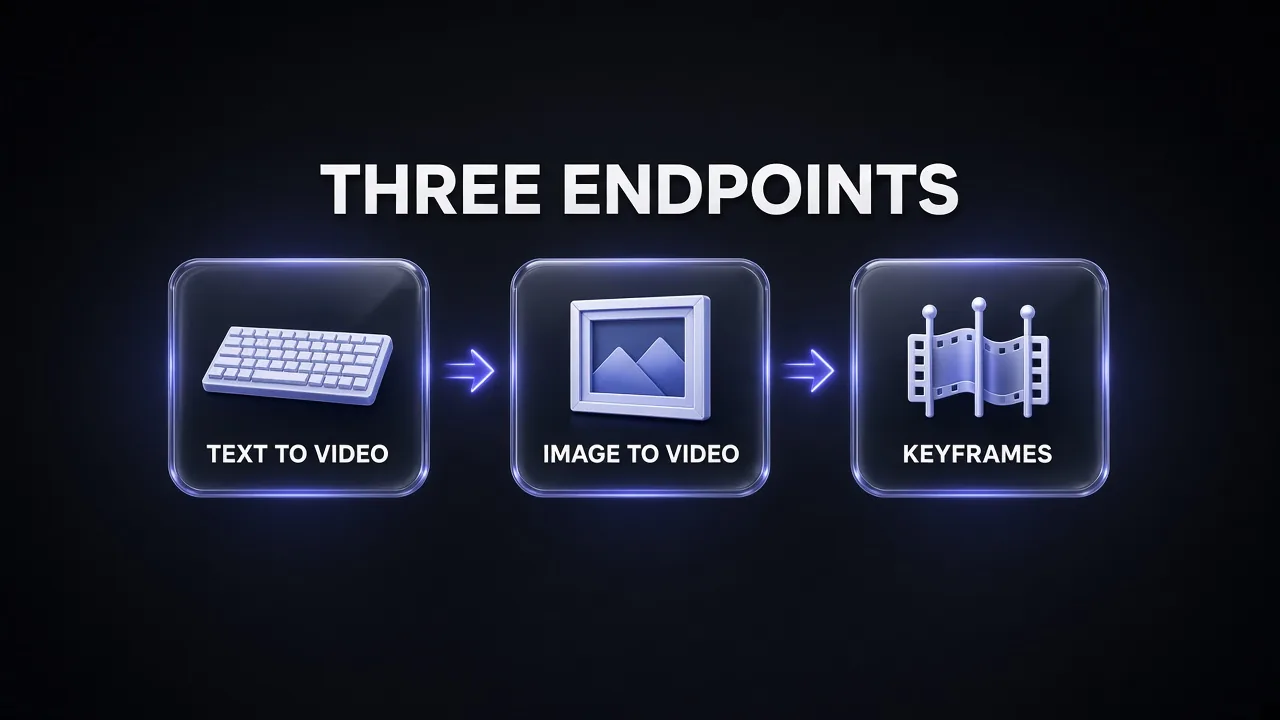
On fal you get three creative modes. Text-to-video builds a scene from a written brief. Image-to-video locks the opening frame (and optionally the last) while the prompt drives motion. Keyframes-to-video pins up to ten stills across the timeline so you can storyboard a product open, a camera push or a pose change without hoping the model invents every beat. All three share the same post-trained weights, 5–20 second length and 720p/1080p options. If you are already comparing scene models for a full pipeline, our Kling 4.0 vs Wan 3 matchup sits next to this on the shelf.
Honest framing: fal's Artificial Analysis number is a preliminary image-to-video arena score (Elo 1,139, tied with Seedance 2.5; MiniMax H3 sits at 1,141 with an overlapping confidence interval). Rankings move. Treat "joint #1" as a published vendor claim, not a permanent leaderboard lock.
Speed, Keyframes and Features That Matter
The feature that sells Max is latency. fal's launch post clocks a 10-second video at 12.45 seconds of generation time versus 277.80 seconds for Seedance 2.5 in the same benchmark setup — roughly 22× faster on the product page (26.5× in the blog write-up). Against base FLUX 3, the same 10-second job drops from 126.44 seconds to 12.45. The model pages also quote "~11 seconds" / "more than 25×" for a slightly different wording of the same idea. Actual wall-clock time will vary with resolution, reasoning level and queue load; none of these numbers are our stopwatch. For character-locked shots where Max is the plate and Kling holds identity, see keeping characters consistent in Kling.
Keyframe control is the other differentiator for production briefs. You place images at unique frame_index values on a 24 fps grid (max index = duration × 24), then write a prompt that describes the motion between those pins. fal's docs are clear that keyframes guide milestones — they do not freeze every interpolated frame. Image-to-video is simpler when you only need a first frame plus an optional last frame.
Other controls worth knowing before you budget:
- Aspect ratios: Auto, 21:9, 2:1, 16:9, 4:3, 1:1, 3:4, 9:16.
- Audio: generated by default; can be disabled.
- Reasoning: low or high (high default) — higher effort costs more wall time.
- Seed: optional; omit for a random take.
- Commercial use: fal's FAQ says API outputs can be used commercially under fal's terms.
Pro tip: Draft at 5–8 seconds and 720p while you hunt for the right camera move. Extend duration and flip 1080p only after the motion and audio beat read correctly — every second is billed.
FLUX 3 Max Pricing: Promo vs List
Billing is per second of output video, same rate for text-to-video and image-to-video on fal. No subscription seat fee on the model itself — you top up fal credits and pay as you go. The schedule below is copied from the live T2V/I2V endpoint billing text on 7 November 2026:
| Window (UTC) | 720p | 1080p | 10 s @720p |
|---|---|---|---|
| Through 7 Nov (75% off) | $0.0425/s | $0.0725/s | $0.425 |
| 8 Nov 00:00 – 22 Nov (50% off) | $0.085/s | $0.145/s | $0.85 |
| From 23 Nov (list) | $0.17/s | $0.29/s | $1.70 |
Worked examples at the current 75% rate: 5 s / 720p ≈ $0.21; 20 s / 1080p ≈ $1.45. At list those become $0.85 and $5.80.
Two caveats. First, the keyframes endpoint page still describes a hard cut from the 75% promo to list after 7 November and does not mention the 50% middle window — treat the T2V/I2V schedule as the authoritative card until fal aligns the copy. Second, the product page is running a separate free weekend (6 Nov 9:00 AM PST → 9 Nov 12:00 PM PST): three free videos a day signed out, four signed in, five with a verified card; each free clip up to 15 seconds at 720p with sound, on the playground and sandbox (and fal Agent once signed in). API calls stay metered. Free daily slots refill 24 hours after your first free gen, not at midnight.
For context, Black Forest Labs' own FLUX 3 Video list on the model page is $0.06/s Draft HD, then $0.17 HD, $0.29 FHD, $0.40 QHD, $0.80 UHD for text/image-to-video — so Max's list 720p rate matches BFL's HD band, while Max's promo undercuts it hard. fal also lists sister model H3 Max at $0.08/s for 768p on the same product page. Dollar-per-second context for avatar-side work lives in our HeyGen Video pricing notes.
How to Use FLUX 3 Max (With Copyable Prompts)
On fal: open the playground or call blackforestlabs/flux-3-max/text-to-video (swap the suffix for image or keyframes). Pick duration, resolution, aspect ratio, audio on/off and reasoning level. For image-to-video, upload a start frame and optionally an end frame. For keyframes, supply up to ten images with distinct frame indices.
If you prefer a multi-model studio UI, ImagineArt currently lists Flux 3 Max for text-to-video and image-to-video. OpenArt hosts FLUX 3 (the BFL base family) with draft/enhance and editing — useful for FLUX workflows, but as of this check it does not name FLUX 3 Max as a separate model. For Max-specific speed and the fal promo meter, use fal or ImagineArt.
Prompt the way you would brief a DP: one subject, one clear action, camera body + move, light, and the sound you want (including "no music" when silence matters).
Coastal Tracking Shot (T2V)
A continuous tracking shot follows a cyclist through a quiet coastal town at sunrise. The camera moves alongside the bicycle as sunlight reaches the pastel buildings. She slows at an overlook and turns toward the sea. Soft wind, distant gulls and the bicycle's freewheel are audible. No logos, captions or watermarks. 10 seconds, 16:9, cinematic 35mm look.
Use that as a text-to-video starter, then lock a seed once the motion reads. For a product open with keyframes, pin a closed box at frame 0, a half-open lid mid-clip and an overhead hero at the last frame, then describe the camera push between them.
Turn a Brief Into FLUX 3 Max Shot List
You are a commercial director writing prompts for fal FLUX 3 Max (text-to-video, image-to-video, keyframes-to-video). Given my product, audience and platform, output 5 shot briefs. For each shot include: (1) mode (T2V / I2V / keyframes), (2) duration 5–12s, (3) one subject + one action, (4) camera + lens + move, (5) light/grade, (6) audio including "no music" unless I asked for a bed, (7) "no logos, brand names or printed words". If keyframes, list 3 frame milestones. Product: [PRODUCT]. Audience: [AUDIENCE]. Platform: [TikTok/Reels/YouTube].
FLUX 3 Max vs Kling, HeyGen Video, Pika H3 Flex
Same-day vendor cards, not a bake-off. Re-check each rate before you lock a budget — several of these still carry launch windows of their own.
| Model | Near-HD rate (vendor) | Typical length | Best fit |
|---|---|---|---|
| FLUX 3 Max (fal, today) | $0.0425/s @720p promo | 5–20 s | Fast iteration + keyframes on fal |
| FLUX 3 Max (fal, list) | $0.17/s @720p | 5–20 s | Same model after 23 Nov UTC |
| BFL FLUX 3 Video HD | $0.17/s (Draft $0.06) | ≤20 s | BFL API, draft→enhance, up to UHD |
| H3 Max (fal) | $0.08/s @768p | — | fal's other post-trained speedster |
| HeyGen Video | $0.03/s @768p | 5–30 s | Picture + sound, cheaper drafts |
| Kling 4.0 API | ~$0.157/s @720p | longer storytelling | Omni refs / story control |
| Pika H3 Flex API | $0.02/s @768p (listed) | 3–15 s | Cheap H3-family clips, stems |
My take: Max wins the "I need twenty takes before lunch" lane while the promo lasts. HeyGen Video still undercuts on raw $/s for simple plates. Kling remains the control tool when you need multi-reference storytelling. Timeline / code-driven motion is a different job; that is Remotion vs HyperFrames vs Claude Motion, not a per-second diffusion meter.
Who Should Use FLUX 3 Max (and Who Shouldn't)
Use it if you iterate scene plates in volume, care about keyframe storyboards, want near-real-time 10-second returns, and are fine living on fal's API (or ImagineArt's Max picker). The free weekend and the last day of 75% pricing make 7–9 November a rational window to burn through concept tests.
Skip it (for now) if you need a consistent talking presenter — that is still HeyGen Avatar territory (see the Avatar notes linked from our HeyGen Video post). Skip Max on BFL's API too: it is not there. If you only want BFL's draft→enhance path and UHD upscalers, stay on FLUX 3 Video at bfl.ai. If your deliverable is a finished YouTube chapter pack rather than a generated plate, start from repurposing YouTube with AI or editing with Claude instead of burning diffusion seconds.
Our Verdict
FLUX 3 Max is fal's speed-tuned take on FLUX 3 Video: joint-#1-tier I2V claims, ~12-second generation for a 10-second clip on fal's benchmarks, and three practical endpoints including keyframes. The commercial story today is the meter — $0.0425/s through end of 7 November UTC, then a 50% step-down week, then list at $0.17. Hosted Max also shows up on ImagineArt; OpenArt currently ships base FLUX 3, not Max.
Bottom line: if you have a brief to explore, burn the free playground slots and the remaining 75% seconds today. After 23 November, treat Max as a premium-speed option next to H3 Max and HeyGen Video, not as the default cheap draft model.
Keep Reading
Frequently Asked Questions
10 questions answered
frame_index on a 24 fps timeline. A text prompt directs the motion between those visual milestones. Keyframes guide the shot; they do not freeze every interpolated frame.