Loading model...
Best Nano Banana 2 prompts
124 prompts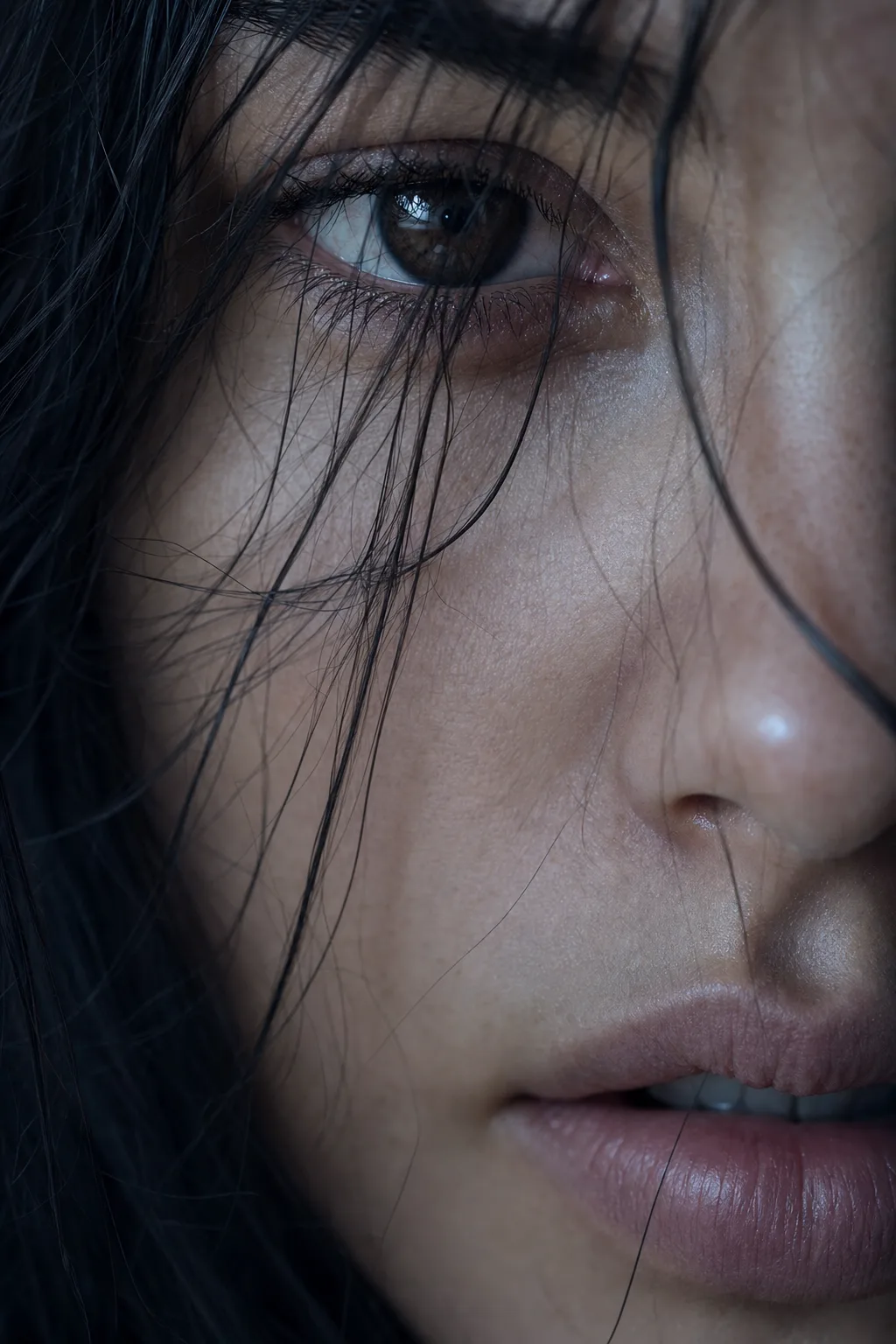
Image
Portrait & Character
Extreme Macro Portrait AI Prompt
A macro portrait AI prompt for extreme close-ups from your photo — razor-thin focus on the eye, pore-level skin detail, four crops and light grades. The template turns a reference photo into the kind of frame beauty campaigns and cinema title sequences are built on: a partial facial view at the closest possible macro distance, your identity held with zero deviation while the 100mm-macro rendering brings out pores, lashes and a crisp catchlight the original photo never showed. What you can customize Focal Crop — Eye Dominant with the far side of the face falling out of frame, Lips & Jawline, Both Eyes Band, or Profile Sliver. Lighting — Cool Cinematic, Golden Warmth, Rembrandt Shadow, or Clean Beauty. Skin Mood — Dewy Natural with no heavy makeup, Rain-Kissed droplets, Golden Shimmer on the cheekbone, or Matte Editorial. Detail Accent — Loose Hair Strands across the eye, Clean View, Tear Glint, or Freckles Forward. Reference Photo — required; the strict identity source for the whole frame. Best for Profile pictures with cinematic weight, beauty and skincare content, photography portfolio pieces, album and podcast cover art, and editorial mood boards. Tips for the best results Use a sharp, well-lit, front-facing photo — macro reconstruction amplifies whatever it is given. Avoid blurry or heavily filtered references, and avoid sunglasses entirely. Pick one accent per generation; stacking hair strands, tears and shimmer in one frame breaks the quiet intimacy that makes the format work. Nano Banana Pro holds identity at macro distances most faithfully; ChatGPT Image 2 is a strong alternative.
198 ViewsTemplate
Image
Product & Commercial
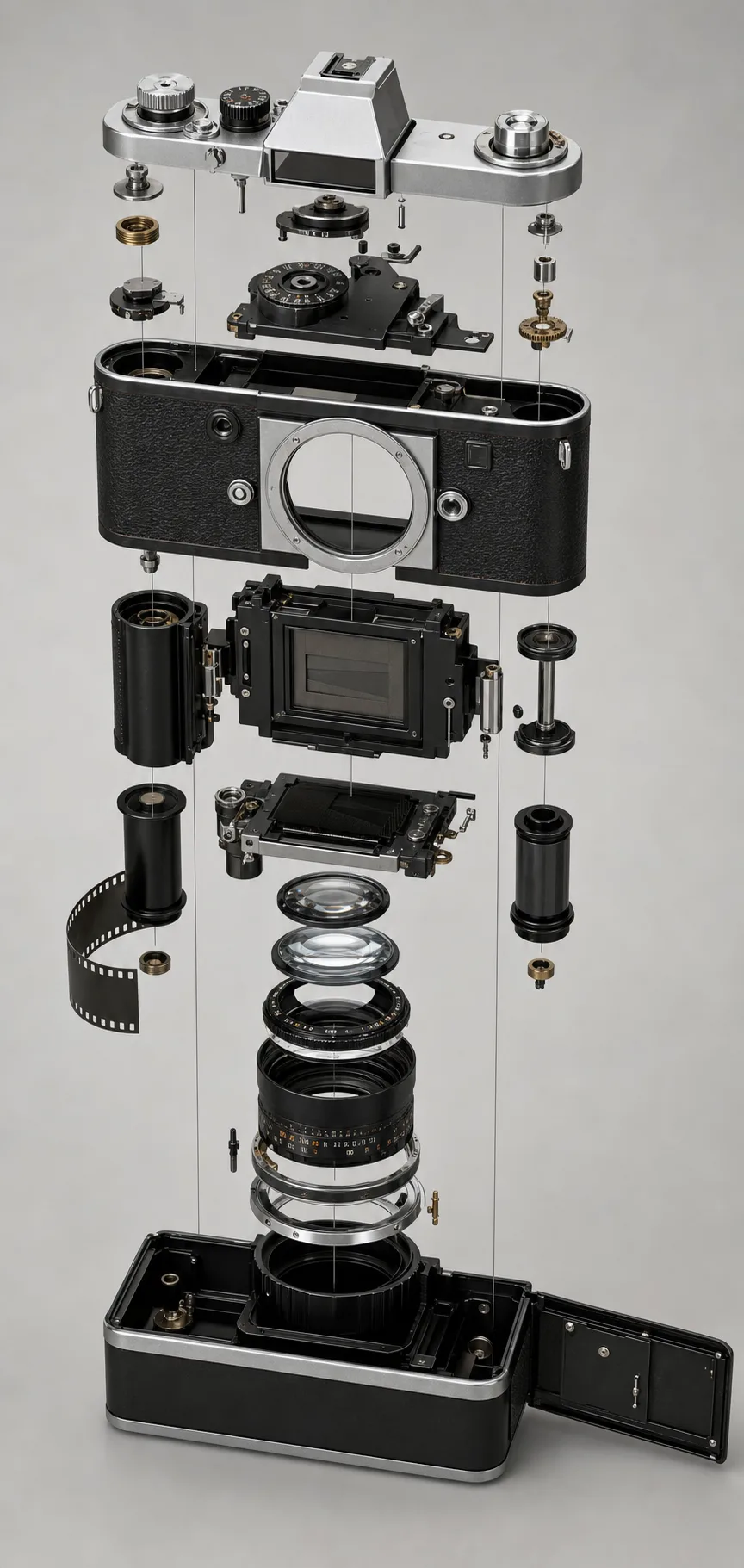
Exploded View Diagram AI Prompt
An exploded view AI prompt that disassembles any product photo into a floating-parts diagram — four styles from studio render to blueprint. Upload a photo of almost anything — a camera, sneaker, watch, headphone, coffee machine, even a burger — and the template separates it into its genuine components along a clean axis. Every part keeps the original's exact materials and finish, with the even spacing and alignment guides that make real industrial-design presentations read as engineered rather than scattered. What you can customize Diagram Style — Studio Product Render, Engineering Blueprint with fine linework, Retro Technical Manual with halftone shading, or Neon Hologram. Explosion Direction — Vertical Stack, Diagonal Axonometric at 45 degrees, Radial Burst, or left-to-right Assembly Order. Annotations — Clean with No Labels, Numbered Callouts with leader lines, Named Labels, or a slim Specs Panel. Background — Light Studio, Blueprint Blue with a faint grid, Matte Black with rim light, or Paper White. Reference Image — required; a clear photo of a single object whose design, materials and colors are preserved across every part. Best for Product designers and engineers presenting concepts, e-commerce brands making scroll-stopping product posts, tech reviewers and teardown channels, portfolio pieces, and educators explaining how things work. Tips for the best results Use a clear, well-lit photo of one object; avoid cluttered scenes with multiple products. Avoid soft organic subjects with no real parts — a pillow has nothing to explode. Start with the no-text annotation option on a new object; label accuracy improves once the part layout looks right. Nano Banana Pro reconstructs plausible internal parts from a single photo most convincingly; ChatGPT Image 2 is a strong alternative.
Image
Abstract & Artistic
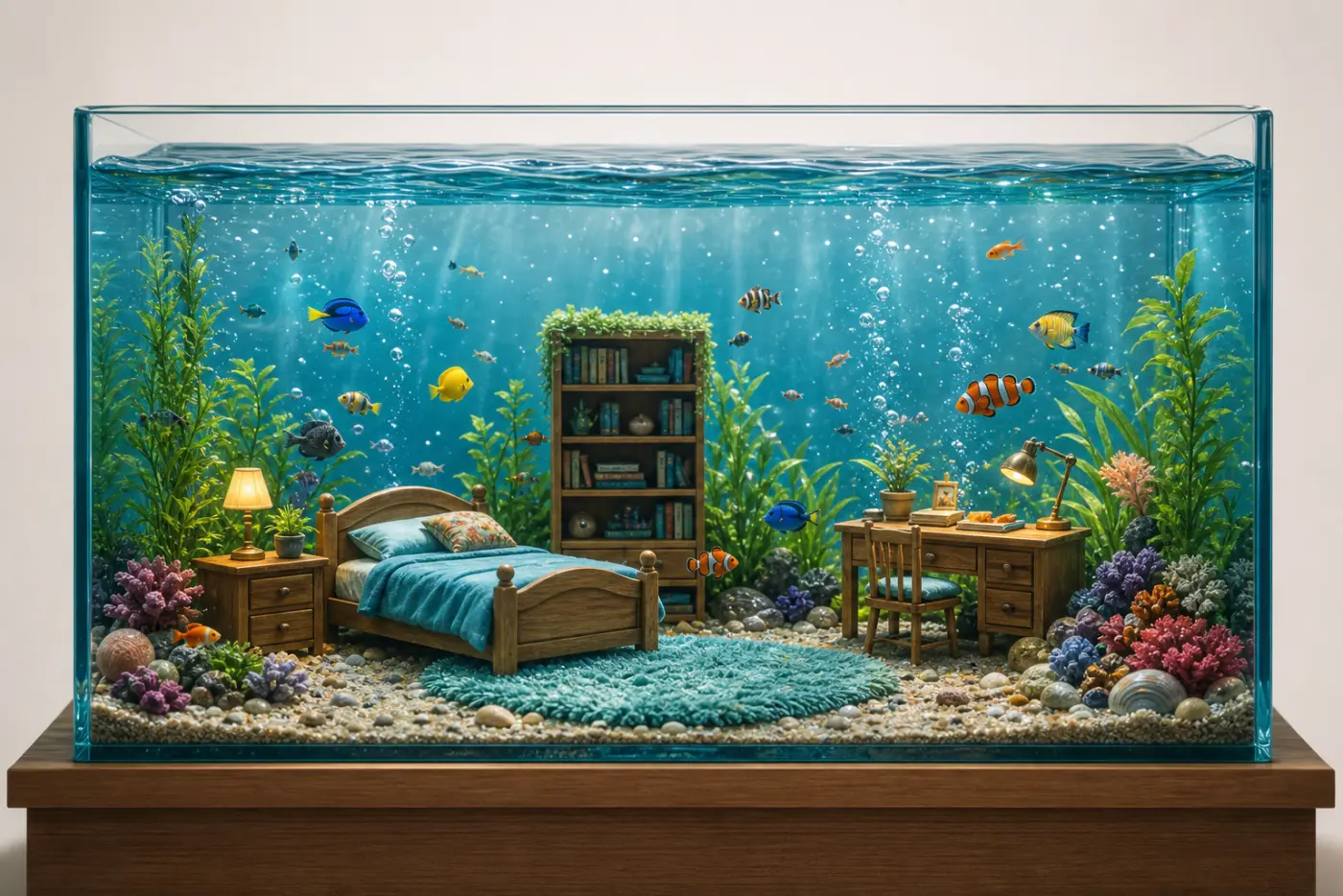
Aquarium Room From Photo
An aquarium room prompt that transforms a photo of any room into a magical underwater fish tank — furniture shrunk and submerged, fish swimming through. Upload a picture of a bedroom, living room or office and the template rebuilds it inside a glass aquarium: the recognizable furniture arranged on the sandy floor, colorful fish weaving between the pieces, bubbles rising and caustic light rays filtering down. The room's walls and ceiling are removed so only the submerged scene remains, and the same room can become a tropical reef, a calm freshwater tank, a glowing jellyfish scene or a moody deep-sea display. What you can customize Water Tone — five tones: Clear Blue, Tropical Teal, Warm Sunlit, Deep Sea, or Crystal Clear. Aquatic Life — Colorful Tropical Fish, Goldfish, Glowing Jellyfish, Exotic Reef Fish, or Betta & Guppies. Tank Style — Frameless Glass on Wood Stand, Rounded Fishbowl, Black-Rimmed Modern Tank, Vintage Brass Tank, or Cube Nano Tank. Aquascape Decor — Coral, Plants & Pebbles, Lush Green Planted, Minimal Sand & Rocks, Treasure & Shipwreck, or Neon Reef. Background — Clean Neutral, Soft Gradient, Cozy Room Corner, or Dark Showcase; plus the Room Photo upload the tank is built from. Best for A delightful, shareable reimagining of your space — a fun social post, a gift, a profile visual or a piece of playful wall art. Tips for the best results Upload a clear, well-lit photo taken from across the room so the furniture and layout read clearly — the tank is built from what it can see. Match the water tone and fish to the mood you want, and pick a decor and background that frame the tank cleanly. Cozy, characterful rooms with distinct furniture translate best. Avoid very dark or cluttered photos and tight close-ups that hide the room. Do not expect exact text or brand details to survive — the charm is the playful underwater reinterpretation, not a literal copy.
Image
Portrait & Character
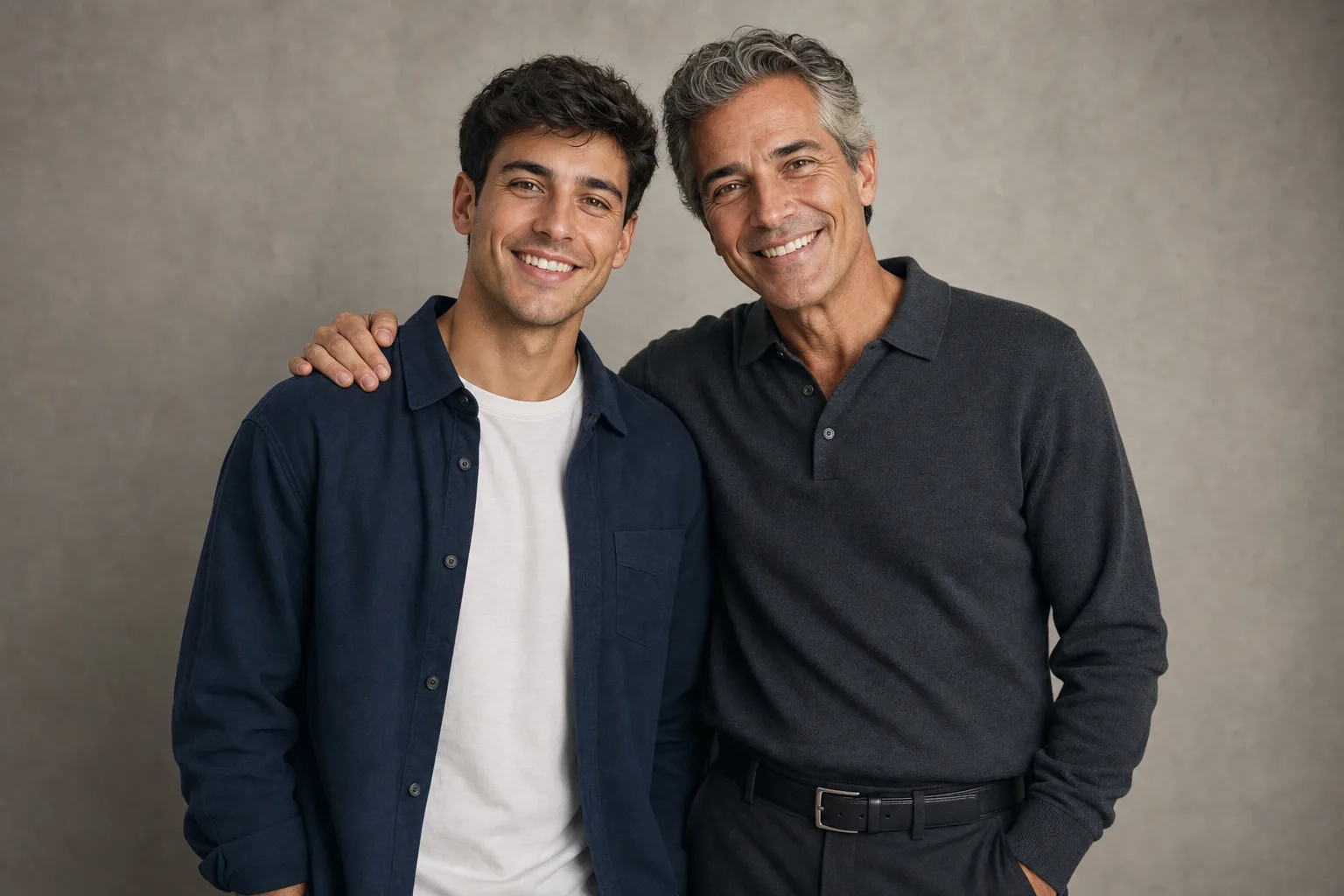
Meet Your Future Self AI Prompt
A future self AI prompt that puts you and your aged self in one photo — pick +10 to +50 years, the pose, the setting and the future wardrobe. The template stages the viral time-travel portrait: you exactly as you are in your reference photo, standing beside the same person decades on — same bone structure, same eyes, same smile, naturally aged with silvering hair and earned lines. Matched studio-quality light makes the composite read as one real photograph. What you can customize Years Ahead — +10 subtle, +20 settled, +30 silver-streaked, or +50 fully white-haired and wise. Pose — Heads Tilted Together, Arm Around Shoulder, Sharing a Laugh across time, or a Passing the Torch handshake. Future Wardrobe — Age-Appropriate Match that pairs with your current outfit, Same Outfit Aged, or Elegant Formal. Setting — Studio Portrait, Family Living Room with framed photos, Sunlit Park, or a softly blurred hint of your Life's Work. Reference Photo — required; one clear, front-facing photo in even light that the aging is built from. Best for Birthday and New Year posts, graduation and career-milestone content, motivational "letter to my future self" videos, retirement-planning and life-coach content, and gifts that make parents cry. Tips for the best results Good, even light on the reference helps the aging read as the same person. Avoid group photos, sunglasses or heavy makeup that hide the facial structure the aging is built from. Do not ask for a different pose and setting than the fields provide — the fixed emotional framing is what makes it moving rather than gimmicky. Nano Banana Pro holds identity across both ages most faithfully; ChatGPT Image 2 is a strong alternative.
Image
Abstract & Artistic
Isometric 3D Room Diorama
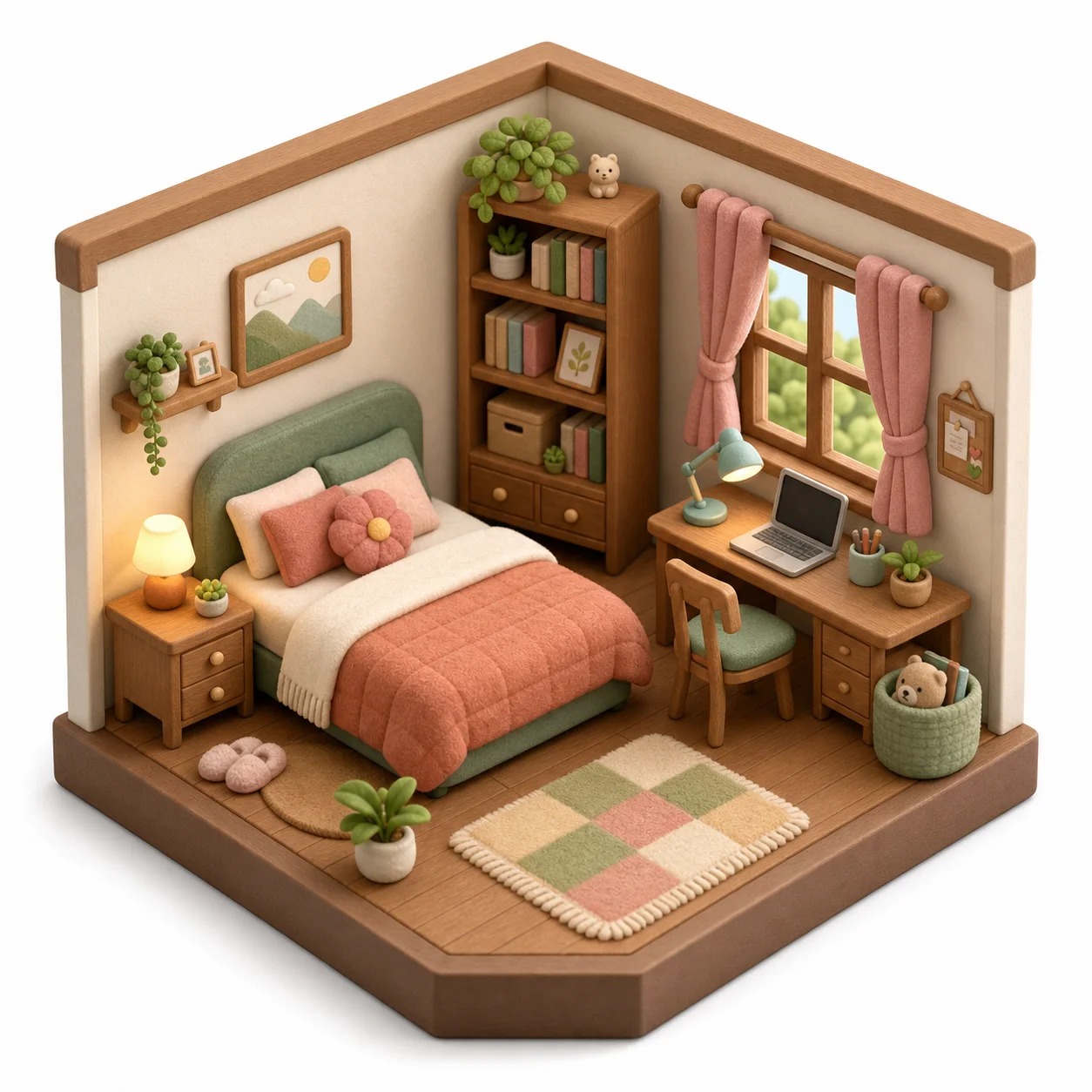
An isometric diorama prompt that turns a photo of any room into an adorable 3D miniature — the viral toy-like cutaway diorama, built from your own space. Upload a picture of a bedroom, living room, office or cafe and the template rebuilds it as a stylized orthographic diorama: the same layout and furniture reimagined as cute rounded miniatures in soft felt-and-wood textures, warm diffuse light and a cozy palette, centered on a clean background. The same room can become a felt toy set, a smooth low-poly model, a claymation scene or a LEGO-style build. What you can customize Diorama Style — five styles: Soft Felt & Wood Toy, Smooth Low-Poly, Claymation, LEGO-Style Build, or Paper Craft. Material Finish — Matte Felt, Smooth Matte Plastic, Natural Wood, or Glossy Ceramic. Color Palette — Cozy Pastels, Warm Earthy, Vibrant Playful, Muted Scandinavian, or Cool Calm. Detail Level — Add Cute Extra Props, Faithful & Minimal, or Add Tiny Characters; this controls how toy-like or refined it looks. Background — Clean White, Soft Pastel, Gradient Studio, or Dark Showcase; plus the Room Photo upload the diorama is built from. Best for Interior designers and realtors who want a delightful way to present a space, and anyone who wants a keepsake miniature of their room, a gift, a profile visual or a fun social post. Tips for the best results Upload a clear, well-lit photo taken from a corner so the layout and main furniture are visible — more of the room in frame means a richer model. Cozy, characterful rooms translate especially well. Avoid extremely cluttered or dark photos and tight close-ups that hide the room shape. Do not expect exact brand or text details to survive — the charm is the stylized reinterpretation, not a literal copy.
Image
Portrait & Character
16-Panel Expressions Grid
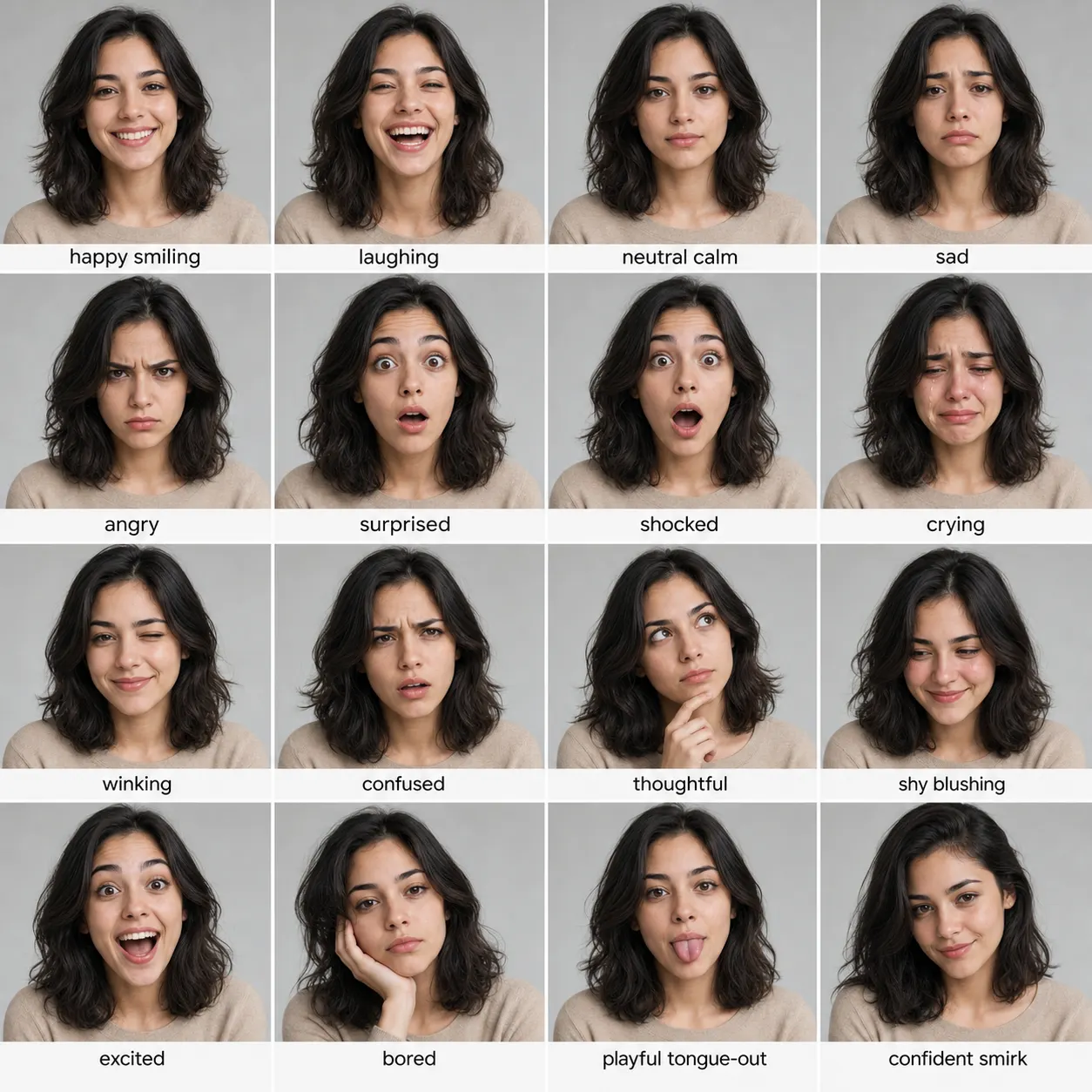
An expressions grid prompt that turns one photo into a clean 4x4 sheet of 16 panels — the same person, one emotion per panel, identity locked throughout. Upload a reference photo and the template renders a consistent expression sheet: happy, sad, angry, surprised and a dozen more, each in its own panel with matching framing and lighting so only the face changes. It is the reference-sheet look creators use for character design, emotion charts, reaction packs and profile-grid posts, generated in a single image. What you can customize Reference Photo and Subject Description — upload one clear front-facing photo so the person is preserved identically across all 16 panels, and describe hair, clothing and features alongside or instead of it The 16 Expressions — exactly which emotions appear and in what order, one short label per panel Art Style — five options: Photorealistic Studio, Anime / Manga, 3D Pixar-Style, Black & White and Comic / Cartoon Panel Framing and Background — Front Headshot, Close-Up Face or Head & Shoulders 3/4, on Neutral Grey, Clean White, Soft Gradient or Dark Studio Panel Labels — show a small emotion label under each panel, or faces only Best for Character designers and artists who need expression references, streamers and creators making reaction-image sets or sticker packs, and anyone who wants a fun "all my moods" grid of themselves. Tips for the best results Attach one clear, well-lit front-facing photo so the identity stays locked across all 16 panels; likeness quality follows the reference. Make every expression visibly distinct and avoid vague or duplicate entries. Match style and background to the use: clean studio for references, anime for character sheets. Keep labels short, since long text is where models misspell, and avoid busy backgrounds or cluttered, fine-detail outfits that are hard to keep identical across panels. Consistency across 16 faces is demanding, so regenerate if any panel drifts off-model.
Image
Fashion & Beauty
Mirror Selfie OOTD AI Prompt
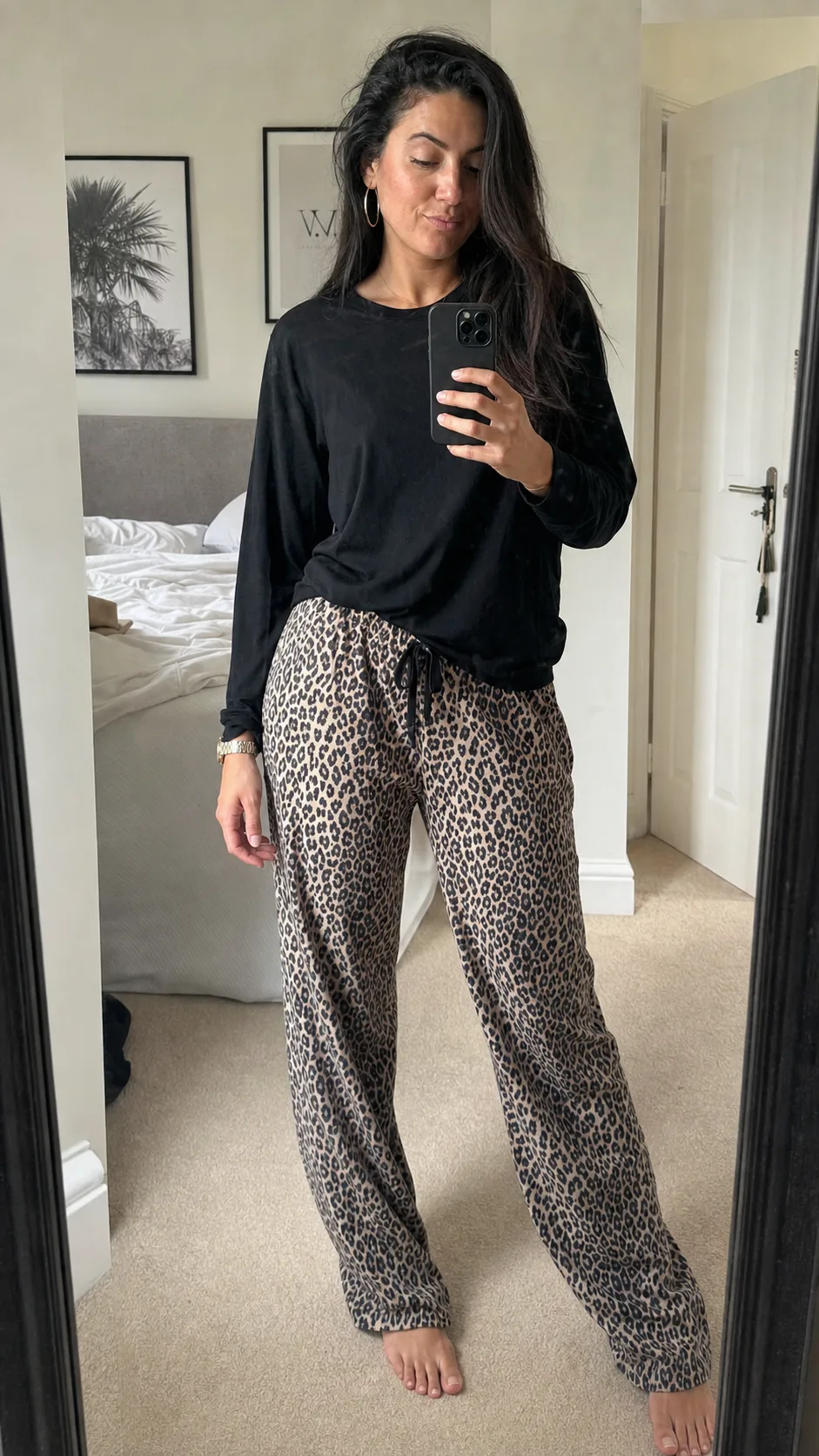
A mirror selfie AI prompt for OOTD fit checks — bedroom, hotel and fitting-room mirrors with phone-real texture, with or without your photo. The template recreates the outfit-check format exactly as it lives on Instagram and Pinterest: a full-length mirror, the phone visible in hand, a relaxed confident stance angled to show the fit, and the un-retouched realism of a photo taken in thirty seconds, mirror smudges included. It works two ways: attach a reference photo to keep your exact face and hairstyle while the outfit and scene restyle around you, or leave it empty and describe any subject. What you can customize Reference Photo (optional) — attach a clear photo to keep your face and hairstyle while the outfit and mirror scene change around you Subject & Outfit — the hero field; describe the fit head to toe, from lounge sets to full streetwear layers Mirror Setting — five options: Bedroom Mirror, Hotel Room with city windows, Boutique Fitting Room, Gym Mirror and vintage Hallway Mirror Lighting — four options: Soft Daylight, Warm Evening, y2k-style Phone Flash glare and Golden Hour through blinds Best for Fashion creators and everyday posters alike: daily OOTD posts, styling reel covers, wardrobe try-on carousels, resale listing photos with lifestyle energy, and Pinterest outfit boards. Tips for the best results Put the effort into the outfit description; it is the field that shapes the post most. Nano Banana Pro handles the reference-photo path and fabric texture best; ChatGPT Image 2 is a strong alternative. Describe only one full outfit per generation, since layered alternates confuse the drape. Skip studio-lighting requests that break the casual story. Leave poses out of your description entirely; the fixed fit-check stance is what makes the image read as authentic.
Image
Social Media
Aesthetic Outdoor Girl Photoshoot
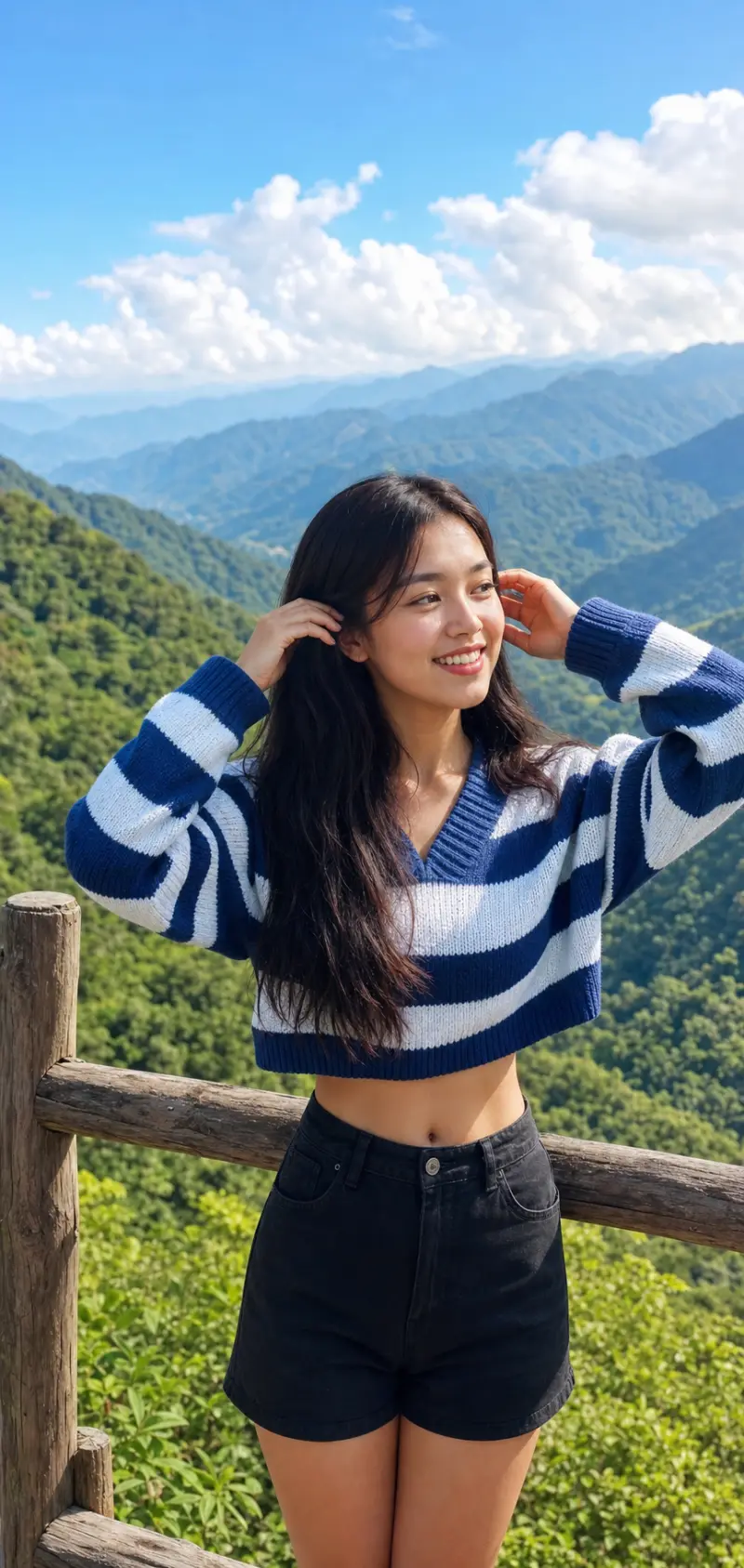
An outdoor girl photoshoot prompt that creates bright, aesthetic travel-style portraits — the candid Instagram look of a sunny day out, in one shot. The template stages a confident young woman in a scenic spot with natural light, a flattering casual outfit and a relaxed candid pose, rendered with realistic skin and vivid true-to-life color. Subject, outfit, pose and location are all adjustable, so the same wholesome aesthetic re-renders at a mountain viewpoint, a beach, a cafe rooftop, a flower field or a city street. What you can customize Subject Description — hair, features and vibe; this anchors the render Outfit — free text, from a cozy sweater to a flowy dress Pose — five candid options: Hands Tucking Hair, Leaning on Railing, Candid Walking, Looking Over Shoulder and Arms Open to View Location — six scenic spots: Mountain Viewpoint, Tropical Beach, Cafe Rooftop, Flower Field, City Street and Lakeside Model Photo — optional upload of a clear front-facing photo to carry a real likeness into the portrait Best for Girls who want scroll-stopping personal photos without a photoshoot, and creators and editors making aesthetic lifestyle content: Instagram posts, profile pictures, travel and fashion feeds, and personal branding. Tips for the best results Describe the girl concretely; hair, features and vibe do the most work. Pick an outfit and location that suit each other, such as a cozy sweater for a hill viewpoint or a flowy dress for a beach, and match the light to the place. Keep the pose natural and candid, which is what sells the look; avoid over-posed stiff stances. Avoid busy backgrounds that fight the subject and heavy beauty filters that erase natural skin texture. Skip revealing or explicit styling requests; the template is tuned for a tasteful, wholesome aesthetic.
Image
Portrait & Character
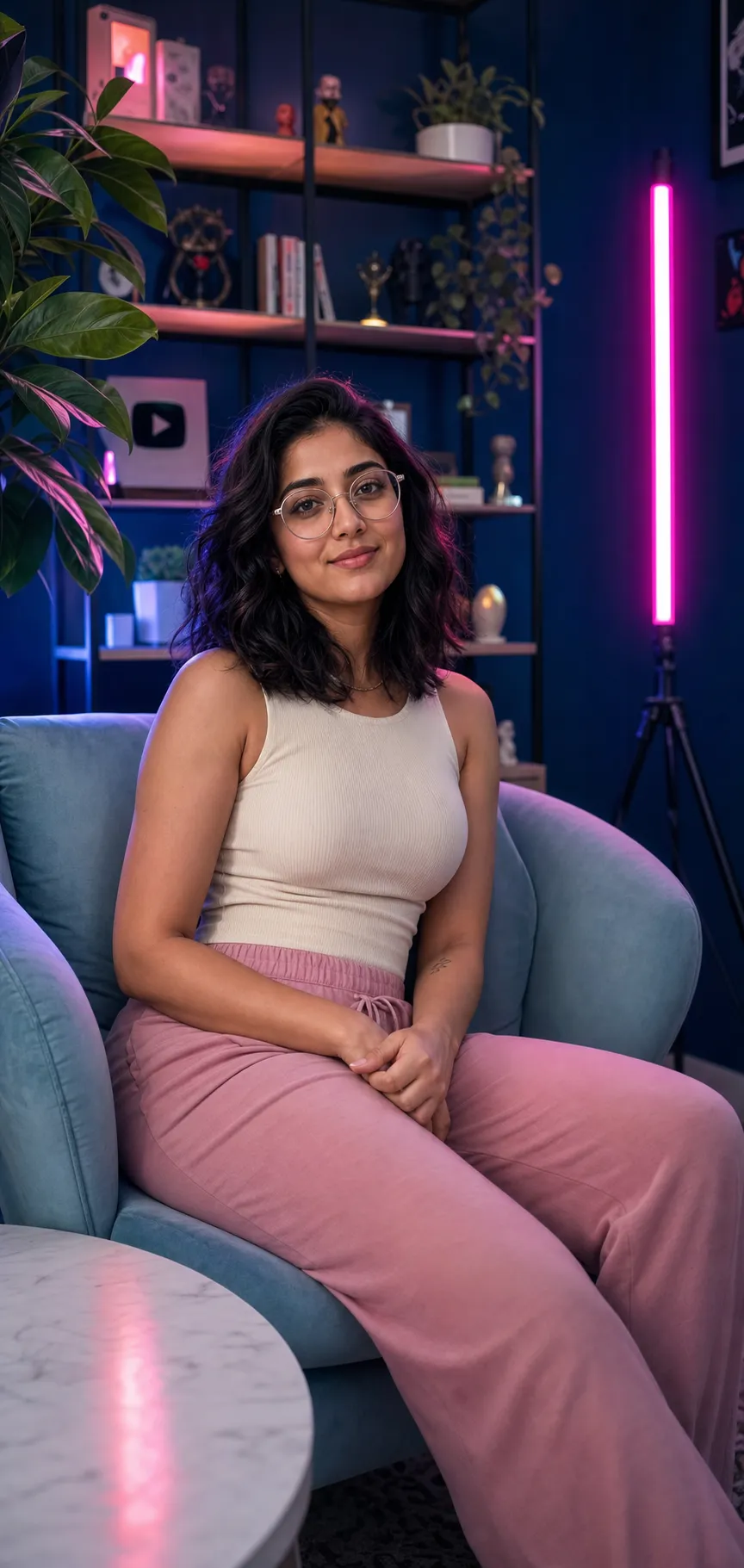
Aesthetic Creator Room Portrait
An aesthetic room portrait prompt that seats a person in a moody, RGB-lit creator space — the styled content creator setup look in rich cinematic color. The template composes the whole scene: a relaxed subject in an armchair, a curated shelf wall of plants and figurines behind them, a glowing tube light washing the room in color, and a soft foreground framing, all with realistic skin and a warm-against-cool color contrast. Room style and accent-light color are the main creative knobs, so the same vibe re-renders as a navy shelf studio, a cozy plant den, a minimalist setup or a neon gamer room in any glow you choose. What you can customize Subject Description — the person and outfit; hair, glasses and clothing anchor the render Room Setting — five rooms: Navy Shelf Studio, Cozy Plant Den, Minimalist White, Neon Gamer Room and Warm Wood Library Accent Light Color — five glows: Magenta & Blue, Teal & Cyan, Warm Orange, Purple & Pink and Green & Lime Model Photo — optional upload of a clear front-facing photo to carry a real likeness into the portrait Best for Creators, streamers and anyone who wants a polished personal-brand portrait or channel visual — profile pictures, about-page shots, thumbnail bases and social posts — with the moody, aesthetic setup look and no studio required. Tips for the best results Describe the person and outfit concretely; hair, glasses and clothing are what the render holds onto. Match the accent-light color to the mood you want; magenta-pink and teal read the most "creator". Keep the pose relaxed and seated, which is what makes the scene feel candid, and attach a photo if you want a real likeness. Avoid over-cluttered shelf descriptions that turn to visual noise, and do not blow out the accent light so it washes the face flat. Skip busy patterned outfits that fight the colored ambient light; a simple top keeps the subject clean against the glow.
Image
Portrait & Character
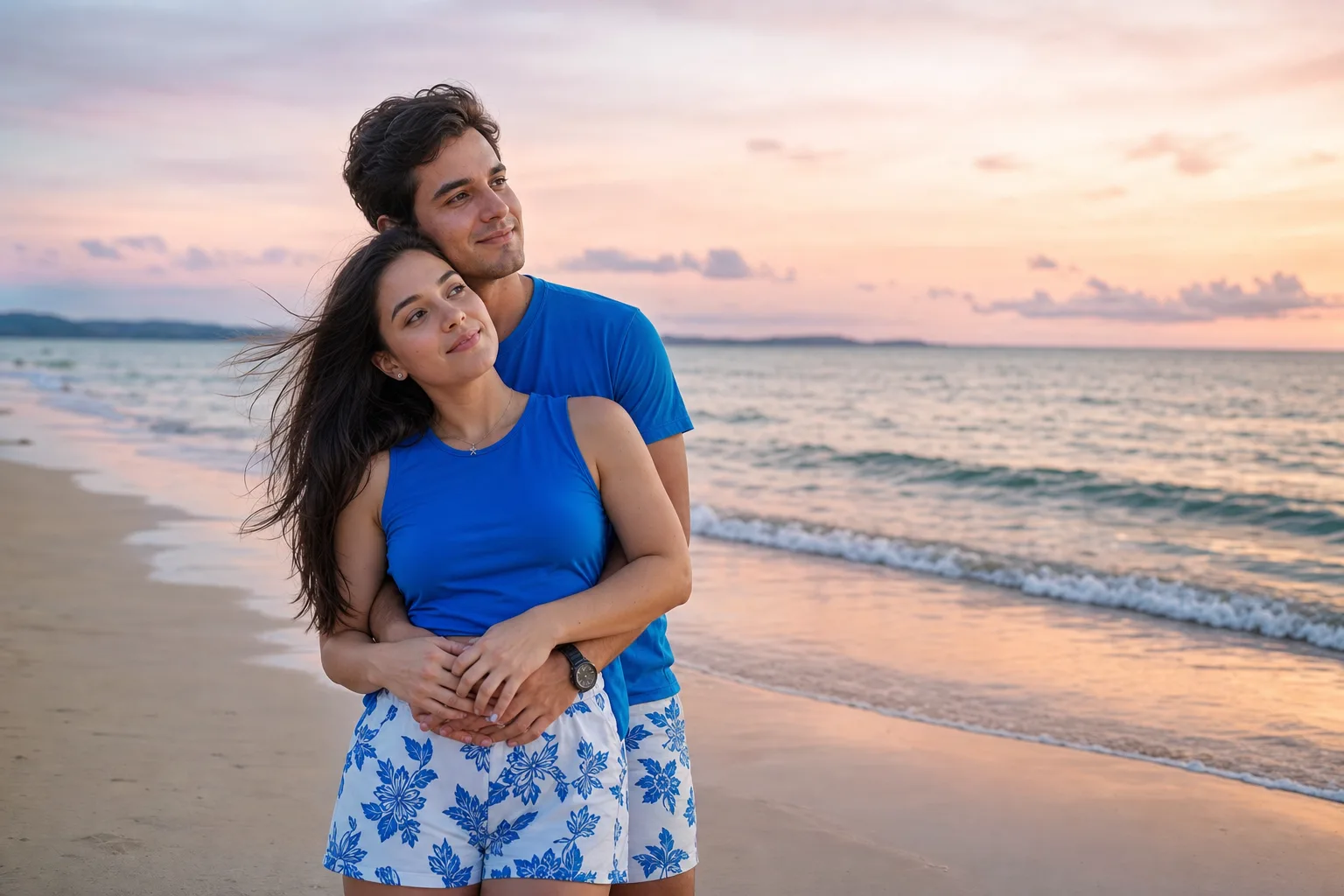
Beach Couple Photoshoot AI Prompt
A beach couple photoshoot AI prompt — two separate photos become one matching-outfit vacation portrait at sunset, on the shore, or mid-twirl. The signature of this template is the twinning: coordinated outfit sets styled as a pair, the look that defines honeymoon and vacation couple content. Upload one clear solo photo of each partner and the prompt composes you both onto a quiet shoreline with vacation-photo realism — breeze in the hair, wet-sand reflections, soft sea depth. What you can customize Partner 1 Photo — a clear, front-facing solo photo; the face and hairstyle are preserved exactly. Partner 2 Photo — the second partner's solo photo; similar framing to Partner 1 gives the most balanced result. Matching Outfits — four coordinated sets: Blue & Florals, All-White Linen, Pastel Twinning and Tropical Prints, every set styled across both partners. Beach Moment — four poses: Back Hug gazing at the horizon, Shoreline Walk hand in hand, Twirl & Laugh at the water's edge, and Sunset Sit shoulder to shoulder. Time of Day — Pastel Sunset, Bright Morning, Golden Hour or Blue Twilight; each resets the entire palette. Best for Honeymoon announcements, vacation recap carousels, anniversary throwbacks, travel-couple pages, and save-the-date shots with a destination feel. Tips for the best results Nano Banana Pro preserves both likenesses from separate references most faithfully; ChatGPT Image 2 is a strong alternative. Use clear front-facing solo photos with even light for both partners. Avoid sunglasses — the eyes carry the warmth. Avoid busy patterned clothing in the reference photos; the template restyles you into the matching sets. Pick one moment per generation — a single clean pose is what makes it read like a photographer's frame.
Image
Portrait & Character
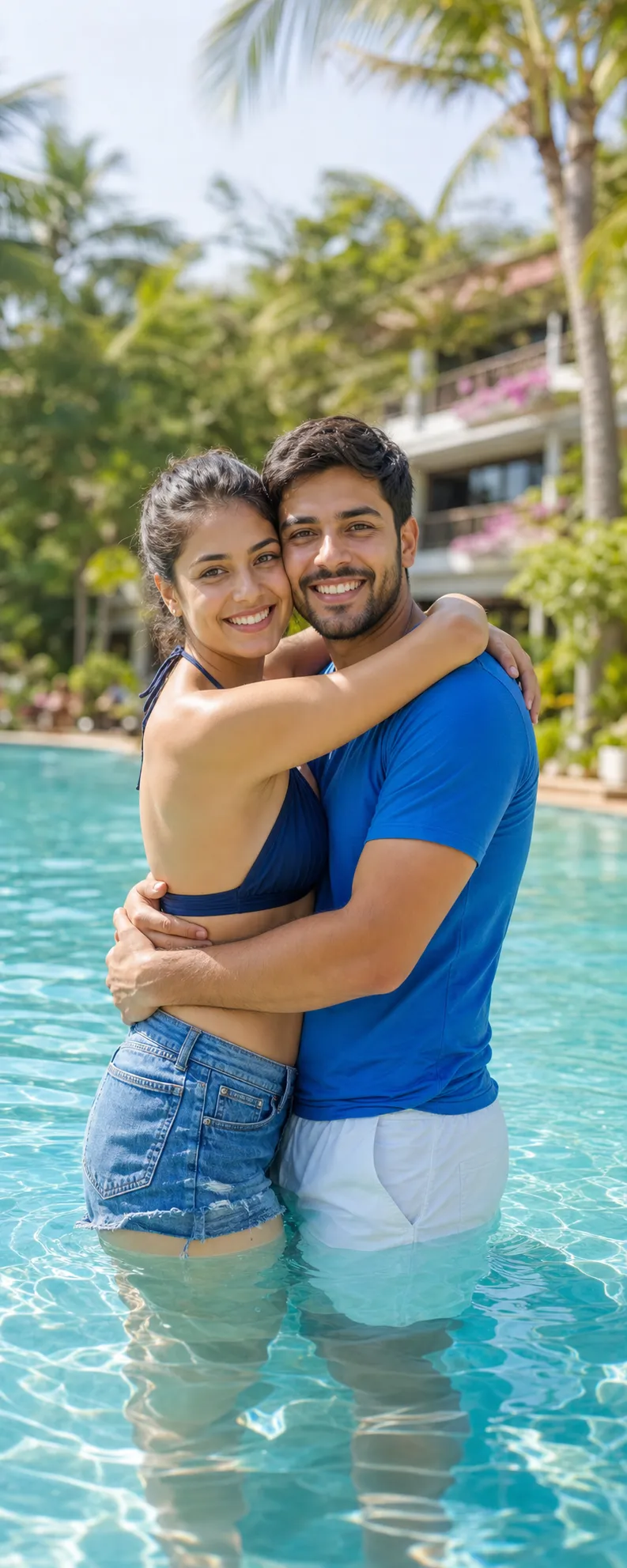
Vacation Couple Photoshoot
A vacation couple photo prompt that puts two people into a bright, sun-soaked holiday shot — resort pool, beach or mountain trail — from your photos. Upload a picture of each partner and the template renders them together on vacation, preserving both faces while capturing the relaxed, joyful travel-photography look: sparkling water, warm hazy daylight, blurred palms and resorts, natural skin and vibrant true-to-life color. The composition is a tall vertical portrait shot on an 85mm lens at f/2.0, with both partners smiling directly at the camera. What you can customize Partner 1 Photo — an optional clear front-facing photo; the face is preserved in the image. Partner 2 Photo — the same for the second person. Partner 1 Description — hair and holiday outfit in free text, such as a navy halter top and denim shorts. Partner 2 Description — the same for the second partner. Pose — five options: Warm Embrace to Camera, Piggyback Ride, Holding Hands Walking, Arms Around Shoulders, and Splashing & Laughing. Destination — five settings: Resort Swimming Pool, Tropical Beach, Mountain Viewpoint, Sunlit Old Town and Boat Deck at Sea. Light is set by a global lighting variable; the bright midday default gives the sparkling-water resort look of the reference. Best for Couples who want holiday photos they never took — trip announcements and recaps, honeymoon and anniversary posts, save-the-dates with a travel theme — and creators making destination couple edits. Tips for the best results Upload a clear, well-lit front-facing photo of each person, cropped to just them, so both faces read cleanly; likeness follows photo quality. Describe hair and holiday outfits in the two fields so styling matches the destination; casual, tasteful holiday wear renders best. Avoid group photos or busy backgrounds in the source images, and sunglasses or heavy filters that weaken the likeness. Do not ask for more than two people. Fusing two real faces is the hardest task for image models, so regenerate a few times to get both likenesses right.
Image
Portrait & Character
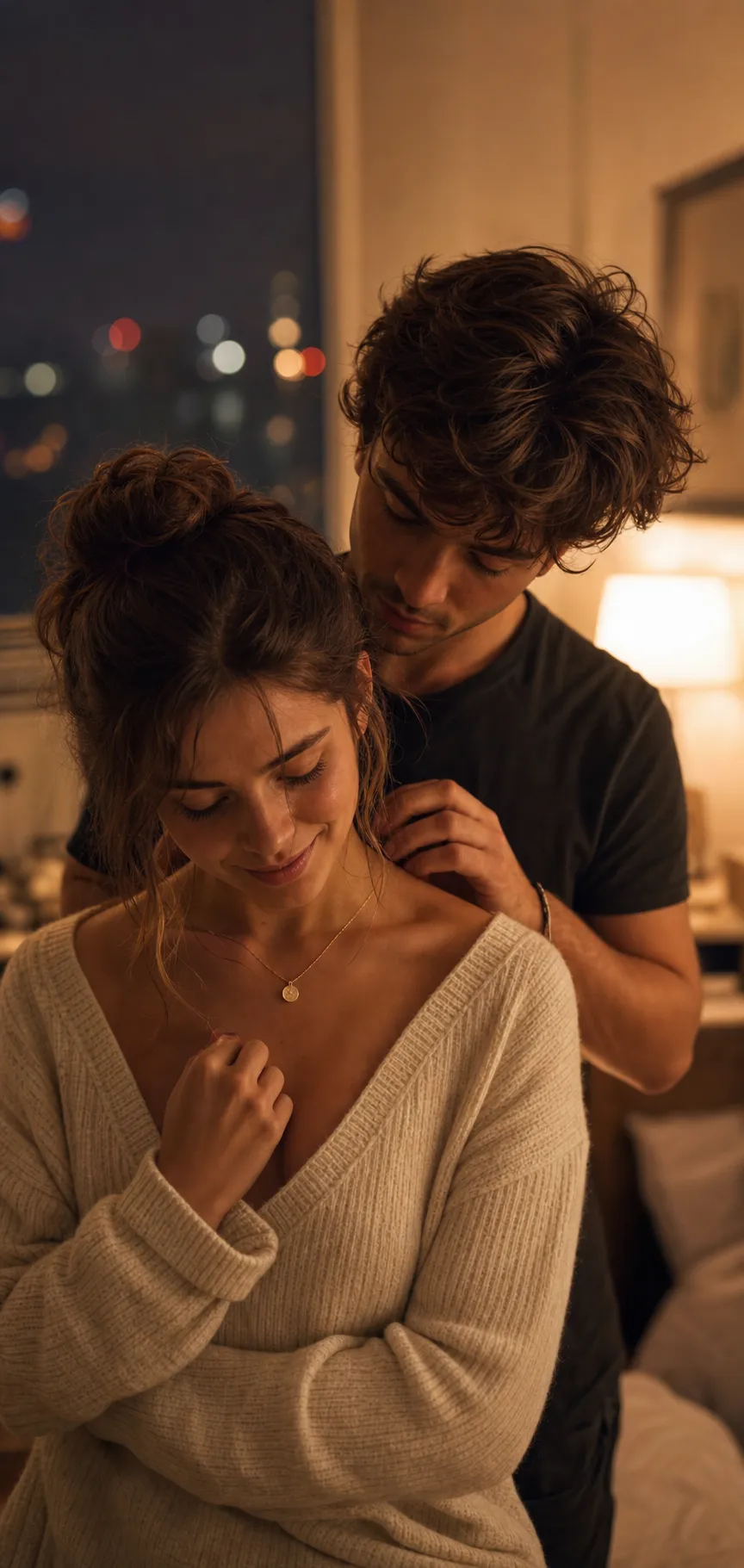
Cozy Intimate Couple Moment
An intimate couple photo prompt built around a single tender gesture — a necklace being fastened, a forehead kiss — lit like a warm, film-like romance. Upload a photo of each partner and the template renders them together in a close, low-lit indoor scene, preserving both faces while capturing the moment mid-action rather than posed. It is a tall vertical close-up on an 85mm lens at f/1.8, with creamy shallow focus, natural skin texture and a warm cinematic color grade. What you can customize Partner 1 Photo — an optional clear front-facing photo; the face is preserved in the portrait. Partner 2 Photo — the same for the second person. Partner 1 Description — hair and clothing in free text, such as a cream knit sweater and a gold pendant necklace. Partner 2 Description — the same for the second partner. The Tender Gesture — the heart of the image, with five options: Fastening a Necklace, Forehead Kiss, Hand on Cheek, Hug From Behind and Sharing a Blanket. Setting — five rooms: Lamp-Lit Bedroom at Night, Fireside Living Room, Slow Morning Kitchen, Candlelit Dinner and Rainy Window Seat. Light and grade come from a global lighting variable, so the same warmth works across every setting. Best for Couples who want a photo that feels like a real private moment — anniversary and engagement posts, gift prints, wallpapers — and creators making cinematic couple edits. Tips for the best results Upload a clear, well-lit front-facing photo of each person, cropped to just them, so both faces read cleanly; likeness follows photo quality. Describe hair and clothing in the two fields so styling stays consistent. Pick a gesture and a setting that belong together and let the warm low-light default do the emotional work — this look lives on soft amber lamp light, deep shadows and shallow focus. Avoid bright flat lighting, busy backgrounds that pull focus from the gesture, group shots or extra people, and heavy beauty smoothing that erases natural skin texture. Fusing two real faces is the hardest task for image models, so expect to regenerate a few times to get both likenesses right.