Grok Pricing (2026): Models Cost & Tokens, Plans, Credits, Usage
Grok's two-hour prompt caps were retired in June 2026 and replaced by one shared weekly pool — a fact most guides still get wrong. Six consumer tiers and the full API token table.
Advertisement
Most Grok pricing guides you will find are wrong about the thing readers care about most. They quote per-two-hour prompt caps — "20 questions every two hours", that sort of figure. Those caps were retired in June 2026.
Paid Grok plans now run on a single shared weekly usage pool, spendable across Chat, Imagine, Voice and Build however you like. That is a materially different product: you can burn a week's allowance on one heavy research day, or spread it thin, and nothing resets every two hours to interrupt you.
The second thing worth knowing is that Grok has six consumer tiers across two separate purchase paths, which is more confusing than it needs to be. And on the API side there is a context threshold that reprices your entire request once you cross it.
API figures below come from xAI's own model documentation. Consumer plan prices are from secondary reporting, since x.ai blocks automated access — treat those as indicative and confirm before subscribing.
Consumer Plans: Two Paths, Six Tiers
Grok is sold both directly and bundled through X, and the two ladders do not line up neatly.
| Plan | Price | Path | Notes |
|---|---|---|---|
| Free | $0 | Either | Daily caps, smaller context |
| X Premium | ~$8/mo | Via X | Basic Grok bundled with X features |
| SuperGrok Lite | ~$10/mo | grok.com | Entry paid tier; Imagine plus one agent |
| SuperGrok | ~$30/mo · ~$300/yr | grok.com | Cheapest standalone path to full Grok |
| X Premium+ | ~$40/mo | Via X | Grok plus the full X perk set |
| SuperGrok Plus | ~$100/mo · ~$1,000/yr | grok.com | Mid-tier between SuperGrok and Heavy |
| SuperGrok Heavy | ~$300/mo | grok.com | Heavy multi-agent model, maximum limits |
Three observations.
The annual discount is about 17% on SuperGrok — $300 a year against $360 paid monthly. It is real but not dramatic, and in a category moving this fast, twelve months is a long commitment for that saving.
The X bundle is a different purchase, not a cheaper one. X Premium at ~$8 gets you basic Grok access alongside social features; X Premium+ at ~$40 sits between SuperGrok and SuperGrok Plus on price. If you want Grok and do not use X, the grok.com ladder is the one to read. If you already pay for X, check what your existing tier includes before adding a second subscription.
Heavy is a genuine step up, not just more of the same. It carries the multi-agent reasoning model with parallel test-time compute, the largest weekly allowance in the lineup, priority access at peak load, and early previews. At ~$300 a month it is priced for people whose work depends on it.
The Weekly Pool: What Changed in June 2026
This is the single most misreported fact about Grok pricing, so it is worth being precise.
The old model was rolling short-window caps — a fixed number of prompts every couple of hours. The current model is one weekly allowance shared across all of Grok's surfaces: text chat, image generation in Imagine, voice, and Build. You decide how to spend it.
What that changes in practice:
- Bursty work is now viable. A long research session that would previously have hit a two-hour wall can run to completion.
- Cross-surface budgeting is on you. A heavy week of image generation eats the same pool your text chats draw from, which is easy to forget until the pool is thin on a Friday.
- The tier you buy determines pool size, and Heavy's is the largest — which is much of what you are paying for at that price.
Because these allowances change and xAI does not always publish exact figures prominently, the reliable source is the usage indicator in-product rather than any published number, including the ones in this article.
API Pricing: Per-Million-Token Rates
From xAI's own model documentation. Every model listed uses a 200,000-token prompt threshold, above which the whole request reprices:
| Model | Context | Input | Cached | Output |
|---|---|---|---|---|
| grok-4.6 | 500K | $2.00 | $0.50 | $6.00 |
| grok-4.5 | 500K | $2.00 | $0.30 | $6.00 |
| grok-4.3 | 1M | $1.25 | $0.20 | $2.50 |
| grok-4.20 (reasoning / non-reasoning) | 1M | $1.25 | $0.20 | $2.50 |
| grok-4.20-multi-agent | 1M | $1.25 | $0.20 | $2.50 |
| grok-build-0.1 | 256K | $1.00 | $0.20 | $2.00 |
Two things stand out.
Grok 4.6 and 4.5 are identically priced except on cached input — $0.50 against $0.30 per million. Everything else matches: same $2 input, same $6 output, same 500K context, same threshold. So if your workload leans heavily on cached prefixes and 4.5 meets your quality bar, the older model is meaningfully cheaper on exactly the axis that matters for that pattern.
The 4.3 and 4.20 family is less than half the output cost of 4.6 — $2.50 against $6.00 — with double the context window at 1M. For workloads that do not need the newest flagship, that is a large saving with more room, not less.
And grok-build-0.1 is the cheapest option in the lineup at $1.00 in and $2.00 out, aimed at coding workloads, with a smaller 256K window.
The 200K Cliff
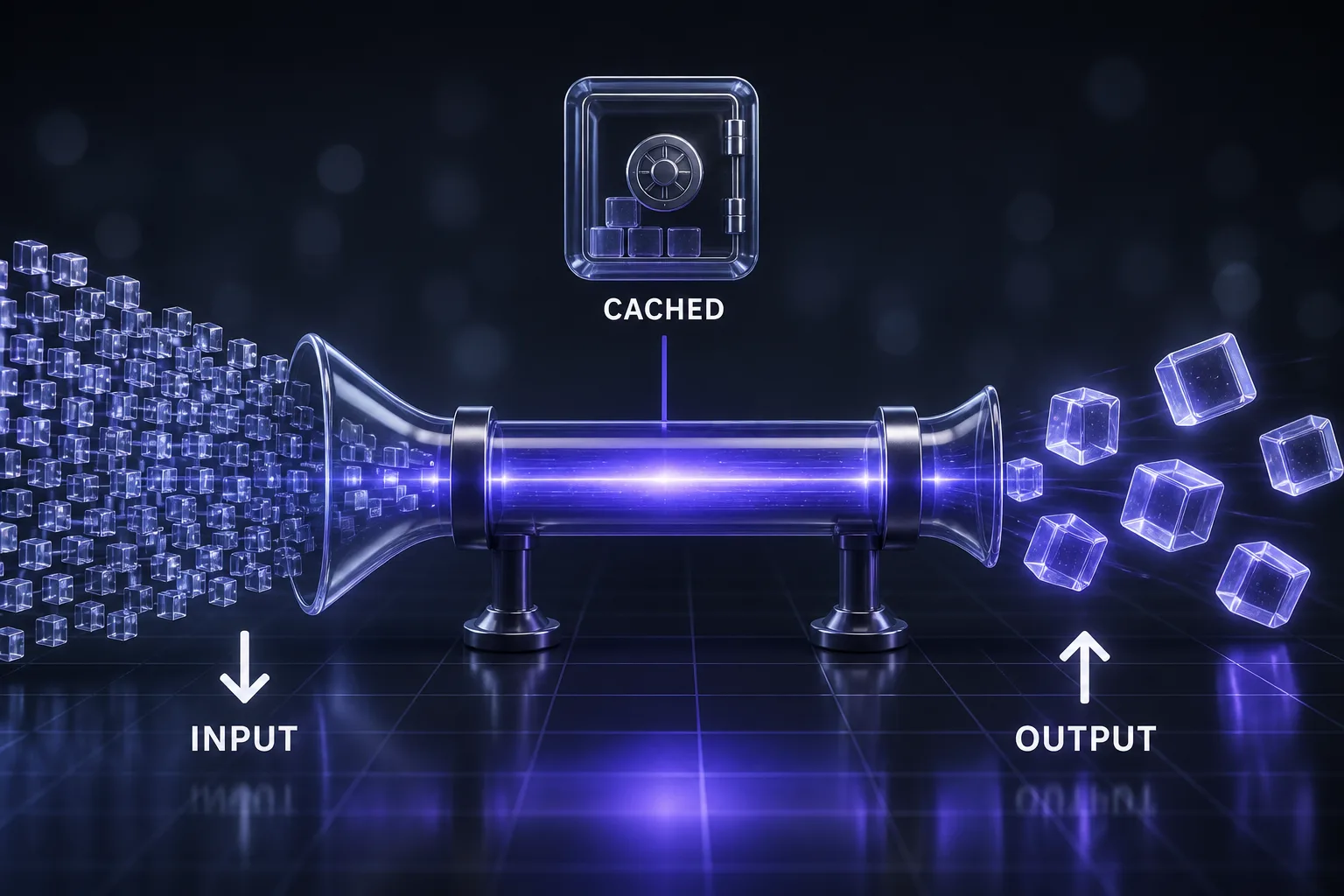
Every model above shares the same mechanic: cross 200,000 prompt tokens and the entire request bills at roughly double, not just the tokens past the threshold.
| Model | Under 200K (in / cached / out) | At or above 200K |
|---|---|---|
| grok-4.6 | $2.00 / $0.50 / $6.00 | $4.00 / $1.00 / $12.00 |
| grok-4.5 | $2.00 / $0.30 / $6.00 | $4.00 / $0.60 / $12.00 |
| grok-4.3 & 4.20 family | $1.25 / $0.20 / $2.50 | $2.50 / $0.40 / $5.00 |
| grok-build-0.1 | $1.00 / $0.20 / $2.00 | $2.00 / $0.40 / $4.00 |
Note the awkward consequence for the large-context models: grok-4.3 advertises a 1M-token window, but everything above 200K is billed at the higher rate. The window tells you what fits; the threshold tells you what it costs. Those are different numbers and it is easy to plan against the wrong one.
Practical rule: instrument your prompt token counts before sending. A request sitting just above 200K costs double a request just below it for nearly identical work, so trimming retrieval results or boilerplate at the margin can halve a call.
Priority Processing
xAI offers a Priority Processing service tier at double the standard token price. It is a scheduling priority, not a different model — same weights, better queue position.
The useful detail: you are only charged the priority rate when the response confirms it actually ran as priority, indicated by a service tier field in the response. So requesting priority is not an unconditional 2× commitment. Still, at double the rate it earns its place only where latency is the product rather than a preference.
Which Should You Buy?
| If you... | Choose |
|---|---|
| Ask occasional questions | Free tier |
| Already pay for X and want basic Grok | Check X Premium first |
| Want a cheap standalone entry point | SuperGrok Lite, ~$10 |
| Use Grok daily as a main assistant | SuperGrok, ~$30 |
| Keep exhausting the weekly pool | SuperGrok Plus, ~$100 |
| Depend on it professionally, need max limits | SuperGrok Heavy, ~$300 |
| Build products on the API, general use | grok-4.3 — half the output cost, 1M context |
| Need the newest flagship | grok-4.6 |
| Lean heavily on cached prefixes | Compare 4.5 — cheaper cached input than 4.6 |
| Are running coding workloads | grok-build-0.1 — cheapest in the lineup |
The Verdict
On the consumer side, SuperGrok at ~$30 is the tier that makes sense for most people who want Grok properly. Lite is a real entry point rather than a crippled demo, and Heavy at ~$300 is a serious tool for people whose work runs on it — but the gap between those two is wide enough that Plus at ~$100 exists to fill it, and you should only climb when you are actually exhausting the pool.
The bundling deserves a warning: if you already pay for X, work out what you have before buying a second subscription. Two overlapping Grok entitlements is an easy mistake to make given how the tiers are presented.
On the API side, do not default to the newest model. The 4.3 and 4.20 family costs less than half the output rate of 4.6 with double the context window, and grok-build-0.1 undercuts everything for coding. Pick the cheapest model that passes your evaluations, keep prompts under 200K, and reach for priority processing only when latency genuinely is the product.
For how this sits against the rest of the market, see our ChatGPT pricing breakdown and Claude pricing explained.
Keep Reading
More pricing breakdowns: ChatGPT pricing 2026, Claude pricing explained, ElevenLabs pricing, Hedra pricing, OpenArt pricing, and Claude AI stats 2026. Or browse all guides and prompts on PromptsRush.
Frequently Asked Questions
10 questions answered