ChatGPT Pricing (2026): Plans, Credits, Tokens, Usage Limits
ChatGPT runs $0 to $200 a month, and the API bill has a cliff most guides miss: cross the context threshold and the entire request reprices. Full plan and per-token breakdown.
Advertisement
ChatGPT pricing now spans $0 to $200 a month on the consumer side and three orders of magnitude on the API side. The number that catches people out is not on either price list.
It is the long-context cliff: once a request crosses the context threshold, the entire request bills at the higher rate — not just the tokens above the line. Send a 300,000-token prompt to gpt-5.6-sol and every token in it costs double, including the first 200,000. That single mechanic turns a predictable bill into a surprising one, and it is the thing worth understanding before anything else here.
API figures below come from OpenAI's own developer pricing documentation. Consumer plan prices are drawn from secondary reporting, because openai.com blocks automated access — treat those as indicative and confirm in-product before you buy.
Consumer Plans
| Plan | Price | Who it is for |
|---|---|---|
| Free | $0 | Capped messages on the flagship model, then a lighter fallback |
| Go | ~$8/mo | Ad-supported entry tier; higher caps than Free |
| Plus | ~$20/mo | The standard paid plan |
| Pro Codex | ~$100/mo | Elevated coding limits |
| Pro Max | ~$200/mo | Top Deep Research and Pro-model quotas |
| Business | ~$20–25/seat | Teams: SSO, admin controls, no-training guarantee |
| Enterprise | Custom | Data residency, SLAs, compliance logging |
Two 2026 changes are worth knowing. Pro split into two tiers in April 2026 — a coding-focused tier around $100 and the classic top tier around $200 — so "Pro" no longer means one thing. And Go is ad-supported, with contextual advertising subsidising the low price, which is a different product proposition from the paid tiers rather than simply a smaller one.
The Business tier's real selling point
On annual billing a Business seat reportedly costs about the same as Plus, and adds shared workspaces, SAML SSO, admin controls, compliance certifications and connectors. But the thing that actually justifies it for most organisations is contractual: a guarantee that your data will not be used for training. That is not something an individual Plus subscription offers at any price. If you are putting client or proprietary material into ChatGPT at work, that clause is the reason to move, not the admin panel.
API Pricing: What a Token Actually Costs
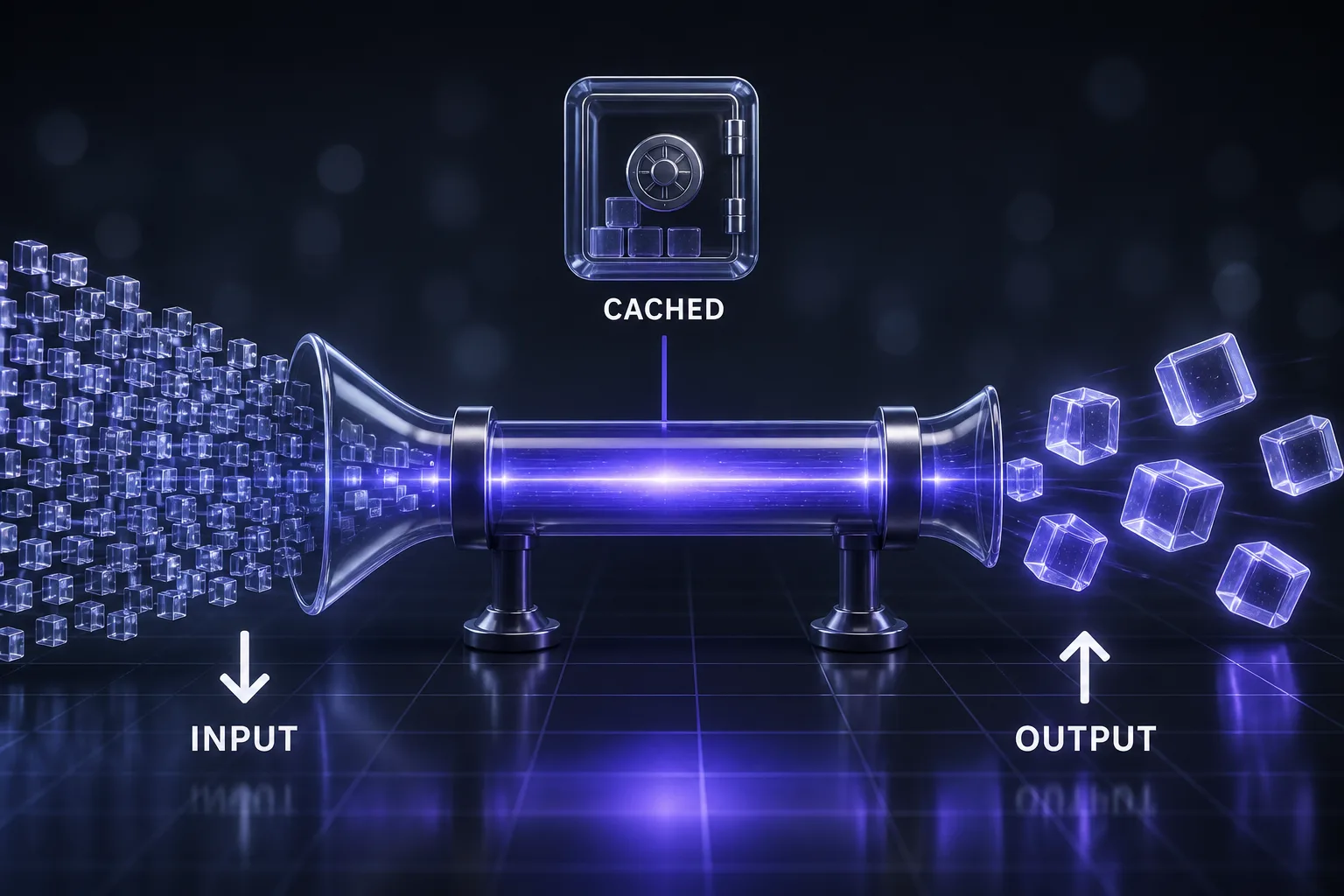
Per million tokens, from OpenAI's developer pricing documentation:
| Model | Input | Cached input | Output |
|---|---|---|---|
| gpt-5.6-sol | $4.00 | $0.40 | $20.00 |
| gpt-5.6-terra | $2.00 | $0.20 | $12.00 |
| gpt-5.6-luna | $0.20 | $0.02 | $1.20 |
| gpt-5.5 | $5.00 | $0.50 | $30.00 |
| gpt-5.5-pro | $30.00 | — | $180.00 |
| gpt-5.4 | $2.50 | $0.25 | $15.00 |
| gpt-5.4-mini | $0.75 | $0.075 | $4.50 |
| gpt-5.4-nano | $0.20 | $0.02 | $1.25 |
| gpt-5.1 / gpt-5 | $1.25 | $0.125 | $10.00 |
| gpt-5-mini | $0.25 | $0.025 | $2.00 |
| gpt-5-nano | $0.05 | $0.005 | $0.40 |
| gpt-4.1 | $2.00 | $0.50 | $8.00 |
| gpt-4o | $2.50 | $1.25 | $10.00 |
| gpt-4o-mini | $0.15 | $0.075 | $0.60 |
Worth double-checking anywhere you read it: several published guides list gpt-5.6-sol at $5 input and $30 output. Those are gpt-5.5's rates. Sol is cheaper than the model it replaced, which is the opposite of what most people assume when a new flagship ships.
Model choice dominates every other cost decision. Luna at $0.20 in and $1.20 out is twenty times cheaper on input than Sol and roughly seventeen times cheaper on output. No amount of prompt trimming closes a gap that size. Before optimising tokens, ask whether the task actually needs the flagship — classification, extraction, routing and summarisation usually do not.
The Long-Context Cliff
This is the mechanic that produces unexpected invoices, so it deserves its own section.
Each model has a context threshold. Below it you pay standard rates. At or above it, the whole request reprices — every input token, not merely the ones past the line:
| Model | Standard in / out | Long-context in / out |
|---|---|---|
| gpt-5.6-sol | $4.00 / $20.00 | $8.00 / $30.00 |
| gpt-5.6-terra | $2.00 / $12.00 | $4.00 / $18.00 |
| gpt-5.6-luna | $0.20 / $1.20 | $0.40 / $1.80 |
| gpt-5.5 | $5.00 / $30.00 | $10.00 / $45.00 |
Input doubles; output rises by roughly half. The practical consequence: a request that lands just over the threshold costs materially more than one that lands just under it, for almost identical work.
What to do about it. Instrument your token counts before you send, not after you are billed. If your requests cluster near the threshold, trimming a retrieval step or dropping a few thousand tokens of boilerplate can halve the input cost of the entire call. And if you genuinely need very long context, price it deliberately rather than discovering it — the long-context rate is the real rate for that workload.
Caching, Batch and the Other Multipliers
Three levers change the effective price without changing the model:
- Cached input is a ~90% discount on the 5.6 family — Sol drops from $4.00 to $0.40 per million. If your prompts share a long stable prefix (a system prompt, a document, a tool schema), structuring them so that prefix is cacheable is the single highest-leverage cost change available.
- Batch halves the rate. If the work is not interactive — overnight enrichment, bulk classification, evaluation runs — batch is half price for the same model.
- Flex prices the same as Batch, trading latency guarantees for cost.
- Fast mode doubles the rate. Worth it only where latency is genuinely the product.
Stacked properly these compound: a cached-prefix batch job on Luna is a fraction of a percent of an uncached Fast request on Sol.
Usage Limits
Consumer and API limits work on completely different mechanics, and conflating them is a common source of confusion.
On consumer plans, limits are message-based and reset on a rolling window. Free gets a capped number of messages on the flagship reasoning model before falling back to a lighter one. Paid tiers raise the ceiling, and also raise adjacent limits — upload sizes, image generation volume, and memory length. The exact figures move frequently and OpenAI does not always publish them prominently, so the reliable source is the limit notice you see in-product rather than any article, including this one.
On the API, there are no message caps. You are constrained by organisation and project rate limits expressed as requests per minute and tokens per minute, which scale with your usage tier and spend history. Hitting them produces throttling, not a bill shock — the bill shock comes from the long-context cliff described above.
Which Plan Should You Buy?
| If you... | Choose |
|---|---|
| Use it occasionally and can live with caps | Free |
| Want more headroom cheaply and do not mind ads | Go |
| Use it daily for real work | Plus |
| Live in coding tools and hit limits | Pro Codex |
| Need maximum research and top-model quota | Pro Max |
| Put company or client data into it | Business — for the no-training clause |
| Need data residency, SLAs or compliance logging | Enterprise |
| Are building a product on top of it | API, and pick the smallest model that passes your evals |
The Verdict
For individuals, Plus remains the sensible default and Go is a genuine option if the ad-supported model does not bother you. The Pro split means you should decide which kind of heavy user you are before spending $100 or $200 — the coding tier and the research tier are not interchangeable.
For teams, Business is worth it for the contractual no-training guarantee alone if you handle anything sensitive, and at annual pricing near Plus levels that is an easy call.
For developers, the cost equation has three levers in order of impact: pick a smaller model, make your prefix cacheable, batch anything non-interactive. Then watch the context threshold. Most surprising API bills are not caused by volume — they are caused by requests quietly crossing a line that reprices everything behind them.
For how this compares across the market, see our Claude pricing breakdown and the Claude AI statistics post for the commercial picture behind these price lists.
Keep Reading
More pricing breakdowns: Claude pricing explained, ElevenLabs pricing, Hedra pricing, OpenArt pricing, Claude AI stats 2026, and what ChatGPT Work is. Or browse all guides and prompts on PromptsRush.
Frequently Asked Questions
10 questions answered