Loading model...
Best ChatGPT Image 2 prompts
165 prompts Video
Motion & Animation
Key-to-Motorcycle Cinematic Transformation
This template creates an ultra-realistic cinematic transformation where a key smoothly materializes into a motorcycle between two reference frames. It produces a short VFX-style clip built around strict camera lock: the angle, lens, background and subject position stay perfectly stable while the object gradually forms from simple shape to full motorcycle. The transformation reads as believable material formation with subtle dust and particulate interaction, progressive shadows and accurate reflections, not a flashy morph. What you can customize Start Frame — the first image, showing the key and the full environment setup that the clip opens on End Frame — the final image, showing the completed motorcycle in the same position and environment the clip resolves to Effect and lighting lines — the prompt's dust, atmospheric motion and lighting rules can be edited if you want a different environment response, as long as the camera and subject stay locked Best for Cinematic reels, VFX tests, and premium social content that need a seamless before-and-after effect. Use it when precision, realism and visual continuity matter more than speed or exaggerated energy effects. Tips for the best results Shoot or generate both frames from the identical camera position, lens and lighting; any mismatch between them forces the model to drift. Keep the motorcycle's ground contact in the end frame aligned with where the key sits in the start frame so alignment stays constant. Do not add camera moves, zooms or shake — the prompt forbids reframing, and the effect depends on a static shot. Watch for flicker, warping or stretching artifacts in the output and regenerate if temporal continuity breaks.
345 Views
Video
Motion & Animation
High-Impact Kinetic Typography Reel
This template converts any short script into a high-energy kinetic typography motion graphic designed specifically for Instagram Reels and YouTube Shorts. It renders a vertical 9:16 animation in which words stretch, snap, bounce, collide and pause with purpose, following 2025–2026 motion design trends: bold scale contrast, rhythmic pacing, punchy transitions and beat-synced typography. Visual hierarchy comes from size, weight and timing rather than static placement, so the result feels alive and intentional, not like subtitles. What you can customize Background Color — the canvas color behind the type, kept clean with strong negative space Text Color — the primary color for body words and secondary phrases Highlight Color — the emphasis color applied to power words that dominate the frame Script Text — the copy that gets broken into meaningful beats and animated phrase by phrase Best for Motivational quotes, brand statements, hooks, promos and creator content where typography is the visual experience. The motion vocabulary includes scale pops and snap-ins, stretch and squash on impact, slide-ins with momentum, directional movement and micro-pauses before major words. Tips for the best results Use short, punchy scripts — roughly 5–20 words per beat section — with strong musical rhythm in mind. Choose a high-contrast text color against the background and reserve the highlight color for a few power words. Write the script so key words stand alone; the prompt animates phrases and keywords separately and avoids uniform font sizes. Do not ask for imagery, fade-ins or subtitle stacking; the prompt limits visuals to text-driven shapes and rejects static reveals.
Image
Fantasy & Sci-Fi
Dark Cinematic Fantasy Portrait
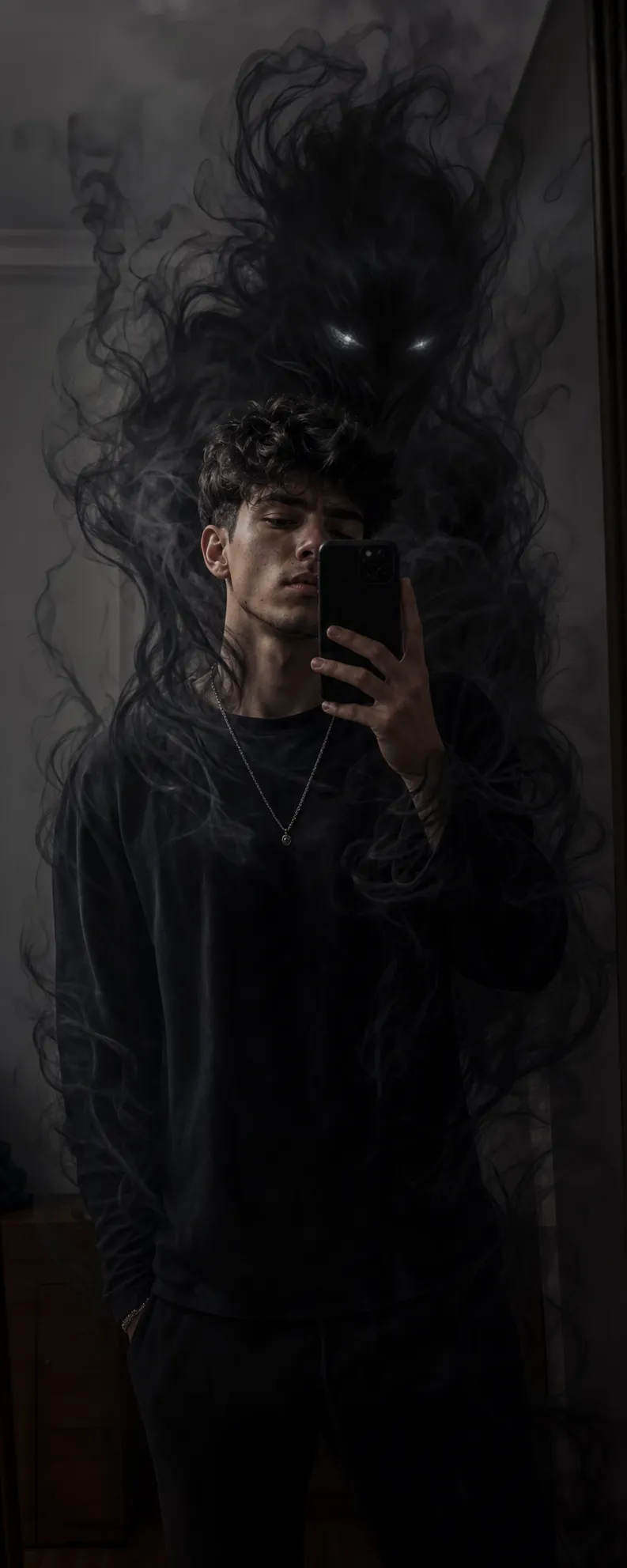
This template transforms an existing mirror selfie into a dark, cinematic fantasy scene while preserving the subject exactly as captured. The person's face, pose, outfit, lighting, background and camera angle remain completely unchanged. A smoke-based supernatural entity emerges from directly behind the subject, semi-transparent with layered volumetric depth and glowing eyes, wrapping around the body and reacting to the existing light sources so it feels physically present rather than overlaid. What you can customize Mirror Selfie — the locked base image that defines identity, pose, lighting, background and camera angle Entity Type — five presences: Shadow Smoke Demon, Ghostly Wraith, Fiery Ember Demon, Frost Specter or Angelic Light Being Entity Glow / Color — five palettes including Black Smoke with White Eyes, Blood Red, Electric Blue, Toxic Green and Purple Void Intensity — Subtle & Restrained, Looming & Aggressive, or Dramatic Reveal, which scales how much of the frame the entity claims Best for Fantasy edits, cinematic profile visuals, or dramatic storytelling images where identity preservation and realism are non-negotiable. The output is moody and high-contrast, blending grounded realism with subtle supernatural tension. Tips for the best results Start from a mirror selfie with clear space behind your back; the entity needs room to emerge and flow into the environment. Match the glow color to the room's existing light for the most integrated look, or pick a contrasting color for a deliberate reveal. Choose Subtle & Restrained when you want the selfie to stay the focus; Dramatic Reveal pushes the entity forward. The prompt forbids solid body parts and exaggerated monster anatomy; do not request a fully rendered creature.
Image
Product & Commercial
1/7 Scale Figurine Desk Display
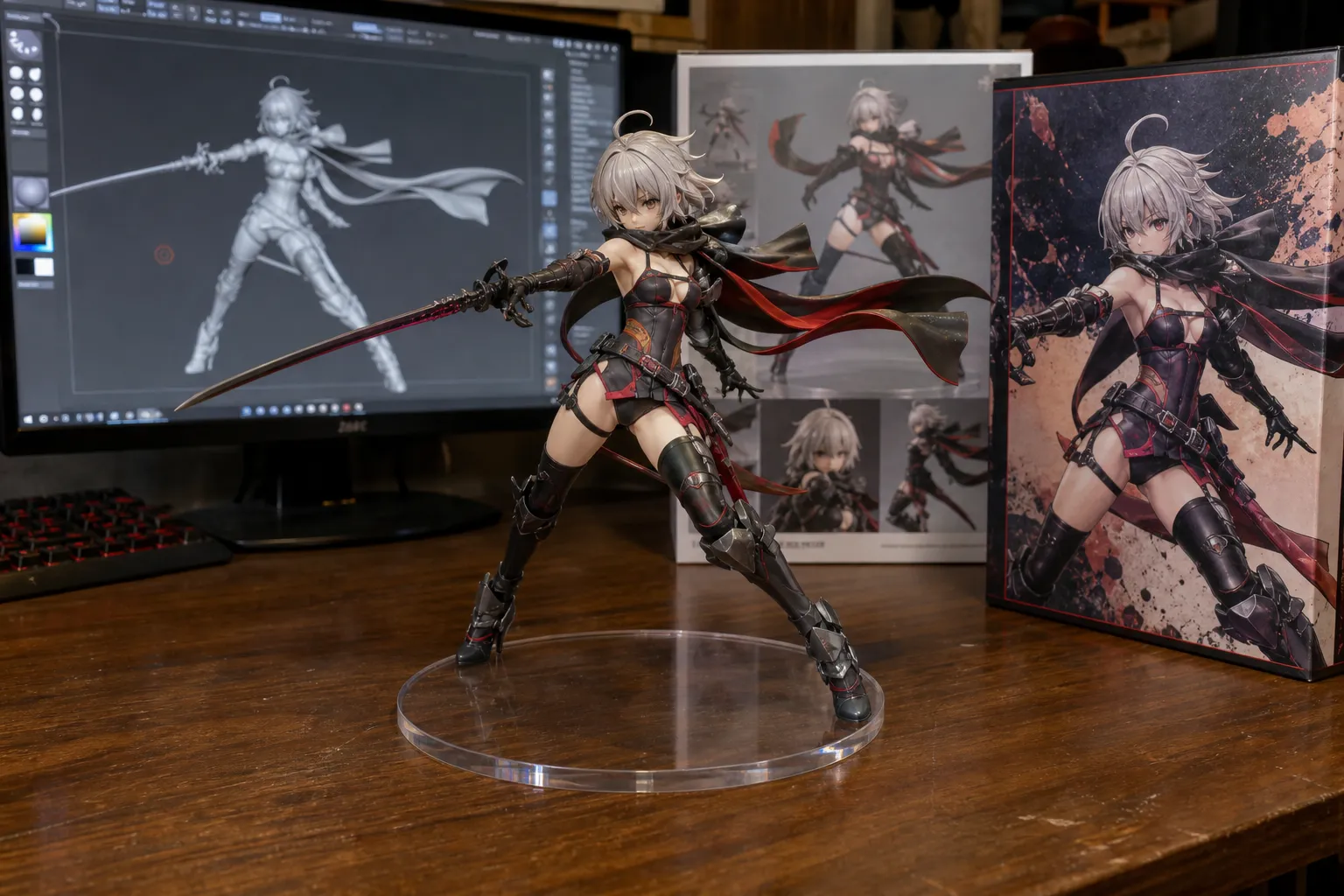
This template generates a highly realistic product-style scene featuring a 1/7 scale PVC figurine displayed on a computer desk. The figurine is treated as a physical object with accurate scale, realistic plastic texture, clean sculpted detail and a painted finish. A monitor beside it shows the 3D sculpting process of the same figurine as a grey clay model inside modeling software, and two packaging boxes complete a professional, non-branded toy-brand setup inspired by BANDAI-style presentation. What you can customize Character Reference — optional image upload the figurine is sculpted from; leave it empty to use the text field instead Character (used if no photo is attached) — a free-text description of the character when no reference is uploaded Display Base — four options: Clear Round Acrylic, Black Round Base, Themed Diorama Base or White Pedestal Desk Setting — four environments: Wooden Computer Desk, Gaming Desk with RGB, Clean Studio Desk or Cozy Creator Desk Best for Collectible concept visualization, toy photography mockups, and product presentation visuals. The final image feels like a premium behind-the-scenes showcase rather than a stylized illustration. Tips for the best results Upload a full-body character reference with a clear pose so the sculpt, paint and packaging art all match. Pick Clear Round Acrylic when you want visible reflections on the base; the prompt renders them realistically. Keep the character description focused on costume, colors and pose — the prompt handles scale, materials and lighting. Expect no text, logos or engravings on the figurine or box art; the packaging uses original illustrated covers only.
Image
Portrait & Character
Seamless Family Photo Integration
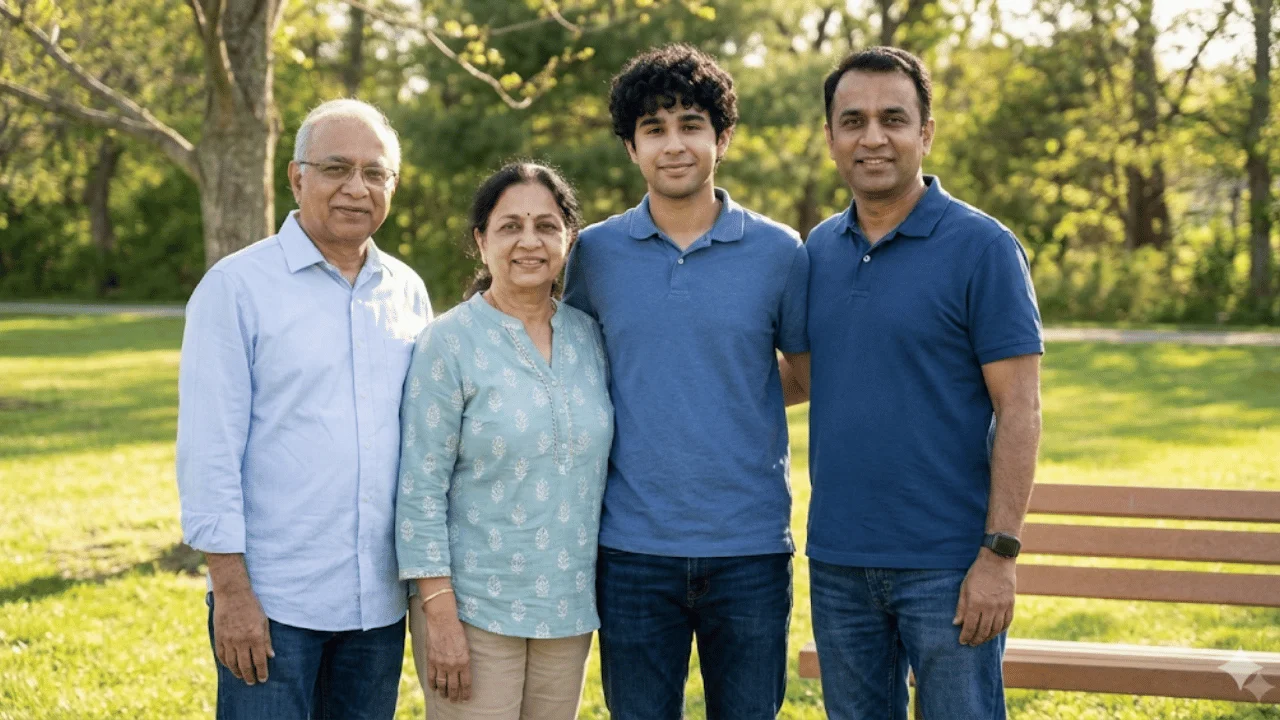
This template seamlessly integrates an uploaded individual into an existing family photograph so it looks shot at the same moment with the same camera. It prioritizes natural realism: matched lighting direction and softness, accurate color tone and white balance, correct perspective and scale, and believable contact and cast shadows. The subject's facial identity stays intact while clothing and placement are adjusted to harmonize with the family's style, formality and setting, with zero visual seams. What you can customize Family Photo — the base image that defines lighting, composition, color tone and group arrangement; existing family members are never changed Person to Add — the individual whose face is preserved and whose expression is kept natural and matched to the photo's mood Clothing and placement guidance — the prompt's styling and placement rules can be edited to specify an occasion (casual, formal, traditional) or a position within the group Best for Family portraits, missing-member photo restoration, memorial images, or group photo completion where authenticity and emotional credibility are critical. Tips for the best results Choose a photo of the person to add that roughly matches the family photo's camera angle and lighting; the model has less to correct. Use a relaxed, natural expression in the source portrait — the prompt forbids beautification and artificial expressions. Leave a plausible gap or edge position in the family photo; correct depth placement prevents anyone looking cut out or floating. Check the result for cutout edges, mismatched skin tones or an artificial glow and regenerate if any appear.
Image
Cinematic & Film
Tamil Gangster Movie Poster Prompt
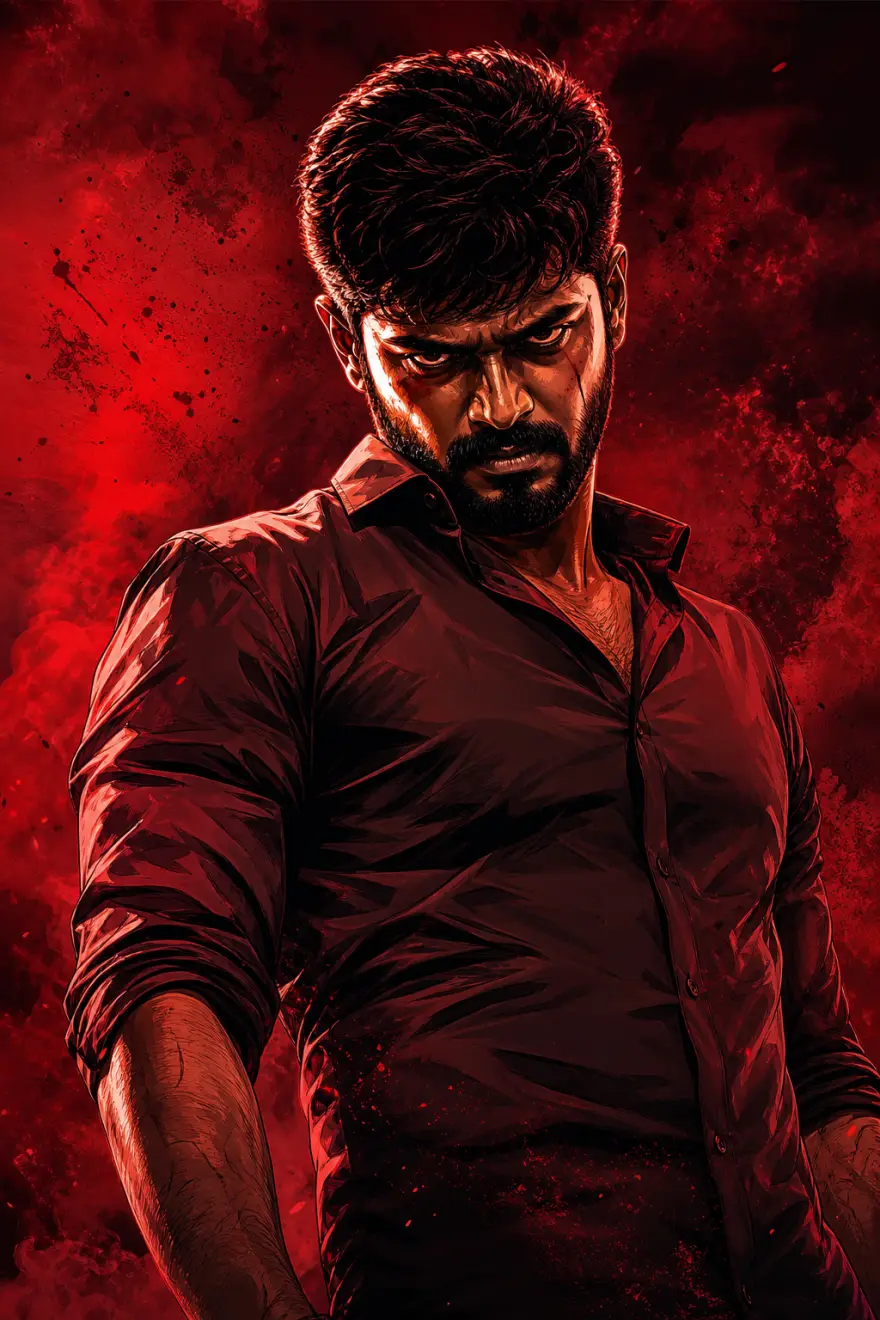
This prompt template transforms a reference photo into a bold, cinematic Tamil gangster movie poster. It blends high-contrast digital illustration with a deep-red, gritty aesthetic to create a powerful character-driven visual.Core Aesthetic: "The Mass Look"Inspired by modern South Indian action cinema, this style focuses on dramatic tension and graphic intensity.Color Palette: Dominated by deep crimsons, charcoal blacks, and high-contrast warm highlights.Art Style: A hybrid of hyper-realistic digital painting and sharp, comic-book-inspired shading.Atmosphere: Gritty, smoke-filled, or textured backgrounds that add weight and "attitude" to the subject.Identity Protection (No Distortion)The template is engineered for absolute fidelity. While the environment and lighting change, the following remain locked and identical to your reference:Face & Expression: Precise facial features and the original mood/gaze.Anatomy: Exact hairstyle, skin tone, and body pose.Zero AI Warp: Enhances the aesthetic without altering the person's core identity.Ideal Use CasesMovie-Style Posters: Create professional-grade promotional art.Personal Branding: High-impact profile visuals for creators and influencers.Digital Fan Art: Elevate standard portraits into "Larger Than Life" cinematic characters.
Image
Cinematic & Film
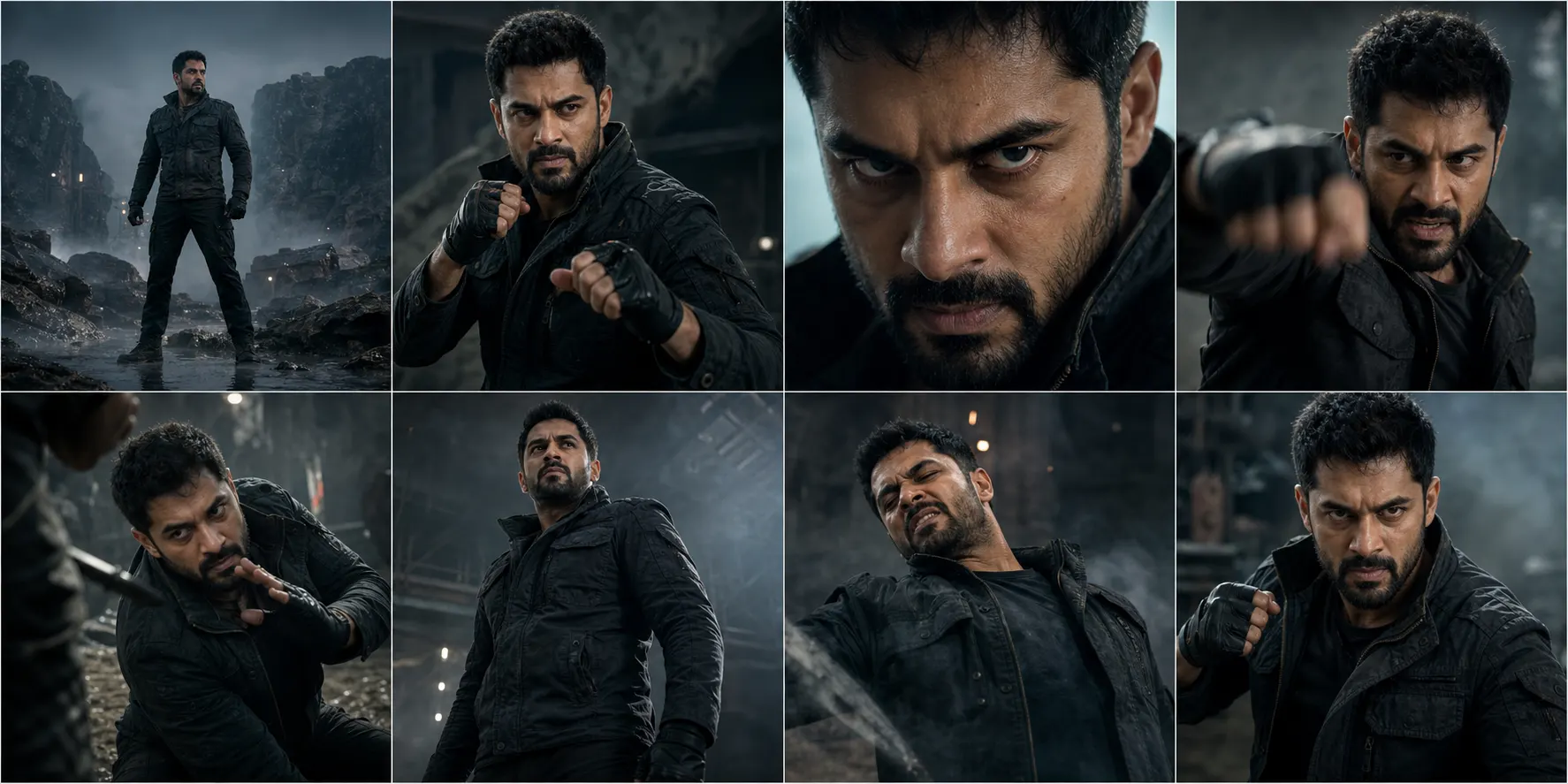
Cinematic 8-Shot Character Action Sequence
This template generates a cohesive 8-shot cinematic action sequence using an uploaded character image as the single source of truth. Each shot functions like a carefully directed movie still with controlled camera language, dramatic lighting and believable motion. The face, body proportions, skin tone, hairstyle and outfit remain identical across every frame under an absolute identity lock, with consistent color grading and 4K-level detail. What the eight shots cover An establishing wide shot, a waist-up preparation shot, a tight close-up on the eyes, a strike with motion blur limited to limbs, a defensive block or dodge, a low-angle hero shot, an impact reaction, and a final battle-ready dramatic pose. What you can customize Character Reference Image — the sole upload, defining exact facial identity, body proportions, hairstyle, outfit and realism baseline Shot descriptions in the prompt — each of the eight shot blocks can be edited to change environment, combat style or emotional beat while keeping the sequence structure Style lines — the ultra-realistic action-film grading and contrast rules can be adjusted if a different cinematic look is needed Best for Trailers, action reels, character showcases and cinematic tests where identity continuity across multiple shots is non-negotiable. Tips for the best results Upload a sharp, full-body reference showing the outfit clearly; costume and hairstyle must not vary between shots. Keep the character in one outfit per sequence — the prompt forbids costume changes, so generate a separate run for alternate looks. Expect motion blur only on limbs during the strike shot; faces and torsos stay sharp throughout. Do not request text, logos, subtitles or UI; the prompt restricts output to clean cinematic framing.
Image
Cinematic & Film
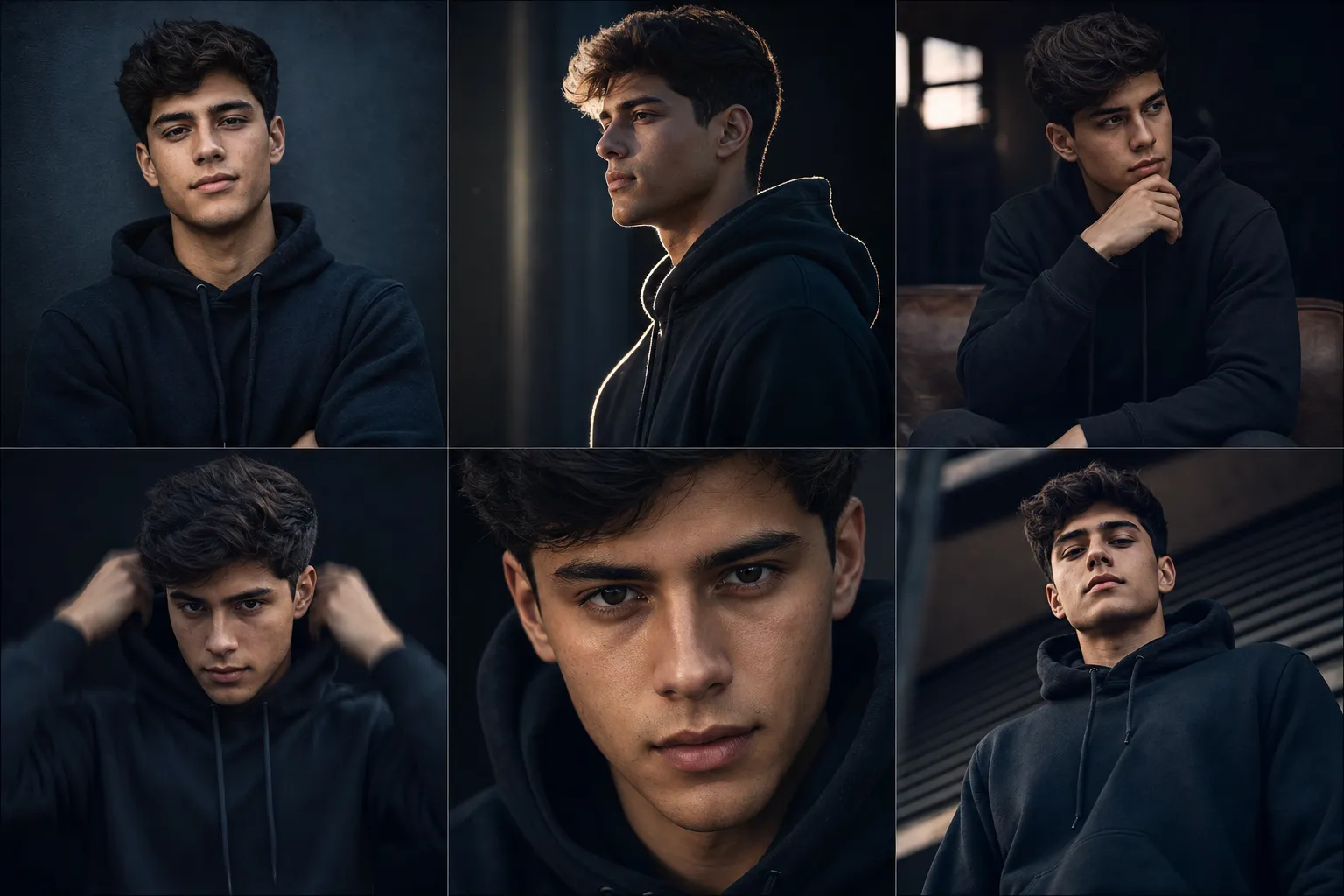
Cinematic Character Variations
This template generates multiple highly creative, cinematic image variations using one consistent character identity derived from a single reference image. It is built for creators, influencers, and personal brands who need diverse visual content without losing recognizability. Each variation explores a different pose, angle, and emotional tone while maintaining strict continuity of face, hairstyle, clothing, and proportions. The result feels like a professional photoshoot with multiple setups, with cinematic lighting, dramatic shadows, and shallow depth of field rather than a set of unrelated images. Why the character stays consistent The prompt enforces an absolute identity lock: same face, facial structure, skin tone, hairstyle, and body proportions in every frame, with no beautification drift or redesign. It then renders six defined setups, including a front pose, a three-quarter profile with rim light, a seated introspective pose, a subtle action pose with motion blur on the body only, a tight close-up, and a low-angle stance. What you can customize Character (used if no photo is attached) — a text description of the person, used only when no reference image is supplied Outfit — the wardrobe, kept identical across every variation (default is a clean modern dark hoodie) Setting & Mood — 5 options that set the environment and lighting, such as Dark Studio, Urban Night, Warm Golden Hour, and Neon Moody Character Reference Image — an optional clear, face-visible photo that defines identity, hairstyle, clothing, and proportions Best for Profile picture sets, branding visuals, content libraries, video thumbnails, and character portfolios where consistency and polish are critical. Tips for the best results Attach a sharp, well-lit reference photo with the full face visible; it overrides the text description and gives the strongest likeness. Keep the outfit description simple and specific so it can be reproduced identically in all six frames. Pick one Setting & Mood per run; the prompt applies consistent color grading, so mixing moods belongs in separate generations. The prompt already excludes extra people, text, logos, and watermarks, so avoid adding conflicting instructions in the character field.
Image
Social Media
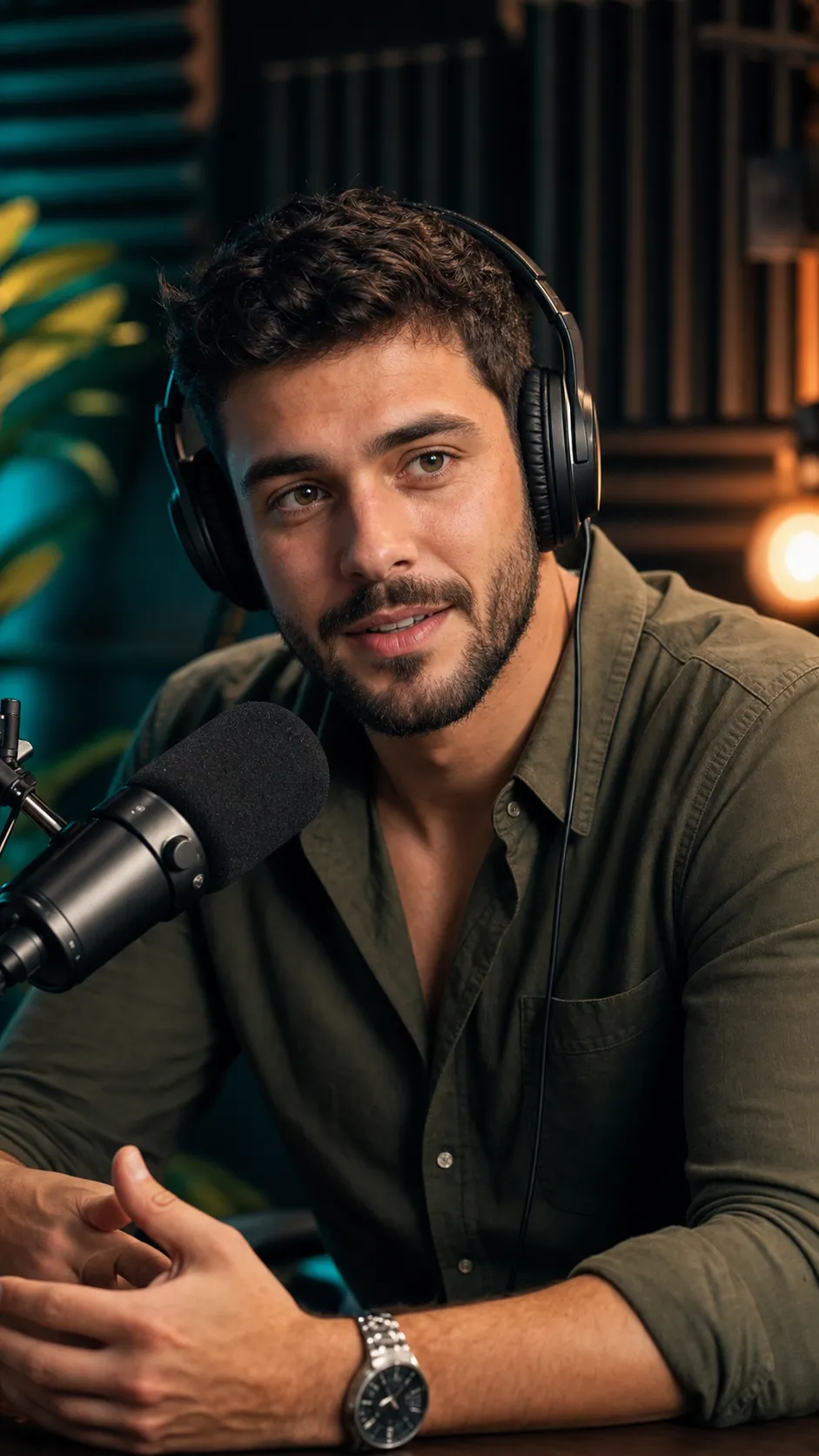
Podcast Thumbnail Portrait
This template repurposes an existing image of a person into a high-quality YouTube podcast thumbnail portrait. The focus is an exceptionally crisp, expressive face that reads instantly at small sizes, paired with a relaxed, natural podcast posture. The subject appears seated and leaning slightly forward as if mid-conversation, with an engaged, approachable expression, rendered in a vertical 9:16 frame with medium-close head-and-upper-torso framing. The image stays brand-safe with no text, watermark, or UI elements, so creators can add titles or graphics externally later. What you can customize Subject (used if no photo is attached) — a text description of the person, used only when no source image is supplied Podcast Setup — 4 options for props and staging: Mic + Headphones, Mic Only, Clean Portrait (no props), or Two-Mic Interview Studio Background — 5 softly blurred settings, including Moody Teal & Warm Studio, Warm Cozy Set, Neon Modern Studio, and Bookshelf Backdrop Source Image — an optional photo that defines the person's facial identity and likeness, preserved strictly with no changes to structure, skin tone, or expression style Best for Podcast episode thumbnails, YouTube channel visuals, Reels and Shorts covers, and creator branding where facial clarity, authenticity, and clean composition are essential. Tips for the best results Upload a sharp, front-facing source photo; the prompt prioritizes the face above everything else, and a blurry input limits the final detail. Choose Clean Portrait (no props) when you plan to add your own microphone graphics or text overlays afterwards. Match the background to your channel palette, since each option carries its own lighting color, from warm amber to teal or neon accents. Keep the subject description short and physical (hair, beard, shirt) rather than describing a scene; setup and background are handled by their own controls. The output is vertical 9:16, so crop or reframe if you need a landscape YouTube thumbnail.