The PromptsRush journal
AI ToolsAI Skills vs AI Agents: What's the Difference?
AI skills are capabilities. AI agents are decision-makers that use them. Here is the real difference, how they fit together, and when to reach for each.
Advertisement
People use "AI skill" and "AI agent" as if they mean the same thing. They do not. A skill is a capability. An agent is the thing that decides to use it.
Get the distinction right and your mental model for the whole AI stack clicks into place — what to build, what to install, and what to hand off. Get it wrong and you will reach for a complex autonomous agent when a single skill would have done the job in a tenth of the time.
This guide draws the line clearly, shows how the two work together, and gives you a simple test for which one a task actually needs.
What is an AI skill?
An AI skill is a packaged capability you can give a model on demand. In practice it is a folder with an instruction file — usually a SKILL.md — that teaches the AI how to do one thing well: format a brand-safe invoice, run a specific research routine, generate a carousel, review a contract.
A skill is passive. It does not wake up on its own or decide anything. It sits there until something loads it into context, at which point the model suddenly knows the steps, the rules, and the resources for that task. Think of it as a recipe card or a power-up: knowledge and procedure, bottled.
If you want the full primer, we wrote one here: What Are AI Skills and How to Use Them. And if you want to build your own, start with How to Create Your First Claude Skill.
What is an AI agent?
An AI agent is a system that pursues a goal. You give it an objective — "find the 10 best leads and draft outreach" — and it plans, takes steps, calls tools, checks its own work, and keeps going until the goal is met or it gets stuck.
An agent is active. It runs a loop: observe, decide, act, repeat. It chooses which tools to call and in what order. Products like Genspark are built around this idea — you state an outcome and the agent runs a multi-step workflow to reach it, rather than you driving each click.
The defining trait is autonomy across multiple steps. A single prompt-and-response is not an agent. The moment the model is making sequential decisions toward a goal without you steering each one, you have an agent.
AI skills vs AI agents: the core difference
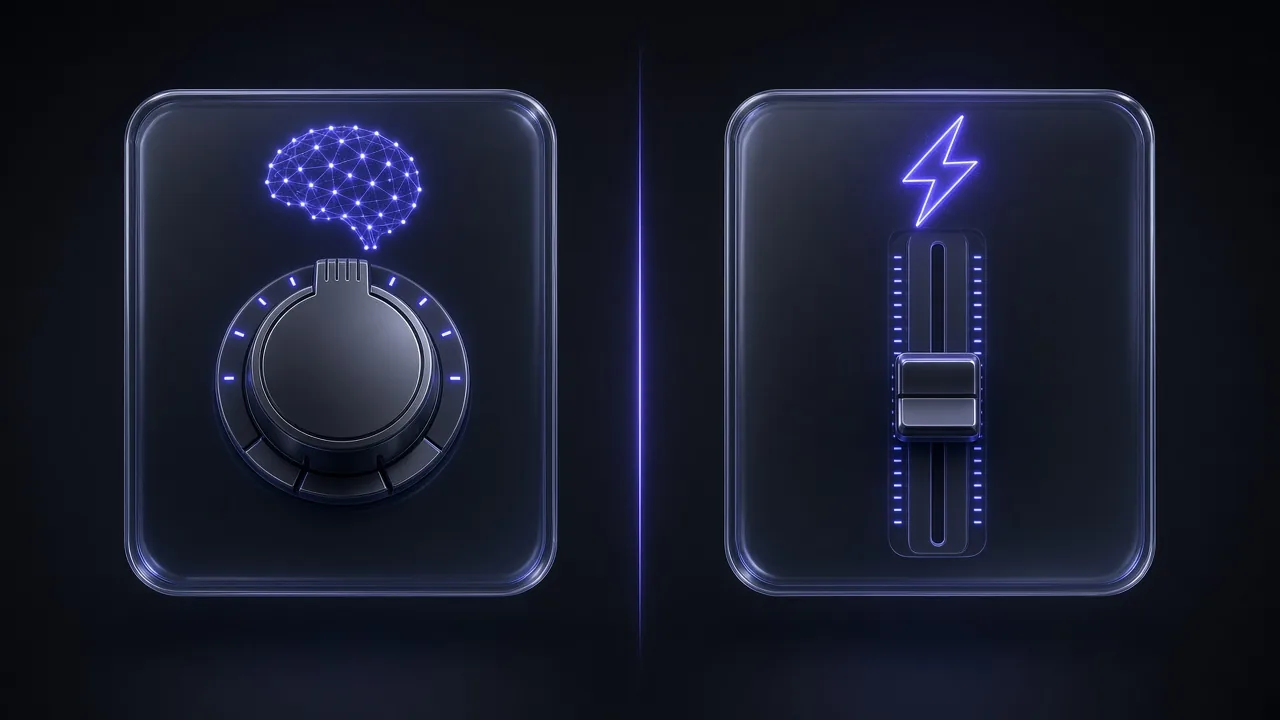
One line: a skill is what an AI can do; an agent is what decides to do it. Skills are nouns, agents are verbs in motion.
| Dimension | AI Skill | AI Agent |
|---|---|---|
| What it is | A packaged capability or procedure | An autonomous system pursuing a goal |
| Behavior | Passive — loaded when needed | Active — runs its own loop |
| Scope | One task, done well | Many steps and tasks, chained |
| Decision-making | None — follows its instructions | Plans, picks tools, self-corrects |
| You provide | The how | The what (the goal) |
| Lives as | A SKILL.md and its resources | A model plus tools, memory, and a loop |
| Analogy | A recipe or a power-up | A cook working through a menu |
Here is the relationship that trips people up: an agent uses skills. They are not competitors. Skills are some of the tools an agent reaches for. A capable agent with a library of good skills beats a clever agent with none.
How skills and agents work together
Picture a workshop. The agent is the worker. The tools on the wall are skills. The worker reads the job ticket (your goal), decides which tools to grab and in what order, and uses each one according to its instructions. Remove the worker and the tools just hang there. Remove the tools and the worker improvises badly.
This is why the two get stronger together. Every good skill you add expands what an agent can reliably do without re-inventing the procedure each time. The agent supplies judgment and sequencing; the skill supplies a dependable, repeatable way to execute one step.
A concrete example: research and write a report
Say the task is "research the AI video market and write a briefing."
Skill-only approach: You load a market-research skill that knows your preferred structure, sources, and tone. You feed it the topic, it produces the briefing in your format. You did the steering — you chose the topic, ran the skill, and moved it along.
Agent approach: You hand the goal to an agent. It plans the work, calls a search tool, loads that same research skill to format the findings, drafts the briefing, checks it against the brief, and returns the finished document. You did one thing: stated the goal.
Same skill, very different amounts of human steering. That gap is the whole distinction.
When to use a skill vs an agent
| If your task is... | Reach for... |
|---|---|
| One well-defined job you repeat often | A skill |
| Predictable — the same steps every time | A skill |
| Required to be auditable and identical each run | A skill |
| Open-ended, with an unknown number of steps | An agent |
| Dependent on choosing tools on the fly | An agent |
| Reactive to intermediate results | An agent |
Pro tip: Start with the smallest thing that works. Most tasks people hand to agents are really one skill plus a trigger. Reach for autonomy only when the steps genuinely cannot be known in advance.
Where prompts fit in
Prompts are the raw instruction layer underneath both. A skill is essentially a curated, reusable bundle of prompts and resources you can load on demand. An agent strings prompts and skills together dynamically as it works toward a goal. So the progression goes: a prompt is one instruction, a skill is a packaged set of them for a task, and an agent is the decision-maker that decides which to use and when. They are layers, not rivals.
Common misconceptions
- "Agents are just better skills." Different category entirely. A skill is a capability; an agent is a decision loop that uses capabilities.
- "A skill needs an agent to run." It does not. A single chat session can load a skill and follow it end to end.
- "Anything with tools is an agent." Tool use alone is not agency. The loop and the goal-seeking are what make an agent.
- "Agents replace skills." The opposite. Agents get more useful as your skill library grows.
How to get started
Build skills first — they are simpler, immediately useful, and the building blocks agents rely on. Browse ready-to-install skills in the Skills marketplace, learn the fundamentals in the AI Skills track, go deeper on autonomy in the AI Automation track, or submit your own skill for the community.
The verdict
Skills are capabilities; agents are the decision-makers that wield them. If you can write the steps down and they never change, a skill is the right tool — cheaper, faster, and auditable. If the path is open-ended and the AI has to react as it goes, you want an agent. Most people overreach for agents. Get a handful of solid skills working first, and the leap to autonomy becomes a small one.
Keep going
Next, learn how to brief AI on your visual style in How to Write Better design.md Files, or explore more in the blog, the Skills marketplace, and the Learn hub.
Frequently Asked Questions
8 questions answered